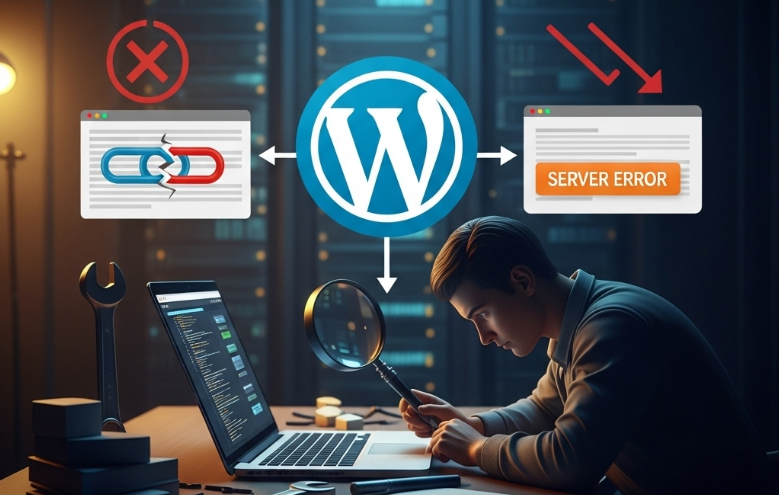

If you’ve ever waited too long for a website to load, you know how frustrating it can be. Now flip the script, and imagine your visitors feeling the same impatience on your site.
They click, they wait… and then they leave. That’s not just a missed opportunity; it’s a potential customer walking out the door.
Website speed isn’t just a tech metric. It’s a user experience issue, a trust factor, and a make-or-break moment for your business.
Search engines notice it. Customers judge you for it. And in today’s fast-paced digital world, even a one-second delay can cost you leads, sales, and credibility.
That’s where SSD WordPress hosting steps in. Think of it as upgrading from a bike to a sports car, same destination, but much faster and smoother.
SSD (Solid State Drive) technology allows your WordPress website to load significantly quicker than it would on traditional hard drives.
And that speed doesn’t just improve the browsing experience; it directly impacts your SEO, bounce rate, and overall success.
In this guide, we’ll break down what SSD WordPress hosting means, why it’s such a powerful upgrade from regular hosting, and how to find a hosting provider that gives your site the speed and reliability it truly deserves.
Whether you’re starting your first blog or managing an online store, this could be the one change that transforms your site’s performance.
Let’s dive in.
What Is SSD WordPress Hosting?
Think about walking into your favorite shop. The door opens, the lights come on, and boom, everything you need is right in front of you.
No waiting, no searching, no awkward “where do I even start?” moment. You grab what you came for, pay in seconds, and you’re on your way.
That’s exactly how people want websites to feel.
Fast, simple, and smooth.
But that kind of experience doesn’t just happen. It all starts with what’s behind the scenes, your hosting. If that foundation’s solid, everything else runs better.
SSD WordPress Hosting is a type of web hosting designed specifically for WordPress websites, but with a major upgrade: instead of using older Hard Disk Drives (HDDs) to store your files, it uses Solid State Drives (SSDs). This matters more than most people realize.
Traditional HDDs use spinning disks and mechanical parts to read and write data, like a record player.
SSDs, on the other hand, use flash memory with no moving parts, making them incredibly fast, durable, and efficient.
When your WordPress site is hosted on SSD servers, everything from loading pages to retrieving data from your database becomes significantly quicker.
That means:
Less waiting for your visitors, Better Google rankings, Higher conversion rates, and an overall smoother experience for everyone
In short, SSD hosting isn’t just a “tech upgrade”; it’s a business decision that impacts speed, SEO, user satisfaction, and revenue.
Why SSD Hosting Makes Your WordPress Site Way Faster
01. Instant Data Access
SSDs retrieve data almost instantly, up to 20 times faster than HDDs. Whether it’s loading a blog post, a product image, or a customer’s login session, SSDs dramatically reduce the lag that slows down traditional sites.
02. Lower Page Load Times
Google recommends a load time of under 2 seconds. With SSD hosting, your WordPress pages can easily hit that benchmark, even during high traffic.
This helps reduce bounce rates and increases time spent on site.
03. Faster Server Response (TTFB)
Time to First Byte (TTFB) measures how quickly your server starts to respond to a browser request.
SSDs make that initial handshake much quicker, giving your users a snappy experience right from the first click.
04. Efficient Handling of Dynamic Content
WordPress isn’t just a static site; there are plugins, themes, media files, and constant database interactions.
SSDs excel at handling these dynamic elements in real-time, especially under pressure (think product launches, flash sales, or viral blog posts).
05. Greater Reliability and Uptime
SSDs are less prone to mechanical failure because they have no moving parts.
This makes them more reliable and durable, reducing the risk of downtime due to hardware issues, a crucial factor for eCommerce and business websites.
06. Improved SEO Performance
Site speed is a direct ranking factor in Google’s algorithm. By reducing load times and server latency, SSD hosting gives your website a natural SEO boost, leading to more visibility, more clicks, and more conversions.
07. Better Support for Traffic Spikes
If your site gets hit with a sudden spike in visitors, say from a social media post or email campaign, SSDs handle the pressure with grace.
They’re better at multitasking and managing simultaneous read/write operations, which keeps your site from crashing or slowing down.
SSD Hosting vs. HDD Hosting: What’s the Real Difference?
Choosing between SSD and HDD hosting is like choosing between a high-speed train and a bicycle.
Both will get you to your destination, but the experience, speed, and reliability are worlds apart.
SSD (Solid State Drive) hosting is built for performance. It’s incredibly fast because it uses flash memory and has no moving parts.
This not only boosts your website’s speed but also improves its reliability and energy efficiency.
SSDs are far more durable and less likely to fail over time, which means your website stays online, loads quickly, and handles traffic effortlessly.
On the other hand, HDD (Hard Disk Drive) hosting relies on spinning disks and mechanical arms to read and write data.
While it’s a more budget-friendly option, it’s noticeably slower and more prone to wear and tear.
Websites on HDD hosting may load more slowly, especially when traffic increases or when multiple operations are happening at once.
In terms of power consumption, SSDs also win; they use less energy, which makes them not only faster but also more eco-friendly and efficient in the long run.
Yes, SSD hosting tends to cost a little more upfront, but the trade-off is a site that performs better, ranks higher, and keeps your visitors engaged.
HDD hosting may work fine for basic or personal websites with minimal content, but for businesses, bloggers, or eCommerce stores that rely on performance, SSD hosting is the clear choice.
How to Choose the Right SSD WordPress Hosting Provider
When it comes to hosting a WordPress website, not all SSD (Solid State Drive) hosting providers are created equal.
SSD storage is essential for speed, but several other critical factors determine whether a provider is right for your specific needs.
Below is a breakdown of what to look for when evaluating SSD WordPress hosting services:
✅ 1. 100% Pure SSD Storage
Ensure the hosting provider uses full SSD storage across all components, operating systems, databases, and files, not just for caching.
Some budget hosts advertise SSD benefits, but only use them for temporary data or page caching.
True SSD hosting provides dramatically faster read/write speeds, reducing page load times and enhancing site performance under traffic spikes.
Look for providers that are transparent about their storage infrastructure.
✅ 2. Deep WordPress Optimization
The best SSD hosting providers go beyond basic support for WordPress. Look for features specifically made for WordPress performance, such as:
⚫One-click installations for quick setup
⚫Automatic core, plugin, and theme updates to keep your site secure
⚫Server-side caching (like object caching or full-page caching)
⚫PHP version control so you can run the latest, fastest versions
⚫Staging environments for testing changes before going live
These tools not only improve speed and reliability but also simplify site management.
✅ 3. High Uptime Guarantee
Downtime can hurt both your SEO rankings and user trust. Choose a host that offers a minimum 99.9% uptime guarantee, preferably backed by a Service Level Agreement (SLA).
This commitment ensures that your site stays online consistently and that you’ll be compensated if the host fails to meet that promise.
✅ 4. CDN Integration for Global Speed
A Content Delivery Network (CDN) works hand-in-hand with SSD storage to improve global load times.
CDNs distribute your website’s static content across a network of servers around the world, reducing latency for international visitors.
Look for SSD WordPress hosts that:
▪️Include a built-in CDN (like Cloudflare or proprietary options)
▪️Allow easy CDN setup from the dashboard
▪️Offer SSL compatibility across the CDN
This is especially important for websites targeting a global audience or handling high traffic volumes.
✅ 5. 24/7 Expert WordPress Support
Technical issues can arise at any time, so your hosting provider should offer round-the-clock support from professionals who specialize in WordPress.
Avoid generic support teams unfamiliar with WordPress-specific problems. Instead, look for:
▫️Multiple support channels (live chat, ticketing, phone)
▫️WordPress-trained engineers or developers
▫️Fast response times and helpful documentation
Exceptional support can be the difference between a minor hiccup and a major site outage.
✅ 6. Performance Monitoring and Resource Scalability
Choose a provider that offers real-time performance analytics, so you can monitor your site’s speed, CPU usage, memory, and disk space.
As your site grows, you’ll need the flexibility to scale resources without downtime. Features to look for include:
▪️Adjustable CPU and RAM limits
▪️Scalable storage
▪️Alerts when you’re nearing resource limits
This is especially important for growing businesses, eCommerce stores, or blogs with increasing traffic.
✅ 7. Strong Security Framework
Security is non-negotiable. WordPress sites are common targets for hackers due to their popularity.
An SSD host should include proactive, layered security features such as:
🔹️Daily malware scanning and automatic removal
🔹️DDoS protection
🔹️Firewall integration
🔹️Automated backups
Some premium hosts also offer real-time threat detection and web application firewalls (WAFs) for improved protection.
✅ 8. Developer-Friendly Tools and Control
Even if you’re not a developer now, having access to advanced tools can future-proof your hosting environment.
Choose a provider that offers:
SSH access, Git integration, WP-CLI support, phpMyAdmin access, and Custom cron jobs
These features are especially valuable if you plan to work with developers or integrate more complex functionality down the line.
Best SSD WordPress Hosting Providers in 2025
SSD (Solid State Drive) hosting significantly boosts your WordPress website’s speed, reliability, and overall performance.
1. Olitt – Fast, Simple, and Affordable Hosting for Starters

Olitt delivers a sleek, SSD-powered hosting experience customized for individuals and startups who value simplicity and speed.
SSD Storage: All websites are hosted on fast SSD infrastructure for quicker loading and responsiveness.
Ease of Use: Offers intuitive site builder tools, one-click WordPress install, and a user-friendly dashboard.
Extras: Free SSL, DNS management, and super affordable plans.
Why Choose: Ideal for beginners, freelancers, and small businesses looking for a reliable and budget-conscious WordPress hosting platform.
2. Truehost – Solid Performance at Startup-Friendly Prices

Truehost balances affordability and reliable WordPress performance with SSD-backed servers.
SSD Storage: Faster access to files and databases with full SSD implementation.
Performance: Optimized hosting environment built for WordPress.
Extras: Free SSL, daily backups, cPanel, and easy WP setup.
Why Choose: A dependable choice for Kenyan startups and SMEs needing cost-effective speed and uptime.
3. Bluehost – Beginner-Friendly with SSD-Powered Plans

Bluehost offers a smooth introduction to WordPress hosting with reliable SSD speed and support.
SSD Hosting: Even entry-level plans include fast SSD storage.
Ease of Use: Drag-and-drop site builder, one-click WP install, and user-first design.
Extras: Free domain, SSL, and marketing tools.
Why Choose: Recommended by WordPress.org, great for beginners launching their first site.
4. Hostinger – Ultra-Affordable Global Host with SSD Power

Hostinger delivers amazing value with strong SSD performance even on its cheapest plans.
LiteSpeed + SSD: Blazing fast for static and dynamic content.
Global Reach: Data centers in the US, UK, Asia, and Africa.
Built-In Tools: WordPress acceleration, AI website builder, and auto-installer.
Why Choose: Perfect for freelancers, students, and startups on a strict budget.
Conclusion
Still wondering if SSD WordPress Hosting is Worth It?
Without a doubt, yes! If your goal is to optimize speed, boost your SEO rankings, and deliver a top-notch user experience, then switching to SSD WordPress hosting is one of the most impactful decisions you can make.
The small increase in cost associated with SSD hosting is far outweighed by the massive gains in performance, user engagement, and conversions, especially in today’s highly competitive digital landscape.
Remember, speed equals satisfaction. In the world of websites, a slow-loading site is a lost opportunity, and you mustn’t let a sluggish user experience hold you back.
Investing in SSD hosting means you’re investing in a faster website, a stronger brand reputation, and ultimately, better business results.
So why wait? Make the switch to SSD hosting and unlock the full potential of your WordPress site today.