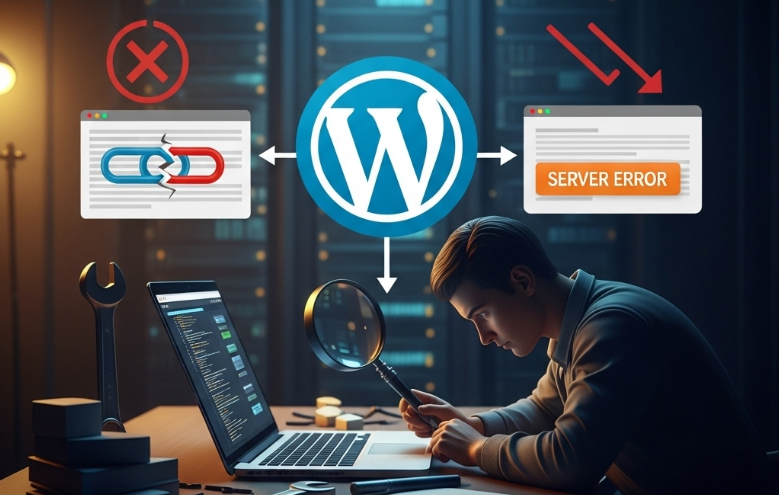

Nobody likes a slow website. Whether you’re running a personal blog, an online store, or a company site, your visitors expect things to load now, not in five seconds.
Most people will click away before your page even loads if it’s too slow. And if that doesn’t sting enough, Google also takes speed seriously when ranking your site.
That’s why your WordPress hosting choice matters more than you might think. It’s not just about finding a place to “park” your site; it’s about choosing a host that helps your website run smoothly, quickly, and reliably.
But here’s where it gets tricky: what makes a WordPress host fast? Is it the hardware? The location of the servers? Maybe some magical tech buzzword like “caching”? Or is it a mix of everything?
In this article, we will break it all down without the jargon overload. You’ll learn what affects WordPress site speed, how to spot a good host from a mediocre one, and what to look for when picking a provider that fits your needs (and your budget).
So whether you’re building your very first website or thinking about switching hosts, you’re in the right place. Let’s dig into what makes WordPress hosting fast, and why it’s worth paying attention to.
Why WordPress Hosting Performance Matters
When building and maintaining a WordPress website, it’s easy to get caught up in design, content, and features.
However, none of that matters if your site doesn’t perform well. Website performance, particularly speed and reliability, directly impacts every critical aspect of your online presence, from user satisfaction to revenue generation.
Here’s why optimizing WordPress hosting performance should be a top priority:
1. User Experience Is Everything
Today’s internet users are highly impatient. Research shows that a delay of even one second in page load time can cause an 11% drop in page views and a 16% decrease in customer satisfaction.
Visitors expect your site to load almost instantly. If it doesn’t, they’re likely to abandon it and turn to a faster competitor.
A high-performing WordPress host ensures that your website responds quickly to user requests, providing a smooth experience whether they’re browsing your homepage or completing a purchase.
2. Speed Influences Search Engine Rankings
Google has made it clear: page speed is a ranking factor. This means that faster websites are more likely to appear higher in search results.
If your WordPress site takes too long to load, not only will users bounce, but search engines might push your content further down the page, reducing visibility and organic traffic.
Choosing a hosting provider that delivers consistent speed and uptime gives your website a competitive edge in SEO, helping you attract more visitors without spending extra on ads.
3. Conversion Rates Drop With Every Millisecond
Your website’s performance directly affects your bottom line. Studies indicate that just a 100-millisecond delay in load time can cause a 7% reduction in conversion rates.
Whether you’re running an eCommerce store, offering services, or capturing leads, slow pages can cost you real money.
A high-performance WordPress host minimizes delays, so your visitors can complete actions, like signing up, purchasing, or subscribing, without friction.
4. High Bounce Rates Hurt Engagement and Retention
When a site loads slowly, users often don’t stick around to see what it offers. This increases your bounce rate, a metric that tells you how many people leave your site without interacting further.
High bounce rates not only signal poor user experience but also lower your chances of building lasting relationships with your audience.
By ensuring fast load times and smooth navigation, a solid WordPress hosting solution helps keep visitors engaged longer, increasing the likelihood of repeat visits and customer loyalty.
Key Factors That Make a WordPress Host Truly Fast
Achieving exceptional speed on a WordPress site isn’t just about choosing the right theme or optimizing images; it begins with the host.
A fast WordPress host lays the groundwork for performance, scalability, and user experience.
Here’s a look at the key factors that make a WordPress host genuinely fast:
1. SSD-Only Storage
Traditional hard drives (HDDs) use moving parts to read and write data, which slows things down, especially when handling multiple simultaneous requests. SSDs (Solid State Drives), by contrast, store data on flash memory, allowing near-instant data retrieval.
For WordPress sites, this means:
Faster page load times
Quicker database queries
Snappier admin dashboard performance
Why it matters: Every time a user clicks on a link, WordPress fetches content from the database. SSDs ensure that this happens with minimal delay.
2. Advanced Caching Mechanisms
Caching stores a ready-to-serve version of your site, so the server doesn’t need to regenerate each page for every visitor. A fast host uses:
Page caching (serves static HTML versions of pages)
Object caching (stores database queries)
Opcode caching (stores compiled PHP code in memory)
Some hosts use LiteSpeed Cache, NGINX FastCGI Cache, or their proprietary systems.
Why it matters: With caching, your site loads in milliseconds instead of seconds. It reduces load on your server and improves scalability under traffic surges.
3. Optimized Software Stack
The server software stack is the foundation of your WordPress site’s performance. Fast hosts typically run:
Latest PHP versions (PHP 8.1 or higher) – faster execution and improved memory handling
LiteSpeed or NGINX, high-performance web servers, are better than traditional Apache
MariaDB or tuned MySQL – faster, more efficient databases for WordPress queries
Why it matters: Outdated server software slows down every aspect of your site. Modern, WordPress-optimized stacks can cut response times by over 50%.
4. Built-in CDN Integration
A Content Delivery Network (CDN) caches static assets (images, CSS, JavaScript) across a global network of servers.
Instead of loading your site from a single location, a CDN serves it from the node closest to the visitor.
Why it matters: A user in Nairobi or London accessing a site hosted in New York will experience lag. A CDN shortens this distance, boosting performance worldwide.
5. Sufficient Resource Allocation
Shared hosting often means your site is fighting for resources with dozens of others. Quality WordPress hosts allocate more:
RAM – important for caching and PHP processes
CPU cores – critical for processing PHP scripts and database queries
I/O throughput – affects file read/write speeds
Why it matters: When your site suddenly gets more traffic, under-resourced plans will crash or slow down. Proper allocation ensures consistency.
6. Modern Protocols: HTTP/3 & Brotli
Fast hosts stay current with web technologies like:
HTTP/3 – improves connection speed and reliability, especially on mobile
Brotli compression – better than GZIP at shrinking file sizes
Why it matters: These protocols reduce page load time, lower bandwidth use, and improve performance on slower networks.
7. Object Caching Tools (e.g., Redis or Memcached)
WordPress generates many repeated queries. Object caching tools store these in memory to serve repeat visitors quickly.
Why it matters: Reduces the load on your database and speeds up complex sites like WooCommerce stores, forums, or large blogs.
8. Image Optimization Features
Images often make up 60–70% of a page’s weight. Some hosts offer automatic image optimization, including:
Compression without loss of quality
Responsive sizing
Lazy loading for below-the-fold content
Why it matters: Optimized images drastically reduce page load time, especially on mobile devices and slower networks.
9. Geographically Strategic Data Centers
The closer the data center is to your audience, the faster the response. Many top-tier hosts allow you to choose between multiple regions, like US East, Europe, Asia, or Africa.
Why it matters: Physical distance increases latency. A Kenyan business targeting local customers should host its site in a nearby region for the best speed.
10. Stable Infrastructure and Uptime
Speed isn’t just about milliseconds; it’s also about reliability. The best hosts maintain 99.9 %+ uptime with:
Load-balanced servers
Proactive monitoring
Daily backups and fast recovery
Why it matters: Downtime or slow performance due to overloaded servers will cost you customers. Fast hosts invest heavily in infrastructure to prevent this.
How to Test WordPress Hosting Performance
Before investing in a WordPress hosting provider, it’s crucial to evaluate its real-world performance.
Marketing claims can be misleading, so conducting your testing (or analyzing third-party benchmarks) helps ensure you get the speed and reliability your site needs.
Here’s a breakdown of the most effective tools and how to use them:
i. GTmetrix or Pingdom – Front-End Performance Testing

Both GTmetrix and Pingdom are widely used to measure how quickly your site loads from different locations.
What to Look For:
▫️Fully Loaded Time: Total time to render all elements.
▫️Time to First Byte (TTFB): Indicates how fast the server responds.
▫️Largest Contentful Paint (LCP): A Core Web Vitals metric that affects user experience.
▫️Performance Score: Based on various front-end optimization metrics.
Pro Tip: Test multiple pages (homepage, blog post, product page) from different geographic locations to get a full picture.
ii. WebPageTest – Advanced Load Behavior Analysis

WebPageTest is a more technical tool that shows a granular view of how your site loads.
What to Analyze:
▪️Waterfall Charts: Identify which files load slowly and cause delays.
▪️First Byte and Start Render Times: Reveal back-end and DNS performance.
▪️Repeat View Metrics: Useful for evaluating caching effectiveness.
Unique Benefit: You can simulate slower internet connections or devices to see how your site performs under real-world constraints.
iii. Load Impact (now k6.io) – Traffic Surge & Scalability Testing
K6 (formerly Load Impact) is designed to test how a hosting environment handles multiple users simultaneously.
Why It’s Important:
Most shared hosting plans work fine under light traffic but fail under spikes.
K6 lets you simulate hundreds or thousands of virtual users accessing your site at once.
Key Metrics to Watch:
▫️Response Time Consistency: Look for increased latency as load increases.
▫️Failed Requests: These often signal server overload.
▫️Throughput and Requests per Second (RPS): Indicate efficiency under pressure.
iv. UptimeRobot or BetterStack – Long-Term Uptime and Stability Monitoring

Speed means little if your site isn’t reliably online. UptimeRobot and BetterStack help you monitor your site over days or weeks.
How It Works:
These tools ping your website at regular intervals (every minute, 5 minutes, etc.).
They track downtime events, alert you when your site goes offline, and log response times.
What to Aim For:
Uptime of 99.9% or higher. Minimal response time fluctuation.
Bonus Tip: Pair uptime tracking with alerting tools like StatusCake or Jetpack Monitor for real-time notifications.
Best Fast WordPress Hosting Providers of 2025
If you’re serious about building a high-performance WordPress site in 2025, choosing the right host is crucial.
Fast load times improve user experience, reduce bounce rates, and boost SEO rankings.
Below are the top WordPress hosting providers that combine speed, reliability, and optimization, whether you’re a blogger, business owner, or developer.
1. Olitt

Olitt has rapidly emerged as a top contender in the WordPress hosting space, especially for small businesses and creators looking for fast performance without a hefty price tag.
Designed with beginners and lean startups in mind, Olitt offers a clean, intuitive experience paired with excellent speed and uptime.
Why It Stands Out:
✔Built-in CDN for faster content delivery globally
✔Free domain and SSL included in all plans
✔1-click WordPress setup — no technical experience needed
✔Optimized server performance tuned for WordPress
✔Affordable pricing makes it ideal for new or growing businesses
If you’re based in Africa or targeting a global audience on a budget, Olitt offers an unmatched combination of value and performance.
2. Truehost

Truehost offers SSD-powered WordPress hosting with reliable speed and budget-friendly pricing.
Perfect for local businesses or individuals launching their first website, it includes free SSL, automated installs, and responsive customer support.
Highlights:
✔SSD storage and solid uptime.
✔Affordable plans with essential WordPress features
✔Great local support in Kenya and East Africa
While it lacks the polish of more premium services, Truehost remains a smart, practical choice for new WordPress users.
3. WP Engine

WP Engine is a managed WordPress hosting provider built for speed and scalability.
Using EverCache and an integrated global CDN, it delivers lightning-fast load times and ironclad reliability.
Perfect for agencies, enterprises, and developers who want powerful automation without manual upkeep.
Top Features:
✔EverCache™ + CDN combo for superior performance
✔Daily backups and advanced security protocols
✔Staging environments and developer tools
Expect top-tier support and premium pricing.
4. SiteGround

Known for its customer support and stable performance, SiteGround delivers a solid WordPress experience through its Ultrafast PHP, NGINX servers, and SG Optimizer plugin, a toolset designed to fine-tune everything from caching to image compression.
Standout Features:
▪️Powerful built-in speed tools
▪️Free daily backups and SSL
▪️Excellent support and site migration tools
Great for businesses that need speed and hands-on support without jumping into full cloud setups.
5. Cloudways

Cloudways lets you run WordPress on cloud giants like DigitalOcean, AWS, and Google Cloud, without having to manage infrastructure directly.
You get server-level control, optimized stack (Nginx, Apache, Redis, Varnish), and staging environments.
Why Devs Love It:
▪️Launch on your preferred cloud
▪️Provider Pay-as-you-go pricing
▪️Advanced performance tools and monitoring
Best for experienced users who want flexibility, speed, and scale.
Conclusion
Speed isn’t just a luxury, it’s a necessity. From boosting SEO rankings to improving user engagement and reducing bounce rates, hosting performance impacts every aspect of your WordPress site.
However, raw speed is only part of the equation. The best hosts combine performance with:
⚫Reliability (uptime and consistent response times)
⚫Security (firewalls, malware scans, SSLs)
⚫Scalability (resources that grow with your site)
⚫WordPress-specific tools (auto-updates, staging, plugin support)
Before You Decide:
☑Test the host using real-world tools (as outlined above)
☑Read unbiased reviews and performance benchmarks
☑Evaluate their support responsiveness and technical documentation
Ultimately, don’t settle for cheap hosting if it sacrifices performance.
Choose a WordPress host that prioritizes speed, stability, and scalability, and your visitors, your SEO rankings, and your bottom line will thank you.