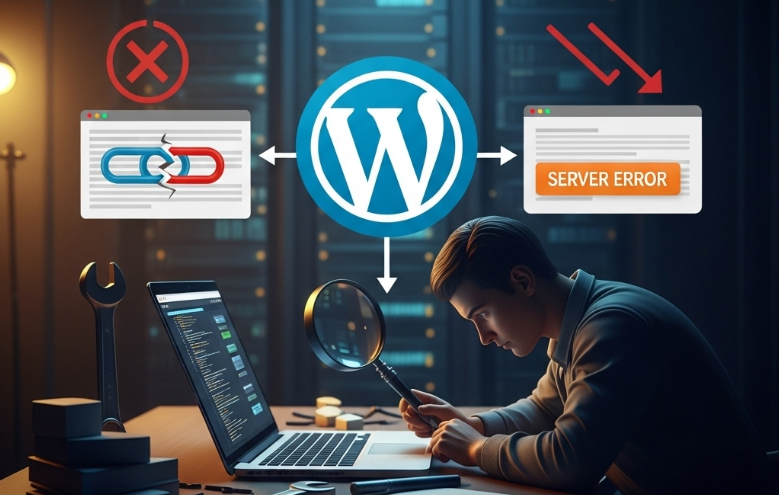

Hosting a WordPress site is great for anyone, but when it comes to dem errors, it’s exciting for no one.
Well, since it can be a pretty good digital home to your online pursuits, we better keep it error-free.
But why so?

Nothing kills the vibe like when you happen to run into WordPress hosting errors and they end up making your site crash, slow down, or just act weird.
They can frustrate your visitors, hurt your SEO, and even cost you big-time sales.
If you’ve been there, you know exactly what am talking about.
Don’t you worry, though!
We have the magic wand just for that. P.S., you don’t need to be a tech genius to hack it.
So, let’s go through 15 common WordPress hosting errors, explain why they happen, and show you step-by-step ways to fix them.
Let’s get your site back on track!
Understanding WordPress Hosting Errors
Before we jump into the fixes, let’s get a copy of what WordPress hosting errors are.
We are talking issues caused by your hosting environment, or rather the server where your WordPress site lives.
Unlike plugin or theme problems, WordPress hosting errors stem from server misconfigurations, resource limits, or issues with your hosting provider.
They can show up as error messages, slow loading times, or a completely inaccessible site.
Why do these errors happen?
Common culprits include outdated server software, overloaded servers, incorrect settings in files like .htaccess, or even a hosting plan that’s too small for your site’s needs.
These errors aren’t just annoying—they can tank your site’s performance, scare off visitors, and hurt your search engine rankings.
The good news?
When you understand and fix WordPress hosting errors, you can keep your site running smoothly and your audience happy.
It’s that simple.
15 Common WordPress Hosting Errors and Their Fixes
Without any further ado, let’s go over 15 of the most frequently occurring errors all WordPress users would face and suggest some straightforward ways to resolve these issues.
I am positive these tips will make you an expert troubleshooter no matter which hosting provider you are using.
1. 500 Internal Server Error
What is it? The 500 Internal Server Error is like your site saying, “Something’s wrong, but I’m not sure what!” It’s a generic error that often points to a server issue.
Why it happens: Common causes include a corrupted .htaccess file, a plugin conflict, or your site using too much PHP memory.
Symptoms: Your site shows a blank page or a message like “500 Internal Server Error.”
How to fix it:
a) Check your .htaccess file: Log in to your hosting control panel (e.g., Olitt’s file manager) or use FTP. Rename .htaccess to something like .htaccess_old. Refresh your site—if it works, generate a new .htaccess via Settings > Permalinks in WordPress.

b) Increase PHP memory: Add define(‘WP_MEMORY_LIMIT’, ‘256M’); to your wp-config.php file.
c) Disable plugins: Go to your hosting file manager or WordPress dashboard, deactivate all plugins, and reactivate them one by one to find the culprit.
d) Contact your host: If the error persists, reach out to your provider (like Olitt’s support team) for server logs or assistance.
Pro Tip: Enable WP_DEBUG in wp-config.php to get more details about the error.
2. 502 Bad Gateway
What is it? A 502 Bad Gateway error means your server isn’t communicating properly with another server it relies on, like a proxy.
Why it happens: This could be due to an overloaded server, a faulty proxy, or incorrect timeout settings.
Symptoms: You see a “502 Bad Gateway” message.
How to fix it:
a) Refresh the page: Sometimes, it’s a temporary glitch.
b) Clear your cache: Use a caching plugin like W3 Total Cache or clear your browser cache.
c) Check with your host: Contact your provider (e.g., Olitt) to check for server issues or misconfigured proxies.
d) Adjust timeout settings: If you have server access, increase the timeout limit in your server configuration (e.g., Nginx or Apache).
Pro Tip: If you’re on a shared hosting plan, upgrading to a higher-tier plan might resolve this.
3. 503 Service Unavailable
What is it? The 503 Service Unavailable error means your server is temporarily down, often due to maintenance or overload.
Why it happens: High traffic, DDoS attacks, or limited hosting resources can trigger this.
Symptoms: Your site displays “503 Service Unavailable.”
How to fix it:
a) Check hosting status: Visit your host’s status page to see if maintenance is scheduled.
b) Enable caching: Use a plugin like WP Rocket to reduce server load.
c) Upgrade your plan: If traffic spikes are common, consider a plan with more resources.
d) Contact support: Your host can confirm if it’s a server-wide issue or specific to your site.
Pro Tip: Set up a monitoring tool like UptimeRobot to get alerts when your site goes down.
4. 504 Gateway Timeout
What is it? A 504 Gateway Timeout means your server took too long to respond to a request.
Why it happens: Slow server response, heavy scripts, or database issues are common causes.
Symptoms: You see “504 Gateway Timeout.”

How to fix it:
a) Optimize your database: Use a plugin like WP-Optimize to clean up your database.
b) Reduce heavy plugins: Deactivate resource-intensive plugins and test site performance.
c) Contact your host: Providers like Olitt can check server response times and suggest solutions.
d) Increase timeout settings: If you have server access, adjust the timeout in your server configuration.
Pro Tip: A Content Delivery Network (CDN) like Cloudflare can speed up response times.
5. Error Establishing Database Connection
What is it? This error means WordPress can’t connect to your database, so your site can’t load.
Why it happens: Incorrect wp-config.php settings, database corruption, or server downtime.
Symptoms: “Error Establishing a Database Connection” message.
How to fix it:
a) Check wp-config.php: Access this file via your hosting file manager (e.g., Olitt’s). Verify the database name, user, password, and host.
b) Repair the database: Add define(‘WP_ALLOW_REPAIR’, true); to wp-config.php and visit yoursite.com/wp-admin/maint/repair.php.
c) Contact your host: If the database server is down, your provider can help.
Pro Tip: Always back up your database before making changes.
6. White Screen of Death (WSOD)
What is it? The White Screen of Death is when your site shows a blank white page—no content, no error message.
Why it happens: PHP errors, memory exhaustion, or plugin/theme conflicts.
Symptoms: A completely blank site or admin panel.
How to fix it:
a) Enable debugging: Add define(‘WP_DEBUG’, true); to wp-config.php to see error details.
b) Increase memory limit: Add define(‘WP_MEMORY_LIMIT’, ‘256M’); to wp-config.php.
c) Deactivate plugins/themes: Rename the plugins or themes folder via FTP or your host’s file manager (e.g., Olitt’s) to disable them, then reactivate one by one.
d) Check server logs: Ask your host for error logs to pinpoint the issue.
Pro Tip: Switch to a default theme like Twenty Twenty-Five to rule out theme issues.
7. 403 Forbidden Error
What is it? A 403 Forbidden error means the server is denying access to a resource.
Why it happens: Incorrect file permissions, .htaccess issues, or security plugins.
Symptoms: “403 Forbidden” message.
How to fix it:
a) Check file permissions: Use your hosting file manager to ensure files are set to 644 and folders to 755.

b) Review .htaccess: Rename it to reset, then regenerate via WordPress permalinks.
c) Adjust security plugins: Temporarily disable plugins like Wordfence to test.
Pro Tip: Contact your host (e.g., Olitt) if you suspect server-side security rules are causing this.
8. 404 Not Found (Server-Side)
What is it? A server-side 404 error means the server can’t find requested resources, affecting multiple pages.

Why it happens: Incorrect permalinks, server misconfiguration, or missing files.
Symptoms: “404 Not Found” on several pages.
How to fix it:
a) Reset permalinks: Go to Settings > Permalinks in WordPress and save without changes.
b) Check .htaccess: Ensure it’s not corrupted; regenerate if needed.
c) Verify files: Use your host’s file manager to confirm key WordPress files exist.
Pro Tip: If only specific pages show 404s, it’s likely a content issue, not a hosting error.
9. 429 Too Many Requests
What is it? This error occurs when your site sends too many requests to the server.
Why it happens: Bots, heavy plugins, or hosting restrictions.
Symptoms: “429 Too Many Requests” message.
How to fix it:
a) Block bad bots: Use a security plugin or ask your host to block malicious IPs.
b) Optimize plugins: Deactivate resource-heavy plugins.
c) Upgrade hosting: A provider like Olitt may offer plans with higher request limits.
Pro Tip: Use a CDN to offload requests and reduce server strain.
10. PHP Memory Limit Exhausted
What is it? This error means your site has used up its allocated PHP memory.
Why it happens: Resource-heavy plugins/themes or low memory limits.
Symptoms: “Fatal error: Allowed memory size exhausted.”
How to fix it:
a) Increase memory limit: Add define(‘WP_MEMORY_LIMIT’, ‘256M’); to wp-config.php.
b) Edit php.ini: If you have access, set memory_limit = 256M.
c) Contact your host: Providers like Olitt can increase memory for you.
Pro Tip: Monitor plugin usage with tools like Query Monitor to find memory hogs.
11. Maximum Execution Time Exceeded
What is it? A PHP script takes too long to run, exceeding the server’s time limit.
Why it happens: Long-running scripts or low timeout settings.
Symptoms: “Maximum execution time exceeded” error.
How to fix it:
a) Increase execution time: Add set_time_limit(300); to wp-config.php or update max_execution_time in php.ini.
b) Optimize scripts: Deactivate heavy plugins or scripts.
c) Contact your host: Ask for server-side adjustments.
Pro Tip: Optimize your site’s code to reduce execution time.
12. SSL/HTTPS Connection Issues
What is it? Problems with your site’s secure connection, which is often related to SSL certificates.
Why it happens: Expired SSL, mixed content, or misconfigured HTTPS.

Symptoms: Browser warnings like “Not Secure” or inaccessible pages.
How to fix it:
a) Renew SSL: Check your hosting dashboard to renew or install a free Let’s Encrypt SSL.
b) Force HTTPS: Add define(‘FORCE_SSL_ADMIN’, true); to wp-config.php.
c) Fix mixed content: Use a plugin like Really Simple SSL to correct HTTP/HTTPS mismatches.
Pro Tip: Test your SSL setup with tools like SSL Labs.
13. File Upload Size Limit Error
What is it? You can’t upload large files due to server restrictions.
Why it happens: Low upload_max_filesize or post_max_size in PHP settings.
Symptoms: “File exceeds maximum upload size” message.
How to fix it:
a) Edit php.ini: Set upload_max_filesize = 64M and post_max_size = 64M.
b) Use .htaccess: Add php_value upload_max_filesize 64M if allowed.
c) Contact your host: Providers like Olitt can adjust these limits.
Pro Tip: Compress media files before uploading to save space.
14. Server Downtime or Unreachable
What is it? Your site is offline because the server is down or unreachable.
Why it happens: Scheduled maintenance, DDoS attacks, or provider issues.
Symptoms: Site inaccessible or extremely slow.
How to fix it:
a) Check host status: Visit your provider’s status page (e.g., Olitt’s).
b) Set up monitoring: Use tools like UptimeRobot to track downtime.
c) Contact support: Ask your host for details and resolution timelines.
Pro Tip: Choose a host with a strong uptime guarantee (e.g., 99.9%).
15. Cron Job Failures
What is it? WordPress’s scheduled tasks (e.g., backups, updates) aren’t running.
Why it happens: Misconfigured WP-Cron or server restrictions.
Symptoms: Missed updates, scheduled posts, or backups.
How to fix it:
a) Disable WP-Cron: Add define(‘DISABLE_WP_CRON’, true); to wp-config.php.

b) Set up server-side cron: Ask your host to configure a cron job (e.g., wget -q -O – http://yoursite.com/wp-cron.php every 15 minutes).
c) Check plugins: Ensure backup or scheduling plugins are configured correctly.
Pro Tip: Use a plugin like WP Control to monitor cron events.
Preventative Measures for WordPress Hosting Errors
Fixing WordPress hosting errors is great, but preventing them is even better.
Here’s how to keep your site running smoothly:
Choose a reliable host: Providers like Olitt, SiteGround, or WP Engine offer WordPress-optimized hosting with strong support and uptime. Look for plans with ample resources for your traffic.
Keep everything updated: Regularly update WordPress core, themes, and plugins to avoid compatibility issues that lead to WordPress hosting errors.
Monitor resources: Use your hosting dashboard to track CPU, memory, and bandwidth usage. Upgrade your plan if you’re hitting limits.
Back up regularly: Use plugins like UpdraftPlus to schedule automatic backups, so you’re covered if an error wipes out data.
Secure your site: Install security plugins like Wordfence to prevent attacks that could cause server errors.
Optimize performance: Use caching plugins (e.g., WP Rocket), a CDN (e.g., Cloudflare), and database optimization tools to reduce server load.
By staying proactive, you can minimize WordPress hosting errors and keep your site fast, secure, and reliable.
Tools and Resources for Troubleshooting
When WordPress hosting errors strike, the right tools can save the day.
Here are some go-to resources:
Diagnostic Tools: Plugins like Query Monitor or WP Debugging help identify WordPress hosting errors by showing performance bottlenecks or error logs.
Hosting Support: Providers like Olitt offer 24/7 support to help with server-side issues. Check your host’s knowledge base or live chat for quick fixes.
Community Resources: Visit the WordPress.org forums, Stack Overflow, or your host’s community for advice from other users.
Server Logs: Access error logs via your hosting control panel to pinpoint the root cause of WordPress hosting errors.
These tools and resources make troubleshooting faster and less stressful, so you can focus on running your site.
Conclusion
WordPress hosting errors can feel like a nightmare, but they’re not the end of the world.
We’ve covered 15 common issues and their fixes to help you get your site back online.
Whether you’re tweaking your .htaccess file, optimizing your database, or reaching out to your host (like Olitt), these solutions are designed to be approachable for beginners and useful for pros.
Take a moment to audit your hosting setup, update your software, and implement the preventative tips we shared.
Your site—and your visitors—will thank you!
Got a tricky WordPress hosting error you’ve faced? Share your story in the comments, and let’s keep the conversation going!