
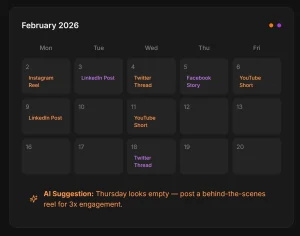

Keeping up with the demand for fresh, high-quality content can feel overwhelming. Whether you run a personal blog, manage a business website, or create client content, staying consistent is tough. Avoiding burnout makes it even harder. That’s where AI helps.
WordPress users are increasingly turning to AI-powered tools to make the content creation process faster, easier, and more efficient. These tools aren’t just about saving time.
They can help you brainstorm ideas, write engaging posts, fine-tune your SEO, and maintain a consistent tone across your site.
In this article, we’re diving into 9 powerful AI tools and smart strategies you can use right inside WordPress to take your content game to the next level. Whether you’re just starting or looking to scale your content efforts, these tools can help you work smarter, not harder.
Let’s get into it.
Why Use AI for Content Creation in WordPress?
Artificial Intelligence (AI) is transforming the way content is created, managed, and optimized, especially for WordPress users.
Making use of advanced technologies like natural language processing (NLP) and machine learning, AI tools are capable of generating high-quality, relevant, and engaging content with remarkable efficiency. Here’s why integrating AI into your WordPress content strategy is a game-changer:
1. Unmatched Speed and Efficiency
AI-powered tools can generate content ideas, detailed outlines, and first drafts in a matter of seconds.
What traditionally took hours of brainstorming and writing can now be accomplished in minutes, freeing up valuable time for strategy and creative refinement.
2. Consistent Quality and Tone
Maintaining a unified brand voice across blog posts, landing pages, and product descriptions can be challenging, especially when multiple writers are involved.
AI helps standardize tone, grammar, and structure, ensuring that all your content feels cohesive and professionally written.
3. Built-In SEO Optimization
Many AI content tools are equipped with SEO capabilities, helping you craft content that ranks well in search engines.
From keyword integration to readability improvements, AI can optimize your text in real-time, boosting your visibility and organic traffic.
4. Cost-Effective Content Production
Hiring freelancers or agencies to create content can be expensive and time-consuming.
With AI, you can scale your content efforts without significantly increasing costs.
It’s a budget-friendly alternative that still delivers impressive results.
5. Boosted Productivity Through Automation
AI isn’t just for writing blog posts, it can also handle repetitive, time-consuming tasks like generating meta descriptions, product descriptions, social media captions, and more. This automation allows you to focus on high-level strategy while the AI takes care of the details.
Understanding What AI Content Generators Can (and Can’t) Do
Before exploring specific tools, it’s important to grasp the true scope of what AI content generators bring to the table and where they still fall short.
Knowing their strengths and limitations can help you use them more strategically.
What AI Can Do Well:
a. Generate Written Content at Scale
AI can create a wide range of content, including blog posts, website copy, product descriptions, social media updates, email templates, and more, helping teams scale their output without proportionally increasing time or effort.
b. Kickstart the Creative Process
Stuck staring at a blank page? AI can offer prompts, outlines, or even full drafts to break through creative blocks and get the words flowing.
c. Accelerate Production Timelines
By automating the drafting stage, AI significantly cuts down the time needed to move from concept to publishable content.
d. Repurpose and Reformat Content
Transform an existing blog post into a LinkedIn update, a podcast script, or a newsletter, AI makes content adaptation faster and easier.
e. Support SEO Efforts
From generating keyword-rich headlines and meta descriptions to suggesting relevant keywords, AI can help optimize content for search visibility.
f. Translate Across Languages
AI-powered tools can localize your content by translating it into multiple languages, helping you reach broader, global audiences.
g. Summarize Lengthy Content
Turn long reports, articles, or transcripts into concise summaries to make them more digestible and reader-friendly.
h. Spark New Ideas
AI can brainstorm content topics, angles, and even campaign themes, offering a wellspring of inspiration for your editorial calendar.
What AI Still Can’t Fully Replace:
i. Genuine Expertise and Original Insight
AI lacks lived experience, deep industry knowledge, and the ability to generate truly original ideas or nuanced analysis.
ii. Brand Voice, Emotion, and Subtlety
While it can mimic tone to a degree, AI struggles to consistently capture a unique brand personality or convey complex emotions and subtext.
iii. Reliable Accuracy Without Oversight
AI may confidently produce content that sounds factual but contains errors or outdated information. Human review is critical for accuracy and credibility.
iv. Building Real Human Connection
AI can assist with engagement, but authentic storytelling and relationship-building, especially over time, still require a human touch.
Top 9 AI Tools & Strategies for Content Creation in WordPress
AI tools are redefining how content is created, optimized, and published in WordPress.
Whether you’re managing a personal blog or scaling an editorial team, these AI solutions can simplify your workflow, boost SEO, and help maintain content consistency across platforms.
1. ChatGPT by OpenAI (via Plugins or API)

Use Case: Versatile content generation, from articles and FAQs to product descriptions and outlines.
How It Works:
Integrate ChatGPT into WordPress using plugins like AI Engine or WP ChatGPT, or connect via API for more custom workflows.
You can generate content directly in the block editor, based on your prompts.
Strategy Tip:
Craft system prompts to define tone, word count, or brand style. Example: “Write a 300-word blog intro in a witty, conversational tone.”
Pros:
Offers extensive customization through prompt engineering
Supports diverse content formats and use cases
Easily integrates with various plugins
Cost-effective through API or plugin-based pricing plans
Cons:
Output quality depends heavily on the user’s prompting skills
Requires human editing to ensure brand consistency
May occasionally produce outdated or inaccurate information
2. Jasper AI Integration

Use Case: High-quality, conversion-driven content for marketing teams and eCommerce.
How It Works:
Jasper offers direct WordPress publishing and a wide range of pre-built content templates (e.g., blog posts, product pages, ad copy).
It’s especially useful for content marketers who need to scale without sacrificing tone.
Strategy Tip:
Use the “One-Shot Blog Post” to generate first drafts, then adjust CTAs, formatting, and voice in WordPress for consistency.
Pros:
Customized for marketers with powerful, persuasive writing features
Exceptional control over tone and creative expression
Easy integration with WordPress
Time-saving templates simplify the content creation process
Cons:
Relatively high subscription cost
Some templates may come across as repetitive or generic
Personalization often requires manual adjustments
3. Surfer SEO + AI Writing Tools

Use Case: Writing content optimized for Google search rankings.
How It Works:
Use Surfer’s Content Editor to get real-time SEO insights while writing. Pair with Jasper, KoalaWriter, or other AI tools to generate content that meets on-page SEO requirements.
Strategy Tip:
Start with a Surfer-generated outline, write content with an AI tool, and refine it based on Surfer’s content score and keyword density.
Pros:
Provides real-time SEO feedback
Easily integrates with Jasper and other AI writing tools
Helps identify keyword gaps and optimize content structure
Improves the likelihood of ranking higher on Google
Cons:
Does not generate content independently
Requires integration with a separate AI tool for content creation
It may have a learning curve for those new to SEO
4. KoalaWriter

Use Case: Fast, automated blogging with SEO and WordPress integration.
How It Works:
KoalaWriter is designed for bloggers and niche site owners. It lets you generate posts using GPT-4 + SEO scoring and auto-publish directly into WordPress, including images, metadata, and internal links.
Strategy Tip:
Schedule weekly content batches with Koala’s auto-publishing feature, great for affiliate or niche content sites.
Pros:
Produces SEO-optimized content
Direct integration with WordPress, including metadata support
Compatible with Amazon affiliate product posts
Quick and easy setup with minimal configuration
Cons:
Limited control over creative tone and voice
May require manual formatting adjustments
Less suitable for content types beyond blogs
5. ContentBot AI

Use Case: Full-funnel content, from idea generation to long-form blog posts.
How It Works:
Via its WordPress plugin, ContentBot helps generate everything from blog topics and outlines to intros, CTAs, and full drafts.
Strategy Tip:
Use the “Blog Post Wizard” to simplify content creation and keep a consistent voice across posts.
Pros:
Supports a broad spectrum of content creation needs
Robust tools for ideation and content structuring
Integrated automation features for simplified publishing
Well-suited for collaborative teams with multiple writers
Cons:
Inconsistent quality in long-form content generation
A user interface may feel unintuitive or cumbersome
Certain advanced features require a paid subscription
6. Rank Math AI Assistant

Use Case: On-page SEO and AI-assisted content creation directly within WordPress.
How It Works:
Rank Math is a leading SEO plugin that now features an AI assistant to generate optimized titles, meta descriptions, and headlines based on target keywords.
Strategy Tip:
Use the AI suggestions while creating or editing posts in the Rank Math SEO meta box for better visibility and keyword targeting.
Pros:
Easily integrates with WordPress
Helps align content with SEO best practices
Ideal for optimizing titles and meta descriptions
Eliminates the need to use external tools
Cons:
Limited to generating content mainly for meta fields
Most effective when paired with existing SEO expertise
Not well-suited for in-depth or creative writing tasks
7. Bertha.ai

Use Case: Real-time writing assistant for pages, blogs, and landing copy.
How It Works:
Bertha integrates natively into WordPress, allowing you to generate content inside Gutenberg or Classic Editor.
It’s useful for creative copy, blog intros, product blurbs, and alt text.
Strategy Tip:
Use it during drafting sessions for quick inspiration, especially for shorter copy like service descriptions or landing pages.
Pros:
- Integrates smoothly with WordPress
- Lightweight and user-friendly
- Excellent for short, creative copywriting
- Allows you to work without leaving the editor
Cons:
- Not suited for long-form content
- Limited SEO and formatting capabilities
- The output may feel generic without additional editing
8. WriteSonic (via Zapier or API)

Use Case: Scalable, automated content creation for editorial teams.
How It Works:
While it lacks a native plugin, WriteSonic can be connected via Zapier to automatically generate and post content to WordPress.
It supports blog posts, landing pages, product descriptions, and more.
Strategy Tip:
Set up a Zapier workflow to move AI-generated content into WordPress drafts or schedule it for later publishing.
Pros:
- Scales effectively for high-volume content websites
- Capable of generating and rewriting long-form content
- API access allows for integration into custom workflows
- User-friendly interface ideal for marketers and teams
Cons:
- Lacks a native WordPress plugin
- Automation setup can be complex and time-consuming
- Requires careful human oversight to ensure content quality
9. GrammarlyGO & Quillbot

Use Case: Editing, paraphrasing, and improving AI-generated drafts.
How It Works:
GrammarlyGO provides AI-enhanced editing to improve tone, clarity, and engagement, while Quillbot is excellent for paraphrasing and summarizing. These tools act as a final polish layer before publishing.
Strategy Tip:
Use GrammarlyGO to match tone with your brand and Quillbot to rewrite awkward sections or condense key points.
Pros:
Improves readability and coherence
Ideal for adjusting tone and improving clarity
Works well alongside AI writing tools
User-friendly, especially with browser extensions
Cons:
Does not generate original content
May oversimplify nuanced or complex ideas
Requires manual steps to transfer content between tools and WordPress
Best Practices for Using AI Content Generation in WordPress
Integrating AI content generation into your WordPress strategy can boost productivity and creativity when done thoughtfully. Here are the key best practices to ensure ethical, effective use:
01. Always Involve Human Oversight
AI can generate drafts, but it’s essential to review, edit, and fact-check every piece. Infuse your unique voice and ensure the content meets your standards for accuracy and authenticity.
02. Use AI to Support, Not Replace:
Think of AI as an assistant, not a substitute. It’s a great tool for idea generation and first drafts, but shouldn’t replace human writers or editors.
03. Protect Your Brand Voice:
Ensure that AI-generated content matches your brand’s tone and style. This may require detailed prompts or refining the final output.
04. Prioritize Quality Over Quantity:
Resist the temptation to mass-produce. High-value, engaging content will always outperform a large volume of generic posts.
05. Check for Plagiarism:
While most reliable AI tools aim to produce original content, it’s wise to use plagiarism checkers to confirm originality, especially for published material.
06. Experiment to Find the Right Tools:
AI platforms vary in capabilities. Try different tools to discover which align best with your content creation goals.
07. Stay Informed on AI Developments:
The AI landscape evolves quickly. Keep learning about new features and tools that can improve your workflow and results.
08. Practice Transparency and Ethics:
If AI plays a significant role in your content creation, consider disclosing this to your audience, especially in sensitive or expert-driven content.
Conclusion:
AI presents exciting opportunities for WordPress users to simplify content production, improve SEO, and expand their reach.
When integrated strategically and ethically, AI becomes a powerful partner in your content marketing efforts.
While it doesn’t replace the depth and creativity of human writers, AI can help break through creative blocks, speed up production, and elevate content quality.
Embrace the potential of AI to improve, not replace, your creative process and accelerate your website’s growth.