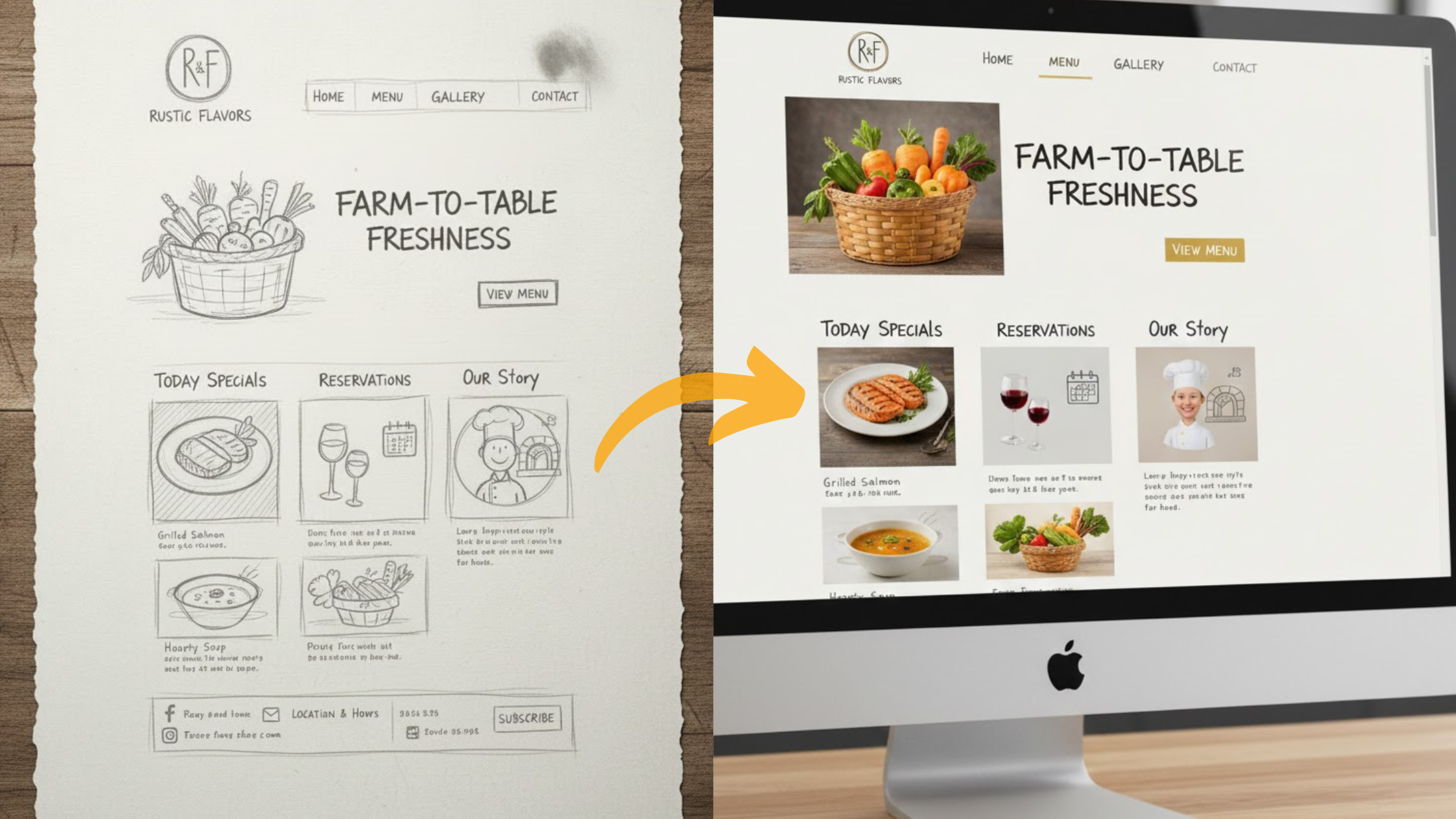

What if you could build a professional website in minutes and not weeks?
You don’t need coding, hiring designers, or any stress.
That’s exactly what an AI website assistant does for you. It works like your digital co-founder, designing pages, writing content, and even optimizing for search, all from a simple prompt.
Instead of struggling with technology or wasting hours figuring out layouts, you just tell it what you want… and it handles the heavy lifting.
In 2025, these AI assistants have become powerful enough that anyone, from solo creators to small business owners and startups, can launch a high-performing website with ease and confidence.
This guide walks you through the best tools worth using and shows you how each one helps you launch faster, look professional, and start attracting visitors immediately.
Why Choose an AI Website Assistant in 2025?
AI is your website’s smart co-pilot. It thinks ahead, learns your style, and takes action without waiting for you to log in. Instead of getting stuck writing content or fixing layouts, you get real results faster and with less effort.
In 2025, AI website assistants do more than build websites; they grow them.
Here’s what makes them great:
- Lightning-fast setup using simple prompts
- Automatic SEO optimization built in from day one
- Designs customised to your brand, no templates that look “cookie-cutter”
- Continuous improvements powered by real-time data and trends
Studies show AI-optimized websites load up to 40% faster and stay updated without you lifting a finger.
Selling products, generating leads, or sharing content becomes effortless with an AI website assistant; it removes the overwhelm, adds clarity, and turns your ideas into a live, growing online business.
Top AI Website Assistants to Try Right Now
Choosing the right AI website assistant can be the difference between launching in minutes and getting stuck in endless customization.
Below is a review of the top tools dominating 2025, complete with pros, cons, and what type of user each tool is best suited for.
1) Olitt AI

Olitt AI builds an entire website from a single prompt. Just say “plumbing business in Chicago” or “online bakery with delivery,” and it generates everything, pages, text, branding, and even payment features.
Pros
- Built-in hosting and free domain
- Local SEO optimization powered by AI
- Ready-to-use e-commerce and invoicing tools
- Fastest setup among all options
Cons
- Limited advanced design control compared to tools like Framer
- Best features are on paid plans
Best For: Entrepreneurs, service businesses, small e-commerce stores
Pricing: Free plan available, paid from $12/month
2) Wix ADI

Wix ADI (Artificial Design Intelligence) asks a few questions and then automatically designs a site based on your style and industry.
Pros
- Highly visual with drag-and-drop editing
- AI writer for blogs and product descriptions
- Excellent templates for any niche
- Free plan available
Cons
- Advanced features can get expensive
- It can feel overwhelming due to too many options
Best For: Creative entrepreneurs, portfolios, personal brands
Pricing: Free, premium from $16/month
3) Hostinger AI Builder

Hostinger AI gives impressive value, full website creation, e-commerce support, and analytics features at the lowest price point.
Pros
- Extremely affordable long-term plans
- AI heatmap predicts user behavior
- Email, SEO, and product listings are automated
Cons
- Templates are simpler than Wix or Squarespace
- Fewer third-party integrations
Best For: Budget users, new e-commerce brands
Pricing: From $2.99/month (4-year plan)
4) Squarespace Blueprint

Squarespace Blueprint uses AI to generate pages with refined, brand-level precision. It’s ideal for users who want rich aesthetics.
Pros
- Beautiful, modern templates
- AI-generated content tailored to tone
- Built-in tools for photography, video, and events
Cons
- Less flexible for complex business tools
- More expensive for full features
Best For: Designers, photographers, consultants
Pricing: From $16/month
5) 10Web AI
10Web uses AI to build full WordPress sites or clone any existing site with a single link.
Pros
- Automates WordPress setup from scratch
- Auto-speed optimization & security scans
- WooCommerce support included
Cons
- You still need basic WordPress knowledge
- Interface is more technical than Wix or Olitt
Best For: WordPress users, agencies
Pricing: From $10/month
6) Dorik AI

Dorik is built for speed. Just enter a prompt, and it generates a full website with pages, blog sections, and SEO-ready copy.
Pros
- No coding or plugins required
- Built-in SEO scanner
- Export to any hosting platform
Cons
- Limited advanced integrations
- The blog features are less robust than WordPress
Best For: Freelancers, landing pages, startups
Pricing: Free plan available, Pro from $18/month
7) Relume AI

Relume builds professional wireframes and full sitemaps that you can export to Figma or Webflow.
Pros
- Massive library of 1,000+ components
- Collaborate with teams in real-time
- Ideal for client work and presentations
Cons
- Doesn’t include hosting or publishing
- Geared towards professionals, not beginners
Best For: Designers, Webflow users, agencies
Pricing: From $29/month
How to Pick Your Perfect AI Website Assistant (Step-by-Step Guide)
Choosing the right AI website assistant is about picking the one that aligns with your goals, budget, and skill level. Here’s how to decide with confidence:
1) Define Your Main Goal
Think about what you want your website to achieve:
| Your Goal | Best Match |
| Sell products or services | Hostinger AI, Olitt AI, 10Web |
| Showcase creative work | Squarespace Blueprint, Wix ADI |
| Launch fast with no tech skills | Olitt AI, Dorik AI |
| Need custom design control | Relume AI, 10Web |
2) Check How Fast It Builds a Site
Use the free plan or trial to enter a simple prompt, like “online fitness coaching website.”
Ask yourself:
- Did it generate usable content?
- Were the images relevant?
- Was the layout polished?
If you need a website live today, choose tools like Olitt AI or Hostinger AI that generate full sites in minutes.
3) Test Mobile Experience
Most of your visitors will view your site on their phones.
Make sure the AI assistant:
- Automatically creates responsive designs
- Let’s you preview the mobile layout
- Maintains fast load times
Squarespace Blueprint and Olitt AI score high here.
4) Evaluate Ease of Editing
Some tools generate sites quickly but make editing difficult. Look for:
- Drag-and-drop editing
- AI text rewriting on the spot
- No need for plugins or coding
Olitt AI and Wix ADI are the easiest for beginners.
5) Consider Built-In Features vs Add-Ons
Do you want everything in one place? Or do you prefer flexibility to add third-party tools?
| Feature | Included Out of the Box | Add-On/Plugin Required |
| Payments | Olitt AI, Hostinger AI | WordPress (via plugins) |
| SEO optimization | Olitt AI, Squarespace | 10Web (uses WordPress SEO tools) |
| Advanced design control | Relume AI | Wix, WordPress |
6) Check Support Quality
When something breaks, you don’t want to wait days for help.
- AI chatbots are good for quick answers
- Live human support is crucial for business-critical websites
- Some platforms offer 24/7 ticketing or live chat
Olitt AI and Hostinger AI are known for responsive human support, not just automated replies.
How to Get the Most Out of Any AI Website Assistant
AI can build your website fast, but what truly sets successful sites apart is how you use the tool. The better you guide it, the better your results.
Follow these steps to make any AI website assistant work like a pro designer, marketer, and developer combined.
1) Start with a Powerful Prompt
AI responds to clarity. The more specific your prompt, the more accurate the result.
Include these in your prompt:
- Industry or niche: e.g., “wedding photography business”
- Website type: landing page, e-commerce store, portfolio, booking site
- Tone of voice: friendly, luxurious, professional, bold
- Target audience: students, corporate clients, small business owners
Example prompt for Olitt AI:
“Create a modern homepage for a fitness coaching business targeting busy professionals. Tone: motivational and trustworthy. Include About, Services, Pricing, and Contact sections.”
2) Customize the AI-Generated Content
AI gives you a solid draft, but it doesn’t know your personality or brand story, that’s where you shine.
- Replace generic phrases with your own voice
- Add real testimonials, pricing, and offers
- Adjust headlines to speak directly to your audience
3) Optimize for Mobile First
Most visitors will view your site on a phone. Even though AI tools like Olitt AI automatically create mobile versions, you should still:
- Check text readability
- Ensure buttons are easy to tap
- Verify images are not cropped awkwardly
- Test page speed on mobile view
4) Secure Your Domain and Privacy Settings
Before going live:
- Choose a strong domain name that reflects your brand
- Enable SSL (https) to build trust
- Review privacy, tracking, and cookie settings, especially if you collect emails or sell products
- On platforms like Olitt, make sure GDPR and data protection settings are enabled correctly
5) Keep Updating with AI Tools
AI assistants help you grow it.
Use them to:
- Generate new blog posts for SEO
- Create landing pages for promotions
- Test different versions of copy with AI suggestions
- Track performance using built-in analytics
Conclusion
AI website assistants make building online fast, affordable, and stress-free. But if you want the best mix of speed, features, and growth potential, Olitt AI stands out.