
Your restaurant’s first impression doesn’t start when guests walk through the door, it starts online.
In fact, about 77% of diners say they visit a restaurant’s website before dining in or ordering take-out/delivery.
That means your website is a very powerful marketing tool.
A well-thought-out restaurant website design can be the difference between a half-empty dining room and a fully booked Friday night.
This guide walks you through how to design a restaurant website that actually converts, not just looks pretty.
We will explore structure, flow, storytelling and key features that make people click Reserve a Table instead of bouncing off to another site.

1) Start With an Engaging Homepage
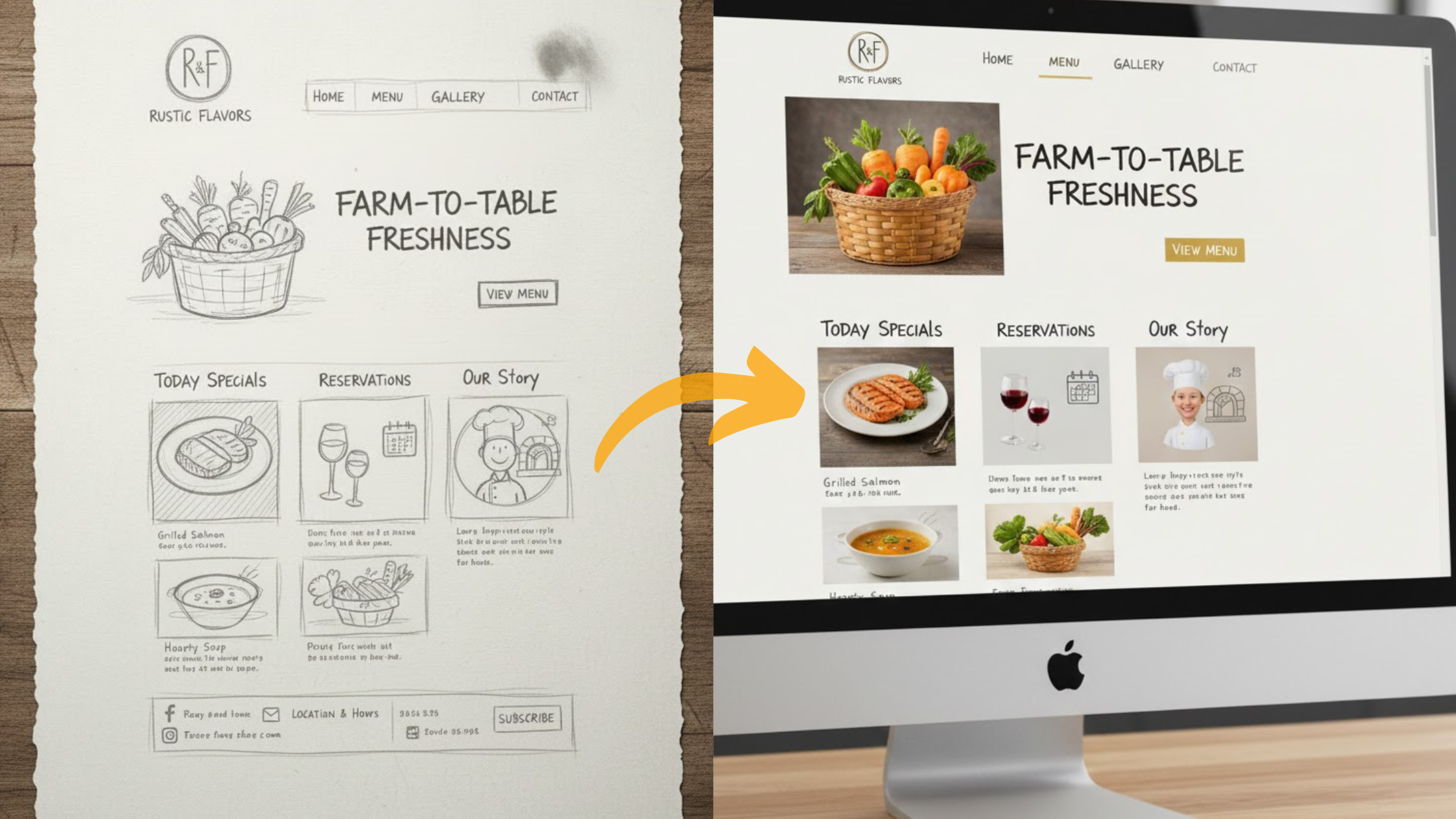
The homepage is what sets the mood for what is to come for your restaurant website.
When someone lands on it, they should instantly feel your vibe. Be it that mood is cozy, sophisticated, or even bold and modern.
Use a large, high-quality hero image that makes visitors hungry the second they see it.
It could be your signature dish, your dining space filled with laughter, or even your chef in action.
Add a short headline that tells them what makes your place special, for example something like Authentic Italian dining in the heart of Nairobi or Farm-fresh comfort food served with a smile.
Also make sure to keep the layout clean. Your homepage should answer three questions right away:
- What kind of restaurant are you?
- Where are you located?
- How can someone book a table or place an order?
And whatever you do, include a clear call to action above the fold. A big Reserve Now or Order Online button shouldn’t be buried, it should be the first thing people see.
2) Make Navigation Effortless
You have probably visited a restaurant website where you had to click through five pages just to find the menu.
Annoying, right? Don’t let that be your site.
Because nothing drives potential diners away faster than confusion. Visitors want quick answers, not a scavenger hunt looking for a simple menu.
Simple, intuitive navigation keeps visitors moving smoothly and happily.
The top bar should include these important details:
- Menu
- About
- Reservations
- Gallery
- Contact
Nothing more, nothing less.
Each of these sections should open instantly, with no lag or messy look.
Consider using a sticky header so the navigation follows users as they scroll, making it easy for them to jump to what they need at any point.
On mobile, make sure your menu icon is easy to spot and tap.
People browse restaurants on their phones all the time, often while hungry or on the go.
When navigation is smooth, visitors subconsciously trust your brand more.
That is what great restaurant website design does, it reduces friction and makes dining with you feel effortless, even before they step in.
3) Design a Menu Page That Converts
Your menu is your biggest selling point. Treat it like gold.
It is the heart of your restaurant website design, the place where curiosity turns into craving.
Many restaurant websites still upload menus as PDFs, that is a mistake.
PDFs are slow, not mobile-friendly, and terrible for SEO.
Instead, design a clean, text-based menu that loads fast and looks good on any device, whether someone is on their phone or laptop.
Break it into clear sections too:
- Starters
- Mains
- Desserts
- Drinks
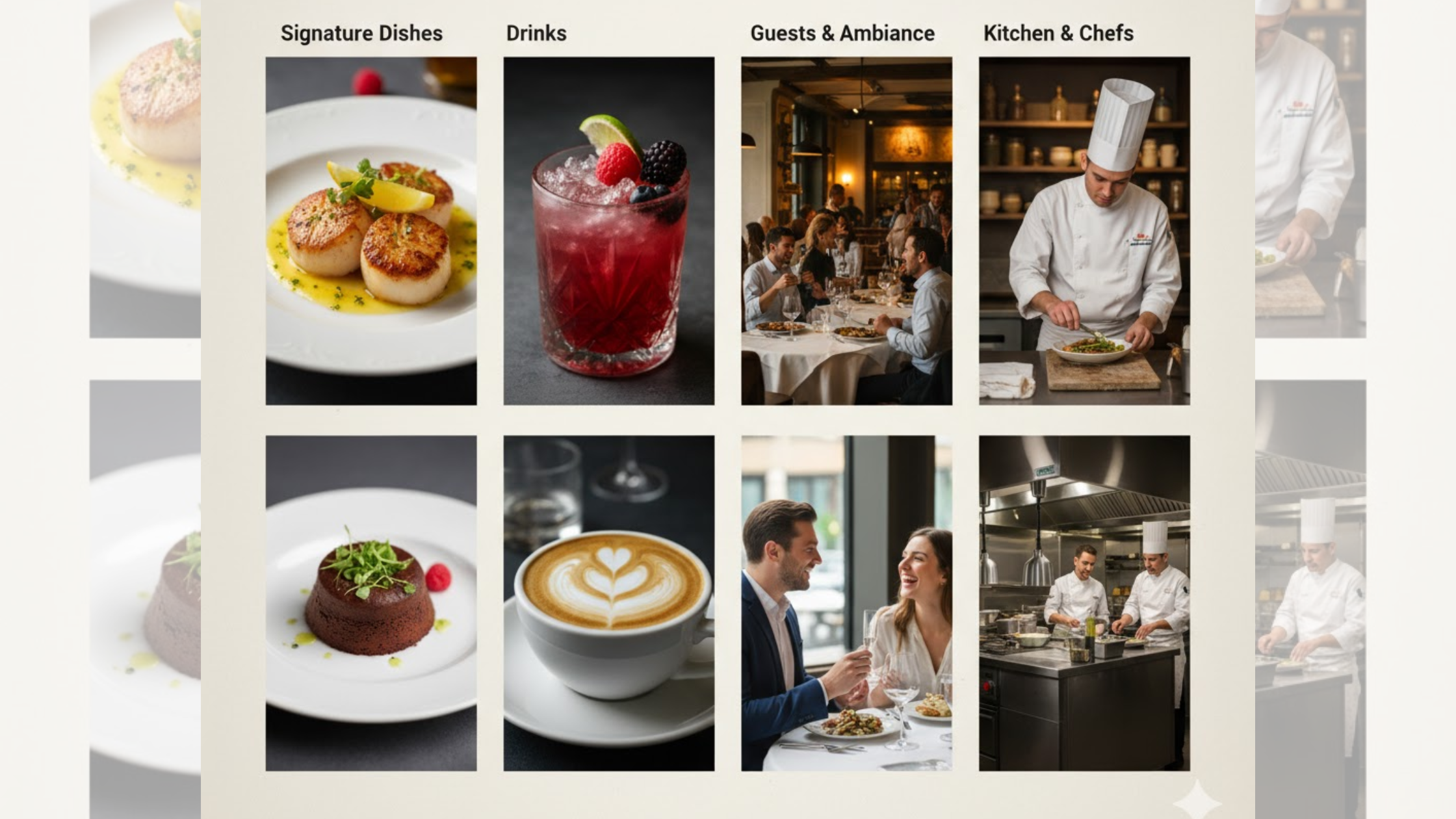
Add food photography sparingly but effectively.
I am talking of one image per section is enough to make mouths water without overwhelming the page or slowing it down.
4) Craft Calls to Action That Actually Work
CTAs are your gentle nudge, the friendly push that turns visitors into diners.
People want direction, they just need it to feel natural and inviting.
A great restaurant website design uses CTAs in all the right places.
For example, right after the hero banner, at the end of each menu section, and again near the footer where visitors are deciding what to do next.
Keep them conversational, something like:
- Book your table, we will save you a seat.
- Feeling hungry? Order your favorite dish now.
Every page should serve a purpose and lead somewhere meaningful.
Even your About page can end with a button that takes visitors straight to a reservation or ordering page.
Avoid vague language like click here, instead, be clear, confident, and action-driven.
The more natural your CTAs feel, the more people will engage, and convert.
Need help building a site that converts? Try Olitt AI Restaurant Builder today.

5) Make Booking and Ordering Seamless
The truth is people are impatient.
If booking or ordering takes more than a few clicks, they are gone, and they are probably not coming back.
A smooth experience can make all the difference between a lost lead and a loyal diner. Integrate a simple reservation system right into your website, no external links or unnecessary steps.
Be it that it is an embedded form or a tool like OpenTable, make sure it is fast, mobile-friendly, and easy to use.
Add a click-to-call button for guests who prefer speaking directly with your staff.
For online orders, design a clean interface with clear food categories, tempting visuals, and an effortless checkout flow.
Avoid pop-ups, messy pages, or confusing redirects that slow things down.
The goal? Let users move from browsing to ordering in under a minute.
Your restaurant website design should make people feel like they are already being served, quick, smooth, and completely satisfying.
6) Prioritize Mobile-First Design
Over 70% of people searching for restaurants do it on mobile devices, and that number keeps growing every year.
That is huge, and it means your restaurant website design can’t just be mobile-friendly, it has to be mobile-first.
Start by designing for smaller screens before scaling up to desktop.
This ensures that the most important features, your menu, booking options, and contact buttons, are immediately accessible and look great on any phone.
Keep buttons large enough for thumbs, use clean and legible fonts, and compress your images so pages load within three seconds or less.
Don’t forget to test every form and button on both iOS and Android devices, because what works smoothly on one might glitch on the other.
When the mobile experience feels fast and effortless, visitors stay longer, bounce rates drop, and conversions naturally rise.
7) Add a Touch of Urgency
Have you ever wondered why limited-time offers work so well? It is simple, really, urgency motivates action.
When people feel like they might miss out, they are more likely to take that next step.
You can use this tactic ethically and effectively within your restaurant website design to encourage faster decisions without being pushy.
Try highlighting limited seats for upcoming events or special nights.
Feature time-bound promotions like Brunch Special, this weekend only! or Happy Hour from 5-7 PM daily.
Small nudges like these create excitement and anticipation.
You can also add subtle prompts such as Book now before we fill up near your reservation or order buttons.
The key is authenticity, urgency works best when it is real and relevant.
You are not forcing anyone’s hand, you are simply helping visitors decide while the opportunity is fresh.
Done right, a little urgency can turn casual browsers into instant diners.
8) Use Social Proof to Build Trust
Nothing sells better than happy customers.
Show reviews, testimonials, and user-generated content wherever possible to give visitors proof that your restaurant delivers exactly what it promises.
Include a section for Google or Yelp reviews, or embed your Instagram feed to show real diners enjoying real meals, the kind of content that instantly builds credibility.
This approach makes your brand feel human, approachable, and authentic.
According to research, 88% of people trust online reviews as much as personal recommendations.
Which means every positive comment, tag, or rating can directly influence someone’s decision to book or order.
Don’t stop at reviews, highlight recognitions, awards, or local features like Voted Best Brunch Spot 2025 or Featured in Nairobi Eats Magazine.
These details give visitors reassurance that others already love what you do.
9) Collect Emails and Build Relationships

A one-time diner is nice. A loyal one is better, and email marketing is how you turn that first visit into many more.
Your restaurant website design should include a simple, eye-catching email sign-up form with a clear reason to join.
Offer something of value, like Join our list for 10% off your next visit or Be the first to hear about new dishes and special events.
These small incentives encourage visitors to stay connected.
Once you have built that list, nurture it thoughtfully.
Send updates about seasonal menus, upcoming events, exclusive offers, or even behind-the-scenes stories from your kitchen.
Personalized emails make guests feel valued and part of your restaurant’s community.
An email list also gives you a direct line to your audience, no algorithms, no distractions.
It is another powerful conversion channel that complements your restaurant website design and keeps your brand top of mind long after they have dined with you.
10) Focus on Speed, Security, and SEO
You could have the most stunning website ever, but if it is slow, unsecured, or invisible on search engines, it won’t matter.
Performance and trust go hand in hand, and they are both vital to successful restaurant website design.
So, what exactly do you need to focus on?
Speed
Compress your images, minimize unnecessary scripts, and invest in reliable hosting.
Even a one-second delay can reduce conversions by up to 7%, which means every millisecond counts.
Fast-loading pages keep visitors engaged and prevent them from abandoning your site before they even see your menu.
Security
Always use HTTPS and make sure your SSL certificate is active and up to date.
Visitors notice when a site isn’t secure, and that small warning can instantly kill trust.
SEO
Optimize every page with relevant keywords like restaurant website design, best dining in Kansas, or order food online at Bets Eats.
SEO is how new customers find you, explore your menu, and book a table before ever stepping inside.
11) Reflect Your Brand Story
Every restaurant has a story, and your website should proudly tell it.
Beyond the dishes and décor, people connect with the heart behind the brand.
Maybe you started with your grandmother’s cherished recipes, or perhaps your dream was to bring authentic Thai street food to your community.
Whatever your beginning, sharing that journey makes your restaurant relatable and memorable.
Use your website to let that story shine through visuals and words.
Include photos of your team, your kitchen in action, and even a throwback to your first setup or food truck.
These glimpses behind the scenes make your brand feel human and real.
Keep your writing conversational, as if you are talking to a friend, not making a sales pitch.
The more genuine your story feels, the deeper the connection you create.
That is the secret ingredient that turns ordinary restaurant website design into something truly unforgettable.
12) Keep It Fresh and Data-Driven
Once your website is live, don’t let it gather dust, it should evolve just like your restaurant does.
Regular updates show visitors and search engines that your business is active and thriving.
Refresh your menu often to reflect seasonal specials or new additions, and replace outdated images with fresh, high-quality shots that capture your latest dishes and ambience.
Promote upcoming events, themed nights, or holiday offers to keep your audience engaged and coming back.
Beyond visuals, use analytics tools to understand how visitors interact with your site.
Track which pages get the most clicks, where users tend to drop off, and how many complete reservations or orders.
These insights reveal what is working and what needs a change.
A good restaurant website design is never static.
It grows, adapts, and improves with every insight.
Keep testing, updating, and refining to stay one step ahead of the competition.
In Conclusion
Every click on your website is a potential guest walking toward your door. The question is, does your site make them want to stay?
A great restaurant website design engages, entices, and convinces. The best part? You don’t need to spend weeks building one.
With Olitt AI Restaurant Builder, you can create a beautiful, functional website in minutes.
One that shows off your dishes, captures reservations, and turns casual visitors into real customers.
Because today, your website is your first table.