
If you want to own a restaurant website, you could use this super detailed checklist to ensure you have included everything you need to start with a bang.
You don’t want to be depending on lack, so strategy is your wit, and this is giving strategy all the way.
Now, why do we even need a checklist?
Well, if you go in blindly, your website could end up looking like a joke, with a blurry PDF for a menu, buried booking button, and pages loading slower than a forgotten order.
That only means bouncing customers, I mean, who wants to stay and see? Hello… we’re hungry!
And if you’re a restaurant owner trying to balance sizzling pans and staffing woes, that lost reservation stings even more.
So, to make sure your website doesn’t feel like an afterthought, letting down the very customers who could fill your tables we ought to get rid of outdated designs, clunky navigation, and zero mobile magic.
That’s where this comprehensive restaurant website checklist comes in, to guide you through all the must-haves.
It covers:
- 10 restaurant website elements to tick on your checklist
- A guide on how to apply them when building with Olitt AI
Let’s roll up our sleeves and build something that tastes like success.
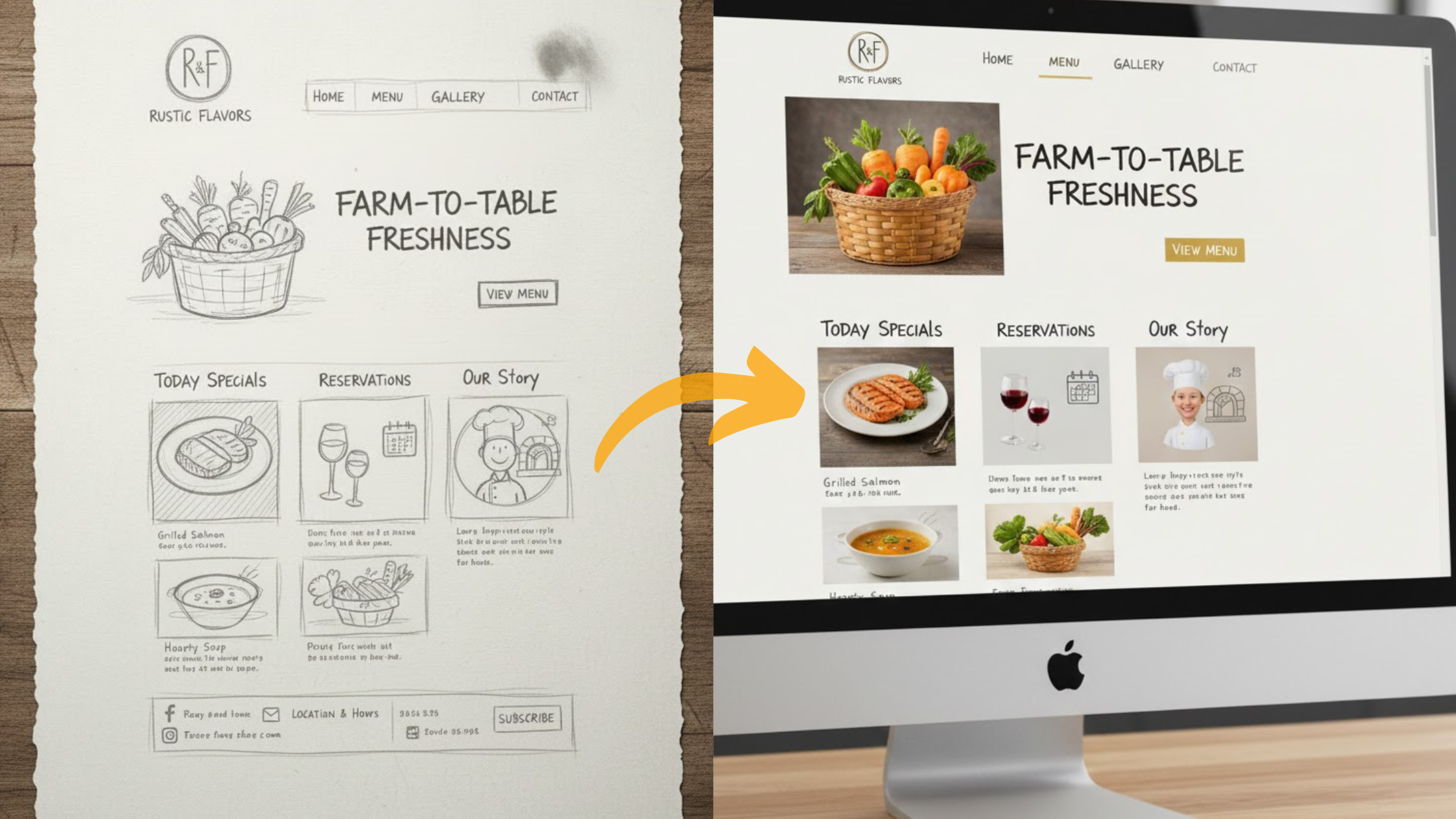
1. Homepage Essentials: First Impressions That Convert
Your homepage is basically, the aroma wafting from your kitchen that pulls people in.
For your restaurant website checklist, this is ground zero for conversions, where 80% of first impressions happen in under 15 seconds.
Get it wrong, and that potential party of four ghosts you; get it right, and you’re halfway to a booked-up weekend.
a) Hero Section
Start with a hero section that hits like a perfectly plated amuse-bouche.
It could be a high-res video or carousel of your bustling dining room, steam rising from fresh pasta, or that crowd-pleasing tiramisu.
Overlay it with a zestful tagline—”Savor Family Flavors at EatOuts: Where Every Bite Feels Like Home”—and you’ve got emotion on lock.
Why? Because diners are also chasing stories.
Take Chipotle: Their homepage pulses with vibrant burrito bowls and a “Order Now” button that’s impossible to miss, driving millions in app downloads.

b) Call-To-Action
Next, layer in clear CTAs, think bold “Book a Table” or “Explore Menu” buttons that link straight to action.
No hunting required.
c) Navigation
And don’t forget quick nav.
A sticky menu bar with Menu, About, Reservations, and Contact, all optimized for thumbs (more on mobile later).
Look at how Panera Bread’s clean Navigation funnels traffic to their app, boosting orders during peak hours.
The beauty is you don’t need a design degree.
With Olitt AI, input your tagline and specialties—like those herb-crusted lamb chops—and it auto-generates a hero that feels custom-made.
It’s like having a sous-chef for your site: efficient, intuitive, and ready to serve up results.
2. Compelling About Us Page: Tell Your Story
Have you ever walked into a restaurant and felt instantly welcomed, like the owners knew your name before you sat down?
That’s the power of a great About Us page.
It humanizes your spot, turning “just another eatery” into “that place we love.”
This section is high on any restaurant website checklist, since it builds trust, especially when 74% of diners pick spots based on vibe and story alone.
a) Origin
Kick it off with your restaurant’s origin tale.
The late-night kitchen experiments, the immigrant roots behind those spice blends, or how it started as a pop-up in your backyard.
Keep it warm and real, 200 words max, laced with photos of the team flipping burgers or harvesting herbs.
b) Chef Bios
Include chef bios too: “Meet Maria, our head baker whose sourdough secrets come from Nonna’s Sicilian notebook.”
This means true connection.
Maggiano’s nails this with heartfelt nods to Little Italy heritage, making every visit feel like a family reunion.

c) Values
Weave in your values, sustainable sourcing, community givebacks, or allergy-aware menus, to resonate with people who prioritize ethics in dining.
And tease the future: Upcoming pop-ups or seasonal collabs to keep ’em coming back.
Olitt AI shines here: Feed in your mission (“Bringing global comfort to local tables”) and story, and it spins a narrative that’s polished yet personal.
It’s more like invitation, where you share your heart, and watch customers invest theirs.
3. Interactive Menu Page: Make Ordering Irresistible
In a restaurant website checklist, an interactive menu page is non-negotiable.
Static PDFs? They’re so 2010, killing conversions when folks crave zoomable glory shots.
a) Structure
You can use categories like Apps, Mains, Sweets, with filters for vegan, gluten-free, or under $20.
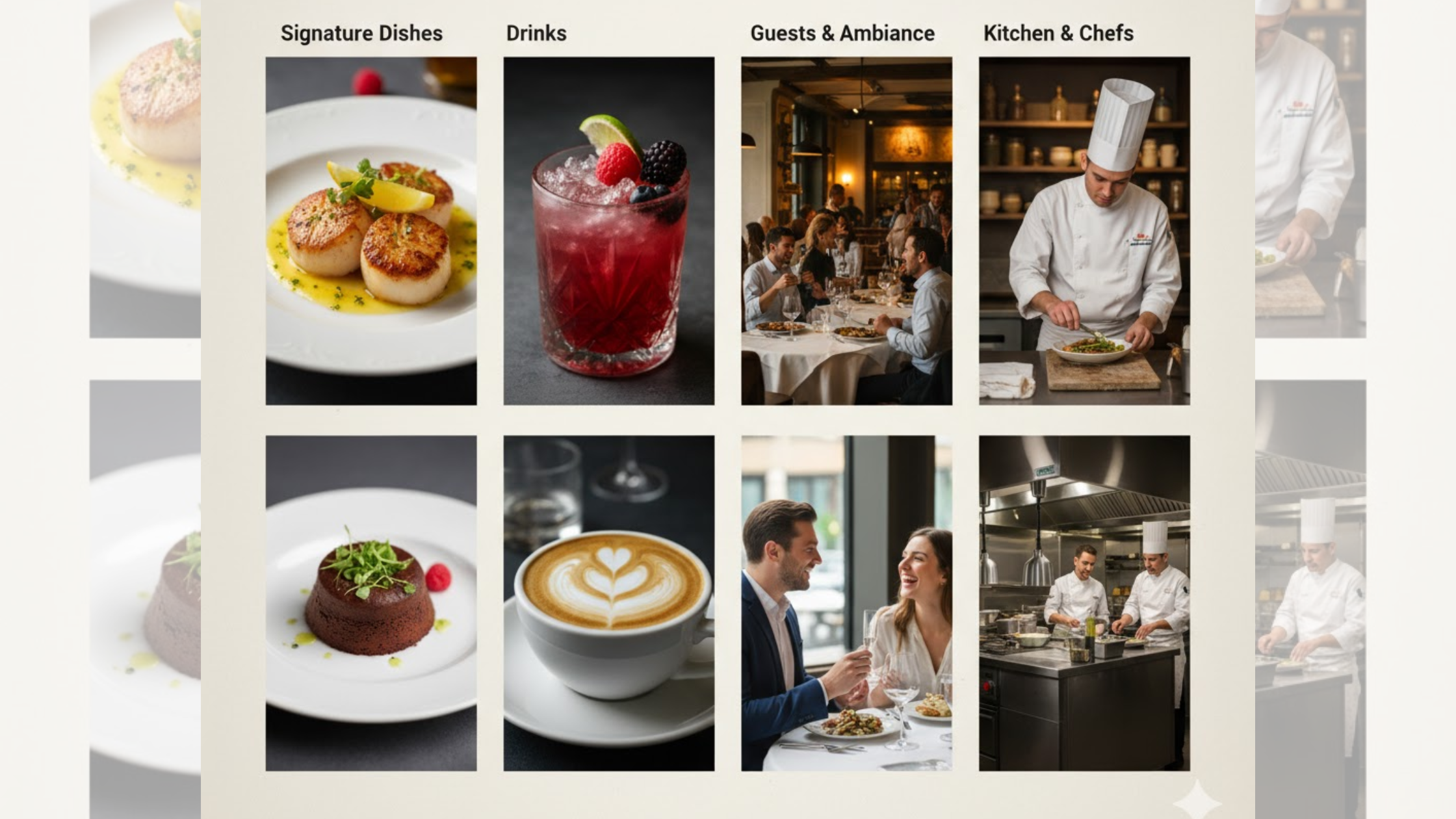
Each item gets a mouthwatering photo, description (“Crispy calamari kissed with lemon zest and aioli”), price, and allergens.
Add search bars for “spicy” or “quick bites” to keep impulse orders flowing.
b) Dynamic Updates
Swap in summer salads or holiday specials without a dev’s help.
And for health nuts, toss in calorie breakdowns or pairing suggestions.
Stats show interactive menus can boost orders by 25%, turning browsers into buyers.
Olitt AI captures a list of your services, including your menu, and it populates a sleek, filter-ready page from your signature dishes.
Edit inline for that new truffle special, and you’re golden.
4. Perfect Reservations System: No More Empty Tables
Empty tables on a buzzing Saturday is the nightmare no owner wants, yet it happens when booking’s a hassle.
This restaurant website checklist staple fixes that, with 57% of diners now reserving via digital channels.
a) Embed a Real-Time Calendar
Guests should be able to pick date, time, party size, with notes for “anniversary” or “high chair needed.”
Integrate tools like Calendly for seamless syncing to your POS.
Backup with click-to-call for old-schoolers, and automate confirmations: “Your spot’s reserved!”
The Cheesecake Factory thrives on this, their OpenTable-powered flow filling slices of their massive menu daily.

Add waitlist magic for walk-ins and no-show reducers like deposit options.
Olitt AI integrates this easily, just choose online or click-to-call during setup, and it wires in Calendly links.
5. Online Ordering & Delivery: Capture Takeout Revenue
Takeout didn’t just survive the pandemic, it exploded, with 44% of diners ordering weekly and 70% preferring digital channels.
So, your site needs to own this revenue stream, turning “What’s for dinner?” into direct dollars.
a) Build a Cart
Add-ons pop up (“Fries with that?”), toggles for delivery or pickup, and secure Stripe checkouts.
Promo codes for “First Order 10% Off” keep ’em hooked.
Link to Uber Eats or Glovo for broader reach, but keep the direct flow for higher margins.
b) Visuals Seal It
Dish close-ups with “Ready in 20 mins” timers.
For hybrids, multi-location support could go a long way.
Olitt AI handles the heavy lifting, just specify delivery/pickup, and it crafts the full funnel.
6. Contact & Location Page: Easy Access for Locals
Nowadays, there’s a whole lot of “near me” searches, maing your contact page the beacon for lost locals, and foot traffic.
As an essential part of the restaurant website checklist, it bridges digital to door.
Stats show mobile “restaurant near me” queries surging 900%.
Embed a Google Map with street view, your address, and hours.
Multi-channel deets: Phone, email, socials, plus a quick FAQ.
Forms for inquiries keep it conversational: “Tell us about your event.” It’s simple courtesy that converts curiosity to crowds.
Olitt AI auto-maps from your address input, adding forms that feed your dashboard.

7. Mobile Optimization & Speed: Don’t Lose Impatient Diners
Diners are thumb-scrollers, with over 70% of restaurant traffic hiting mobile first.
A site that pinches or lags is a deal-breaker, with bounce rates spiking on slow loads.
Mobile tops the restaurant website checklist for a reason.
a) Go Responsive
Everything scales from menus stack to buttons thumb-friendly.
Compress images for sub-3-second loads; AMP for instant reservation pages.
b) Test
Test on real devices and prioritize speed audits.
8. SEO Foundations: Get Found in Local Searches
You could have the best carbonara in town, but if Google buries you, it’s cold by closing.
Optimize titles/descriptions with keywords and add schema for star-snippet magic.
Also, claim Google My Business and link your blog for fresh content.
Blog teasers drive ongoing traffic, like recipes or chef tips that position you as the expert.
9. Social Proof & Testimonials: Build Trust Instantly
Trust isn’t given, but earned, one glowing review at a time.
Most customers read online restaurant reviews and a good number of them choose solely based on them.
So, testimonials are your credibility corner.
Embed Yelp/Google dynamically, and add a UGC gallery for diner selfies.
10. Analytics & Integrations: Track and Grow
What’s measured grows and analytics turn hunches into strategies.
Wrapping the restaurant website checklist, this tracks top pages, drop-offs, tying to POS for unified insights.
Hook Google Analytics for traffic trends; add email pop-ups for newsletters.
CRM links sync orders to loyalty.
Step-by-Step Application of These Elements with Olitt AI
Nw, to turn this restaurant website checklist into reality, I’d bet on Olitt AI.
Head to https://olitt.com/restaurant/ and follow these steps:
i. Plan and Sign Up: Jot your essentials down, like your mission and services. Create a free account on Olitt.
ii. Launch the Builder: Hover on “AI Websites” in nav, click “Restaurant AI Website,” then “Build with AI.” Or on your dashboard: “Create with AI.”
iii. Input Your Info: Business name, your story, ideal customers, services, colors, style, physical address, hours, booking type, tagline, specialties, delivery/pickup, and testimonials.
Make sure you’ve included all the details in the checklist on this part.
iv. Review and Generate: See your all-done summary, hit “Create My Website.”
v. Pick Your Plan: Free for basics; Starter ($9.99/mo or $19/yr) for extras; Pro ($10.99/mo or $49/yr) for bookings; Business ($29.99/mo or $199/yr) for full power. Add payment.
vi. Go Live and Tweak: AI spins it up in minutes. Dashboard lists your new site, click on it to go to editor for more customization or edits.
Add analytics and integrate thirdparties like Calendly for reservations or Uber Eats for orders.
Edit tablet and mobile view to mae sure everything looks perfect.
Boom—your site’s live, SEO-smart, mobile-friendly.
Conclusion
Whew! What a feast of ideas.
This restaurant website checklist is both a to-do list but most importantly your roadmap to a site that works as hard as you do.
Imagine fewer empty seats, more raving reviews, revenue humming without the hassle.
It’s possible, especially with AI like Olitt easing everthing up.
Your restaurant’s story deserves to shine online, pulling in the families, dates, and solo adventurers who’ll become regulars.
Don’t let a meh site dim that light.
Your tables are waiting—fill ’em with flavor, not frustration.