
When a visitor lands on your website, they’re looking for something more than a menu; a relatable connection.
Your restaurant’s website’s ‘About Us’ page is where that connection begins. It’s the warmth that transforms a first-time visitor into a loyal guest.
But let’s be honest: writing about yourself can feel awkward. How do you capture your passion, your team’s dedication, and your unique vibe in just a few paragraphs?
You don’t have to do it alone. There are writing assistants and other tools to help you.
If you are using a tool like the Olitt AI restaurant website builder to help tell your story, the goal is the same: to create a page that feels as authentic and inviting.
In this guide, we have made everything digestible through simple steps to make your “About Us” page a true reflection of your restaurant.
Before we get to the steps, let’s figure out:
Why You Need an About Us Page for Your Restaurant Website

You have a menu, photos, and contact info. But in the restaurant’s competitive market, customers need something more.
You need an about us page to:
Build Immediate Trust
Customers choose restaurants with which they feel a connection.
A genuine story about your origins, chef, or philosophy answers customers’ questions on whether they can trust you with their dining experience.
Set You Apart
While others may serve similar food, your story is uniquely yours.
Family recipes, chef backgrounds, and sustainability practices can be compelling reasons for customers to choose your restaurant over others.
Create Emotional Appeal
Food memories are influential.
Sharing what inspires you, such as family traditions or regional cuisine, can transform a simple meal into a meaningful experience that customers want to repeat and recommend.
Attract Your Ideal Customers
Your description sets accurate expectations.
For instance, calling your space an intimate retreat helps customers self-select, ensuring better-matched diners and more positive experiences.
Work Around the Clock
The about us page is as good as your constant ambassador. It shares your passion with potential customers, bloggers, and journalists 24/7, even when you can’t.
How to Write the Perfect “About Us” Page for Your Restaurant Website
If you have a restaurant website and are stuck on writing your about us page, here’s something to get you off the blank slate:
1. Start with a Unique Headline
Your headline is the first thing people will read.
Hence, don’t just call it “About Us.” Make it inviting and specific.
Examples:
- Boring: About Us
- Better: Our Story
- Even Better: A Taste of Home in the Heart of the City
Furthermore, your headline should give a hint of your restaurant’s personality.
For example, is it a cozy family spot? A sleek, modern bistro? Let the title reflect that.
2. Tell Your Story
After a catchy headline, visitors need details.
Your restaurant story is the core of your page. People love stories, especially passionate and authentic ones.
Here, don’t list facts; express a picture.

For example, you can focus on answering these questions:
- How did it all begin?
- Was it a childhood dream?
- A family recipe passed down for generations?
- What’s your mission?
- What do you believe in? This is your “why.”
- Who are the people behind the food? Introduce the founder, the chef, or the family. A name and a face build trust.
When answering these questions, keep it simple for the reader to follow along and ensure it’s genuine from the heart.
Write like you’re telling the story to someone you just met.
3. Describe What Makes You Unique
Every restaurant has something that sets it apart. What’s yours? Be specific.
We are not just about the food; it’s about the whole experience. In this section, you can focus on:
- Ingredients: Do you source from a local farm you love? Do you grow your own herbs?
- Technique or Tradition: Do you use a wood-fired oven? A secret family marinade? Do you bake your bread in-house daily?
- The Vibe: What’s the atmosphere? Is it a lively gathering place, a quiet romantic spot, or a trendy hub for craft beer enthusiasts?

Example: “Our pasta is rolled by hand every single day, just like it was in our grandfather’s small village in Sicily.”
4. Show, Don’t Just Tell
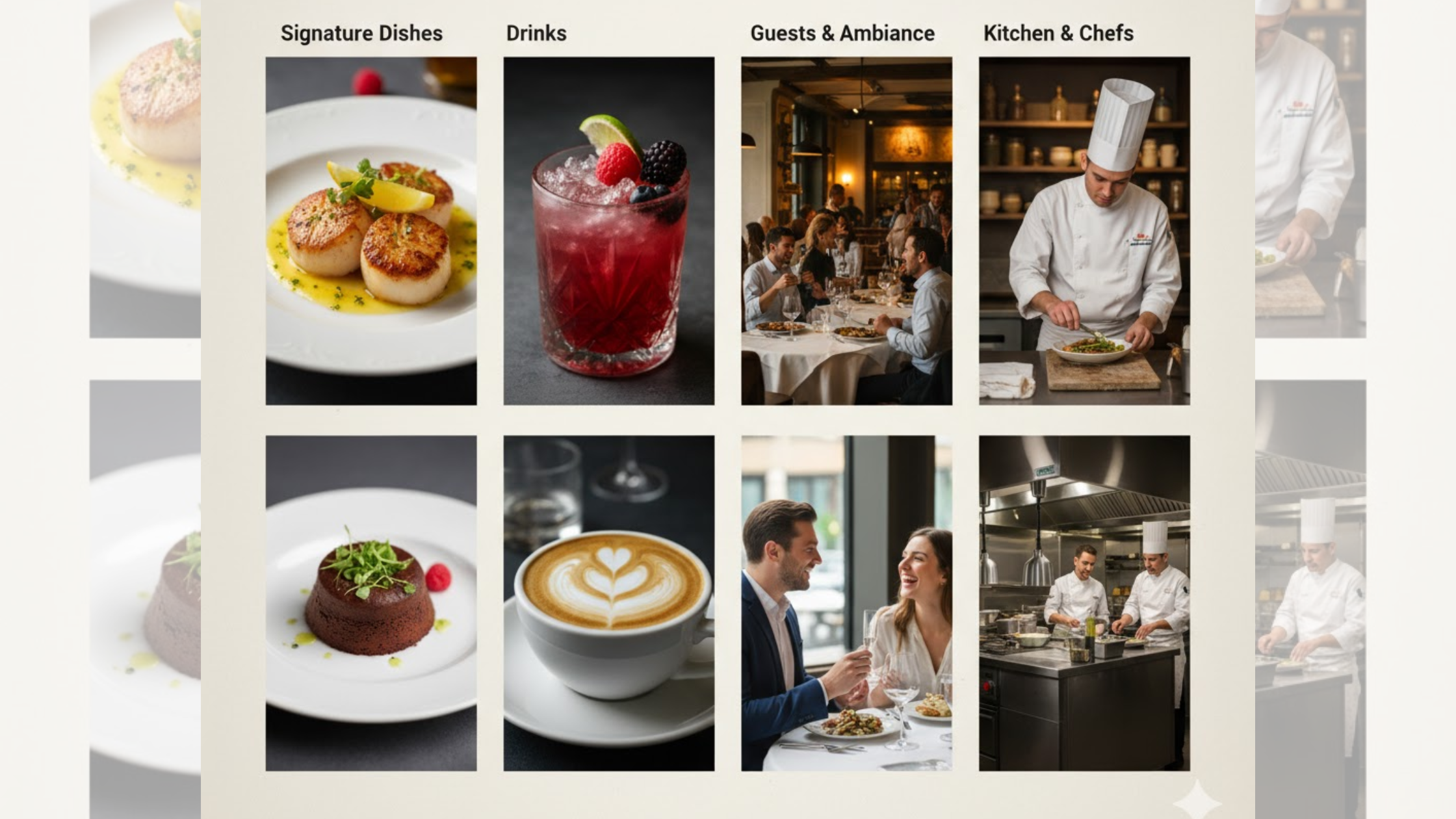
Your words do half the job, but photos bring them to life. For your about us page, you need:
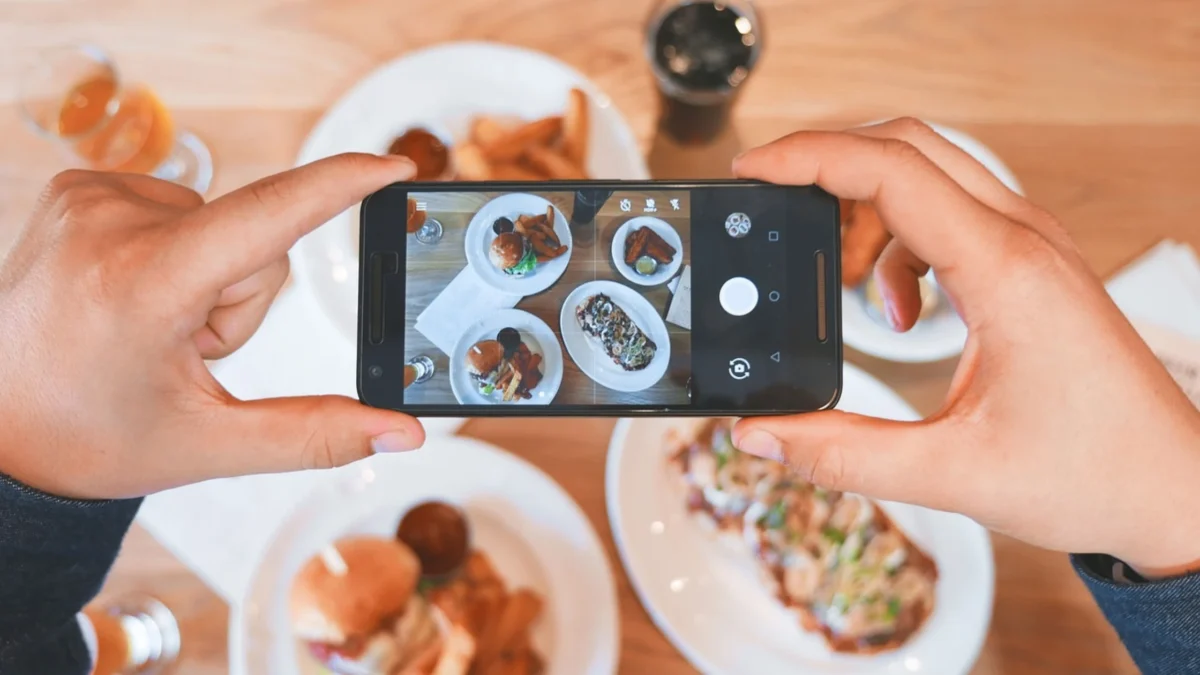
- High-Quality Food Photos: Showcase Your Most Beautiful Dishes.
- Photos of People: A picture of the chef in action, the team laughing together, or happy guests enjoying a meal.
- Photos of the Space: Let people see the cozy booth, the sunny patio, or the elegant bar they’ll be sitting in.
Remember, people want to see real photos to connect with your restaurant. Avoid generic stock photos.
5. Make Your Customers Feel Welcome
Use “you” and “your” to make the reader feel like you’re talking directly to them. For example:
Instead of: “We offer a warm and welcoming atmosphere.”
Try: “You’ll be greeted by the warmth and joy. Find a cozy corner, and let us take care of the rest.”
Personalizing makes your page feel like an invitation, not a brochure.
6. Include a Clear Call to Action
Don’t let the conversation end on the “About Us” page. Clearly communicate what you want people to do next.
You can try these call-to-action on your page:
- View Our Menu and See Us Soon.
- Ready to taste the difference? Make a reservation today.
- Follow our culinary journey on Instagram.
Make these links obvious and easy to click.
Olitt Can Write a Perfect About Us Page For You

While having tips on how to write an about us page makes it easier, you still have to do most of the writing.
No time to write? Olitt is here for you.
Olitt AI builds an ideal “About Us” page for your restaurant by combining your unique inputs with copywriting best practices and SEO signals that fit your site design.
Here’s a look at how Olitt does it:
It Starts with Your Story.
You simply provide the key ingredients: your restaurant’s name, founding story, cuisine type, signature dishes, and the details that make you unique.
Olitt uses this information as the foundation to ensure your page aligns with your brand.
It Structures for Impact.
Olitt then intelligently structures your page with a clear hierarchy:
- A compelling headline
- A concise introduction
- Your story
- Key highlights
- A strong call-to-action
The structure is tailored for optimal readability on mobile devices and SEO.
It Writes with Flexibility.
You get multiple drafts in different tones and lengths.
Then, you can pick your favorite or mix and match to create the perfect version.
It Optimizes Behind the Scenes.
Olitt weaves in relevant keywords naturally, suggests meta descriptions, and uses scannable paragraphs and bullet points to keep visitors engaged.
It even formats the final copy into template blocks, so it looks professional and is ready to publish on your site.
Does an “About Us” Page Matter for SEO?
Yes, an “About Us” page is essential for SEO because it:
- Builds Trust with Google by showcasing your expertise, history, and authenticity
- Uses Natural Keywords like “family-owned restaurant in [City]” that are hard to place elsewhere
- Keeps Visitors Engaged – people who connect with your story stay longer on your site
- Earns Quality Links – journalists and bloggers link to interesting origin stories
While it may not rank for “best pizza,” it enhances your whole site’s SEO by making your restaurant more credible and relevant to search engines.
How to Optimize Your “About Us” Page for SEO
Here’s how to optimize it without sounding robotic or compromising your story.
Keyword Research
Identify terms people use to find restaurants like yours. Think about:
- Location-based phrases: for example, “Italian restaurant in [Your City]”
- Specialty terms: such as family-owned restaurant
- Experience keywords: such as “romantic dinner spot”
Optimize Your Page Title and Meta Description
Your page title should be interesting and include your primary keyword. For example:
Weak: About Us
Strong: Our Story / Mario’s Trattoria – Family-Owned Italian Restaurant in Boston
Additionally, your meta description should entice clicks while naturally incorporating relevant keywords.
Structure Your Content for Both Readers and Search Engines
Your checklist:
- Use heading tags properly (H1, H2, H3)
- Include keywords naturally in your headings
- Break text into short paragraphs and bullet points
- Add internal links to your menu, location, and contact pages
4. Optimize Local SEO
Local SEO is critical for a restaurant website. Mention your neighborhood, city, and nearby landmarks.
Search engines look for these local signals to connect you with nearby customers.
Optimize Your Images
Use descriptive file names: “family-owned-italian-restaurant-boston.jpg” instead of “IMG_1234.jpg”
Add alt text that describes the image and includes relevant keywords.
Also, ensure fast loading times by compressing images.
Include Schema Markup
Add structured data (Schema.org) to help search engines understand your content. This can include:
- Your restaurant’s name, address, and phone number
- Opening hours
- Price range
- Type of cuisine
Pay Attention to User Experience
- Ensure fast loading times
- Make it mobile-friendly
- Include clear calls-to-action
- Keep your most important content “above the fold”
Avoid This On Your “About Us” Page
- Vague Claims like “Great food & service” are meaningless. Be specific.
- Words that sound robotic instead use human language.
- Self-Centered Focus. Instead, connect your story to the customer’s experience.
- Don’t hide what makes you unique. Tell people directly.
- Copying Others. Your authentic story is your best asset.
- Outdated Information. Keep chef bios and menus current.
- Living in the Past. Connect your history to why it matters today.
- No Next Step. Always end with a clear call-to-action.
Conclusion
You can achieve the perfect “about us” page by simply focusing on the essentials:
Start with a headline that invites curiosity, not just a generic label. Then pour your heart into a genuine story that shares your “why”: the passion, the family recipe, the dream that started it all.
Don’t just list your menu; highlight what makes your experience unique, such as bringing up your local farm partnerships.
Remember to show, not just tell, with authentic photos that bring your space and team to life.
Also, write directly to your guest, making them feel seen and welcomed. And most importantly, always guide them to the next step with a clear and enticing call to action.
Still feel stranded on your “About Us” page? Let Olitt help you blend these ingredients into perfection.