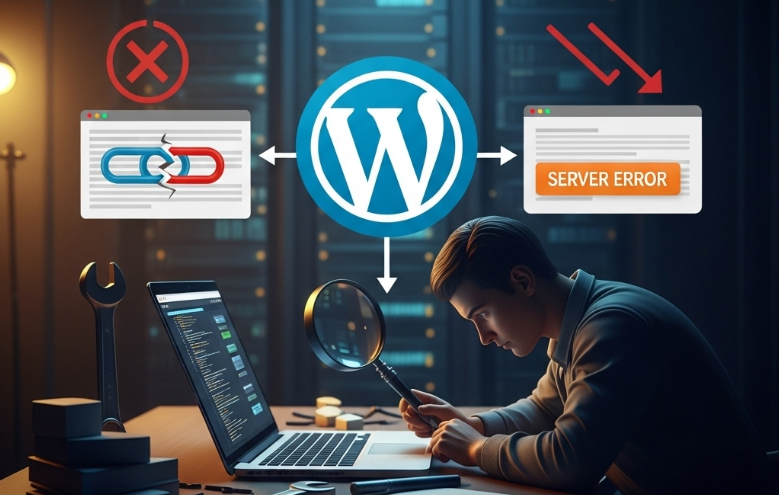

Building a WordPress website that runs smoothly around the clock isn’t just about ticking technical boxes; it’s about protecting your brand, reputation, and bottom line.
Whether you’re running a blog, an online store, or a business site, one thing is certain: your visitors expect a fast, stable experience every time they land on your page.
Choosing the right WordPress hosting provider is more than a backend decision. It’s a strategic move.
A few seconds of downtime or recurring server errors can quietly erode trust, send potential customers away, and gradually chip away at your search engine rankings.
In this guide, we’ll walk you through how to avoid those costly pitfalls by choosing a hosting setup built for reliability and performance.
You’ll learn what matters when it comes to minimizing downtime, handling traffic spikes, and keeping your site healthy and accessible, day and night.
The High Price of Unreliable Hosting: Why It’s Not Worth the Risk
Before exploring solutions, it’s essential to understand the serious consequences of choosing unreliable WordPress hosting:
▪️Revenue Loss:
For e-commerce sites, every minute of downtime means lost sales. For lead-generation websites, it means missed prospects and opportunities.
▪️Reputation Damage:
Frequent outages or slow performance can make your business appear unprofessional and untrustworthy, undermining your credibility and brand.
▪️SEO Setbacks:
Search engines favor fast, stable websites. Poor uptime and sluggish load times can hurt your rankings, making it harder for potential customers to find you.
▪️User Frustration:
Visitors expect a smooth experience. If your site is unreliable, they’re likely to leave and may not return.
▪️Wasted Time & Resources:
Constant troubleshooting, chasing support, and managing downtime diverts your energy from growing your business.
Unreliable hosting doesn’t just cause technical problems; it creates real business losses. Don’t let it be the weak link in your online presence.
How to Choose a Reliable WordPress Host
Selecting the right WordPress hosting provider is one of the most important decisions you’ll make when building or scaling a website.
A poor hosting choice can lead to slow load times, frequent downtime, security vulnerabilities, and a poor user experience, directly impacting your traffic, revenue, and reputation.
Below is a guide to help you evaluate hosting providers with clarity and confidence:
1. Understand Your Website’s Unique Requirements
Before diving into hosting options, it’s essential to understand your specific needs. These factors will shape which type of hosting is most appropriate:
a.Traffic Expectations:
Estimate your current and projected traffic. A brand-new blog may only need basic resources, while an established e-commerce store or high-traffic blog requires robust server performance and scalability.
Most shared hosting plans can support low traffic (under 10,000 monthly visits), but if you expect spikes or growth, plan accordingly.
b.Website Purpose and Complexity:
A minimalist portfolio or blog has vastly different demands than a feature-rich membership site, online store, or LMS (Learning Management System).
Complex sites require more memory, storage, bandwidth, and often better CPU allocation.
c.Performance Priorities:
Are fast loading times and 99.9% uptime crucial to your business model? If so, look for providers with performance guarantees backed by SLAs (Service Level Agreements).
d.Technical Skills:
Do you have the expertise (or team) to manage server configurations, perform backups, and monitor security manually? If not, you’ll likely benefit from managed hosting.
e.Budget Constraints:
While it’s tempting to choose the lowest-priced plan, hosting is an investment in your website’s health.
Opting for cheap shared hosting can lead to costly issues later. Look for a solution that balances affordability with security, scalability, and support.
2. Explore the Different WordPress Hosting Types
Each hosting type offers different levels of performance, control, and support. Here’s what you need to know:
▪️Shared Hosting Overview:
Multiple websites are hosted on the same physical server, sharing its resources.
Pros: Extremely affordable and user-friendly, ideal for hobby blogs or small personal sites.
Cons: You share server space with dozens (or hundreds) of others, which means poor performance if one of your “neighbors” uses up more than their fair share.
Limited scalability and lower security.
Best for: Beginners or low-traffic sites with minimal requirements.
▪️Managed WordPress Hosting Overview:
Hosting built specifically for WordPress websites. Providers handle core WordPress updates, backups, security patches, performance optimization, and expert-level support.
Pros: Excellent uptime, fast load speeds, and minimal maintenance.
These providers often include premium features like built-in caching, staging environments, and CDN integration.
Cons: More expensive than shared hosting. Some platforms limit plugin usage for security or performance reasons.
Best for: Professional bloggers, growing businesses, agencies, or anyone who wants peace of mind without handling server-side issues.

Examples: WP Engine, Kinsta, Flywheel, and SiteGround’s GrowBig/GoGeek plans. VPS (Virtual Private Server)
▪️Hosting Overview:
A virtual environment that mimics a dedicated server within a shared server. Each VPS has allocated resources that are not affected by other websites.
Pros: More powerful and customizable than shared hosting. Offers better speed and reliability for mid-sized sites.
Cons: Requires technical expertise to configure, monitor, and maintain. Not as “hands-off” as managed hosting.
Best for: Developers or site owners with moderate traffic who need greater flexibility and control.
▪️Dedicated Server Hosting Overview:
You rent an entire physical server exclusively for your website(s).
Pros: Maximum control, performance, and customization. Ideal for enterprise-level applications or sites with very high traffic.
Cons: Very expensive. Requires in-depth server management knowledge or a dedicated IT team.
Best for: Large businesses with mission-critical infrastructure and the resources to maintain it.
▪️Cloud Hosting Overview:
Your website runs on a network of interconnected servers (the “cloud”), not a single machine. Resources scale dynamically based on demand.
Pros: Highly scalable, flexible, and reliable. Often offers built-in redundancy to prevent downtime.
Cons: Can be complex depending on the provider. Pricing is usually usage-based and may be harder to predict.
Best for: Websites with fluctuating traffic, fast-growing startups, or businesses that value scalability and resilience.
3. Additional Factors to Consider When Choosing a Host
Beyond the hosting type, evaluate the provider’s performance in these critical areas:
🔹️Speed Optimization:
Look for features like SSD storage, built-in caching, CDN support, and server-side optimization.
🔹️Uptime Guarantee:
Aim for 99.9% uptime or higher. Check for independent uptime monitoring or service-level guarantees.
🔹️Security Features:
Ensure the host offers firewalls, malware scanning, DDoS protection, free SSL certificates, and automatic backups.
🔹️Scalability:
Can you upgrade easily as your site grows? How simple is the process of adding more resources?
🔹️Customer Support:
Prioritize 24/7 expert support via live chat or phone, especially if you’re running a business or monetized site.
🔹️Backup and Restore Options:
Look for daily automatic backups, one-click restore functionality, and data redundancy.
🔹️Reputation and Reviews:
Check real user reviews, performance benchmarks, and independent hosting comparisons.
The Ultimate Guide to Key Hosting Features and Site Reliability for WordPress
While themes, plugins, and content shape how your WordPress site looks and feels, it’s the hosting provider that determines how well it performs in the real world.
Fast load times, minimal downtime, strong security, and smooth scaling all depend on the quality of your host.
To help you choose wisely, here are the most critical hosting features to prioritize, plus the reasons they matter.
🔑 Essential Hosting Features to Look For
I. Reliable Uptime with SLA
A good host backs uptime promises with a Service Level Agreement (SLA). Aim for at least 99.95% uptime, roughly 4 hours of downtime annually.
Better hosts offer proactive monitoring, real-time status dashboards, and compensation if they fall short.
II. Enterprise-Grade Infrastructure
Speed starts with hardware. Look for hosts with SSD or NVMe storage (far faster than HDD), high-core CPUs, and scalable RAM (2–4 GB minimum for growing sites).
Choose servers running LiteSpeed, Nginx, or optimized Apache.
III. Built-In Server-Side Caching
Effective caching speeds up load times dramatically. Look for support for Varnish, FastCGI (with Nginx), or LiteSpeed Cache to deliver dynamic content faster and reduce strain on your server.
IV. Global CDN Integration
A Content Delivery Network mirrors your static files (like images, CSS, and JS) across global servers.
This improves load times, reduces latency, mitigates DDoS attacks, and improves Core Web Vitals like LCP and FID.
V. Modern PHP Support
Your host should always support the latest stable PHP version (currently 8.2+). Newer PHP versions deliver better performance, memory usage, and security.
Hosts stuck on outdated versions are a red flag.
VI. Free SSL Certificates
SSL ensures secure data transfer and enables the HTTPS padlock that builds user trust and boosts SEO.
Look for automatic Let’s Encrypt SSL with renewal and support for custom certificates (wildcard or EV).
VII. Daily Backups with Restore Options
Things go wrong. Daily backups (or more frequent) with easy restore points protect you from accidental deletions, malware, or bad updates.
Great hosts offer downloadable backups and one-click restore features.
VIII. One-Click Staging Environment
Staging lets you test updates, new plugins, or custom code without risking your live site.
Look for one-click cloning and push-to-live options, ideal for developers and growing businesses.
IX. Strong Security Features
A secure host includes Web Application Firewalls (WAF), malware scanning, brute-force protection, rate limiting, and isolated containers.
Advanced hosts also monitor for zero-day threats and auto-patch vulnerabilities.
X. Expert 24/7 Support
Hosting problems can happen anytime. Choose a provider with round-the-clock support across multiple channels (live chat, tickets, phone), staffed by WordPress-savvy technicians.
Always check user reviews for real support experiences.
Final Tip: Don’t fall for flashy marketing. Focus on what matters: performance, reliability, and expert support.
These hosting features are your foundation for a secure, fast, and scalable WordPress site.
Site Reliability Best Practices (Beyond Hosting)
Even with elite hosting, your WordPress site demands careful, ongoing optimization. Here’s how to protect, future-proof, and scale your site:
1️⃣. Stay Updated (Core, Themes, Plugins)
Updates fix bugs, patch vulnerabilities, and improve compatibility. However:
▪️Always back up before updating
▪️Use staging to test mission-critical changes
▪️Be wary of major version updates (read changelogs)

Automated update management tools like MainWP or WP Remote can simplify this at scale.
2️⃣. Vet Every Theme and Plugin
Every plugin or theme adds code to your site. Avoid:
▪️Abandoned or rarely updated items
▪️Tools from unknown or unvetted sources
▪️Plugins with poor reviews or known conflicts
Use tools like:

Plugin Performance Profiler, Query Monitor, and the WP Hive Chrome Extension (to analyze plugin impact directly on WordPress.org).
3️⃣. Optimize Images Like a Pro
Images should be beautiful and fast-loading.
Best practices:
▫️Use tools like Squoosh, TinyPNG, or ImageOptim before upload.
▫️Convert to WebP for smaller sizes
▫️Implement lazy loading (native in WordPress 5.5+)
For automation, use:

ShortPixel, Imagify, Smush Pro (includes CDN delivery).
4️⃣ Implement Layered Caching
Beyond your host’s cache, make use of plugin-based caching:
▪️WP Rocket: All-in-one with minification, preload, and lazy load
▪️LiteSpeed Cache: Best for LiteSpeed servers, includes image optimization
▪️W3 Total Cache: Powerful but complex (ideal for devs)
Also consider Object Caching with Redis or Memcached for dynamic sites.
5️⃣ Monitor Health and Performance
Real-time visibility ensures you act before problems escalate:
▫️Uptime monitoring: UptimeRobot, Better Uptime, StatusCake

▫️Speed insights: GTmetrix, Pingdom, WebPageTest, PageSpeed Insights
▫️Log tracking: Enable WP_DEBUG_LOG and monitor PHP error logs via cPanel or SSH
6️⃣. Clean Your Database Regularly
Use tools like WP-Optimize, WP-Sweep, or Advanced Database Cleaner to remove:
Post revisions, Transients, Expired metadata, Spam/trashed comments
Schedule cleanups weekly or monthly, depending on site size and activity.
7️⃣Apply Strong Security Hygiene
▪️Use a unique admin username (never “admin”)
▪️Enable 2FA via Google Authenticator or Authy
▪️Limit login attempts and use CAPTCHA.
▪️Use a full-stack security plugin like: Wordfence, iThemes Security, MalCare (offers real-time malware scanning and firewall)
8️⃣. Backup Beyond Hosting
Even if your host offers backups:
▪️Maintain redundant backups on cloud services (Google Drive, Dropbox, Amazon S3)
▪️Use UpdraftPlus, BlogVault, or Duplicator Pro
▪️Set up both scheduled and on-demand backups
Follow the 3-2-1 rule: 3 copies, 2 different media, 1 off-site.
9️⃣. Eliminate Unnecessary External Scripts
Excess third-party scripts add network latency. Remove or defer:
▪️Unused social media embeds
▪️Ad tags that block rendering
▪️Tracking pixels with no current use
Tools like Asset CleanUp or Perfmatters help you selectively disable scripts per page.
🔟 Use a Staging Site as Standard Operating Procedure
For any non-trivial change:
Deploy to staging, Run QA tests (functional + design + speed) only push to production after validation
For teams, integrate Git or CI/CD pipelines for structured deployment workflows.
Conclusion
Choosing a top-tier WordPress host is only step one. Maintaining a stable, secure, high-performance site requires:
Strategic feature selection at the hosting level, Disciplined site management practices, Routine monitoring, testing, and optimization
By investing in infrastructure that’s built for speed, scale, and uptime, and combining it with operational excellence, you create a WordPress environment that works for you, not against you.
Your site becomes more than a digital presence. It becomes an asset.