
Real estate website cost matters more than you think. Whether you’re a solo agent just starting out or running a mid-sized brokerage across multiple markets, your website is your digital storefront. And like any storefront, it comes with a price tag.
Here’s the thing, prices range wildly. You could spend as little as $19 a month or drop $50,000 on a custom platform by a web developer. The global real estate market has changed dramatically, and so have the options for getting online.
I’ve watched countless agents make expensive mistakes. They either overspend on features they’ll never use or cheap out and end up with a site that can’t capture leads. Let’s break down what you’ll actually pay and, more importantly, what you should pay based on your needs.

What Actually Drives Your Real Estate Website Cost?
You know what surprises most people? It’s not just about picking a platform and paying a monthly fee.
Several factors determine your final price tag. Understanding these helps you budget correctly and avoid those annoying surprise costs six months down the line.
I) The Complexity Question
Basic listing sites are straightforward. You upload properties, add some photos, maybe a contact form. Done.
But modern buyers expect more. They want advanced search filters, map integration, mortgage calculators, and instant notifications. Each feature adds to your development cost.
IDX integration alone changes everything. This technology pulls live listings from your Multiple Listing Service database. It’s not cheap, but it’s practically mandatory if you want to compete globally.
Virtual tours have become standard too. In 2025, buyers from Singapore to Seattle expect 360-degree views and video walkthroughs. Your website needs to handle this media without crashing.
II) Design: Template or Custom?
Templates save money. That’s their entire purpose.
You can find decent real estate templates for $50-$200. They’re pre-built, tested, and ready to go. Perfect for agents who need something functional fast.
Custom design costs more, sometimes a lot more. But here’s what you get: a unique brand identity that stands out in crowded markets. Your competitors won’t have the exact same layout. Your user experience can be tailored to your specific client base.
Think about it this way. If you’re selling luxury properties in Dubai or London, a $60 template probably won’t cut it. Your website should reflect the caliber of homes you represent.
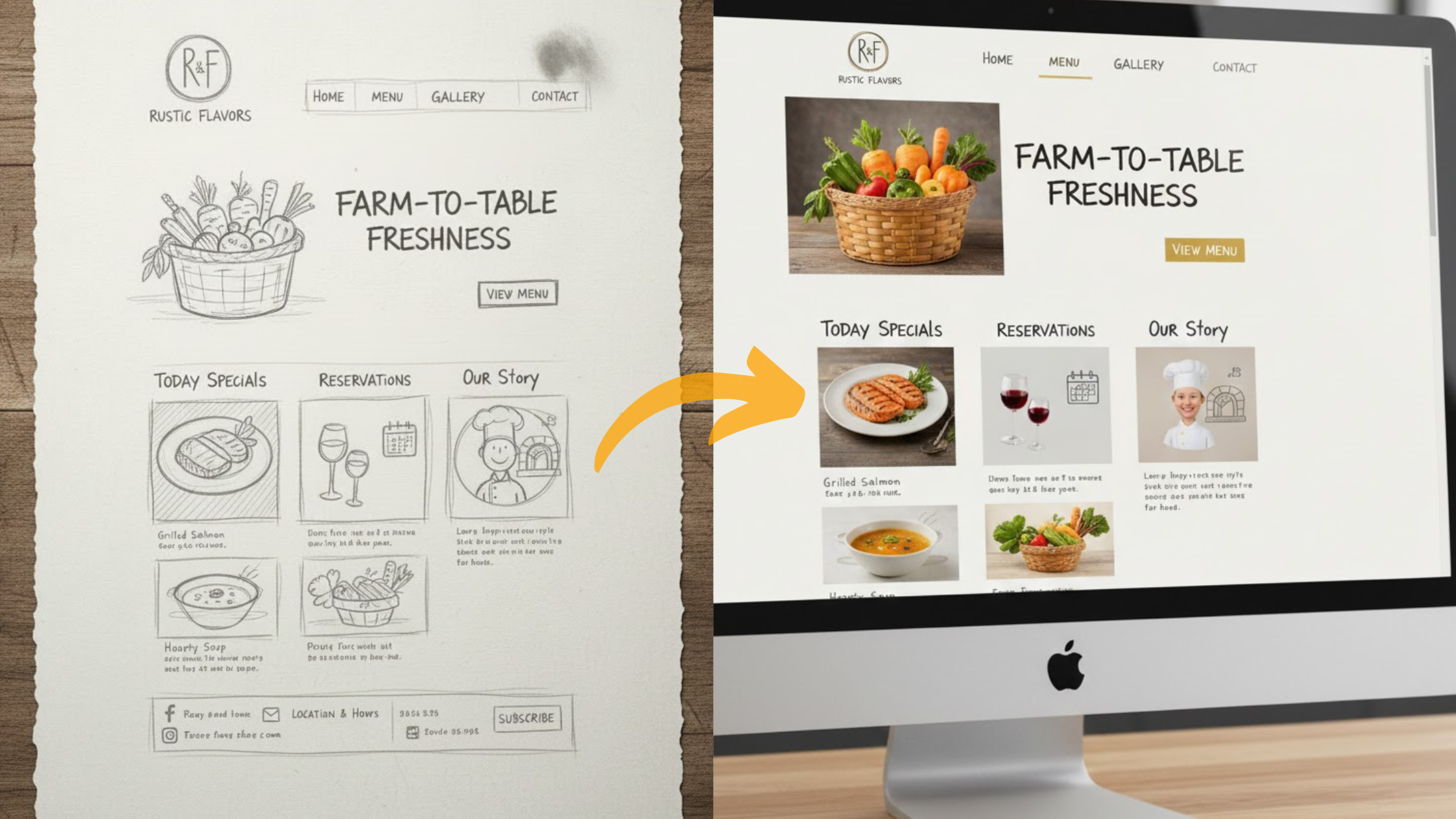
Olitt AI Website builder helps change this by offering a cheaper alternative to customized websites.
III) Technology Choices Matter
WordPress dominates the market. According to W3Techs, it powers over 43.5% of all websites globally.
But WordPress isn’t your only option. Some agents use custom content management systems built from scratch. Others including Olitt allow you to use WordPress as your CMS after building your site with Olitt AI.

Your technology stack affects both upfront and ongoing costs. A WordPress site might need $30 worth of plugins monthly. A custom system could require a dedicated developer on retainer.
Real Estate Website Cost Breakdown: Your Global Options
Let’s talk numbers. Real numbers.
DIY AI Builders ($20-$300/month)
Platforms like Olitt, Wix and Hostinger target agents with limited budgets. You’re looking at $10-$50 monthly for basic plans.
These services include:
- Hosting and security
- Mobile-responsive templates
- Basic SEO tools
- Contact forms
- Limited storage for property photos
Best for: New agents testing the waters. Solo practitioners in smaller markets.
The catch? You’re limited. No IDX integration on most cheap plans. Limited customization. Your domain might look like “yourname.wix.com/realestate” unless you pay extra.
Squarespace offers better design templates. Wix provides more flexibility. Both cap your growth eventually.
Real Estate-Specific Platforms ($50-$500/month)
Now we’re talking serious tools. Platforms like Placester, AgentFire, and Real Geeks were built for real estate professionals.
These typically cost $50-$150 monthly for starter plans. Premium tiers run $300-$500 monthly.
Here’s what changes at this level:
| Feature | Basic Plan | Premium Plan |
|---|---|---|
| IDX Integration | Limited listings | Unlimited listings |
| Lead Capture Forms | 3-5 forms | Unlimited |
| CRM Features | Basic contact management | Full automation |
| Custom Domain | Yes | Yes |
| SEO Tools | Basic | Advanced |
| Support | Email only | Phone + email |
AgentFire starts around $249 monthly. You get stunning templates, built-in SEO, and lead capture tools that actually work.
Real Geeks focuses on lead generation. Their pricing starts higher, around $299 monthly—but includes CRM integration and automated follow-up systems.
Best for: Established agents who close 10+ deals annually. Small teams ready to scale.
The global appeal here is strong. These platforms work across different markets and currencies. They’re designed to handle international property listings and multiple languages.
Ready to see how professional platforms can transform your real estate business? Check out Olitt’s real estate solutions for AI-powered website options.
Custom WordPress Sites ($1,000-$10,000)
WordPress offers a middle ground. You get more control than platforms but less cost than full custom development.
A professional developer charges $2,500-$5,000 for a quality real estate site. Premium themes cost $60-$200. Then you need plugins.
Essential plugins add up:
- IDX integration: $40-$100 monthly
- SEO optimization: $50-$100 annually. There are free plans e.g Yoast but basic and paid plans for more functionality.
- Lead generation: $20-$50 monthly
- Security and backups: $15-$30 monthly
- Page builders: $50-$200 annually
You’re looking at $125-$250 monthly in ongoing costs. Plus hosting at $10-$50 monthly depending on traffic.
Best for: Mid-sized agencies wanting brand control. Agents with technical knowledge or budget for ongoing developer support.
Full Custom Development ($10,000-$50,000+)
High-end brokerages don’t mess around. They build custom platforms from scratch.
I’ve seen projects start at $15,000 and climb to $100,000. Sotheby’s International Realty doesn’t use a template, right?
Custom development means:
- Unique design matching your exact brand
- Scalable architecture handling thousands of listings
- AI-powered property recommendations
- Custom CRM integration
- Advanced analytics and reporting
- Mobile apps (iOS and Android)
Development takes 3-6 months typically. You’ll need ongoing maintenance at $500-$2,000 monthly.
Best for: Large brokerages with multiple locations. Luxury real estate brands operating globally. Companies with specific workflow requirements.
Features That Impact Real Estate Website Cost
Let’s get specific about individual features. You need to know what drives that monthly bill higher.
1) IDX/MLS Integration ($30-$200/month)
IDX changes everything. It’s the difference between manually updating listings and having them sync automatically.
Most IDX providers charge monthly fees. IDX Broker starts around $40 monthly. More comprehensive solutions like Showcase IDX run $60-$100 monthly.
You’re not just paying for data feeds. You’re getting:
- Real-time listing updates
- Advanced search functionality
- Map-based property searches
- Saved search options for buyers
- Lead capture on every listing
Global markets work differently. Some countries have centralized listing databases. Others don’t. Your costs vary based on location and market regulations.
2) Lead Generation Tools ($50-$500/month)
Websites exist to capture leads. Period.
Basic contact forms are free. But they convert poorly compared to modern lead gen tools.
Advanced systems include:
- Exit-intent popups
- Chatbots with instant responses
- Property valuation tools
- Home buyer/seller questionnaires
- Email marketing automation
BoldLeads charges around $379 monthly for lead generation. You get landing pages, CRM features, and automated follow-up. Market Leader offers similar services starting at $139 monthly.
According to the National Association of Realtors, 97% of home buyers use the internet during their search. Your lead capture tools directly impact your income.
3) Advanced Functionality That Costs Extra
- Mortgage calculators seem simple. Quality ones aren’t free though, expect $0-$50 monthly depending on features and branding options.
- Neighborhood guides require content creation. You can build these yourself or hire writers at $100-$500 per neighborhood profile.
- Client portals let buyers save favorites and track their search. Development costs range from $1,000-$5,000 for custom solutions. Platform-based options cost $20-$100 monthly.
- Multilingual support matters globally. Professional translation services charge $0.08-$0.25 per word. A typical real estate site might need 5,000-10,000 words translated, running $400-$2,500 per language.
The Hidden Costs Nobody Warns You About
Surprise expenses kill budgets. Let me save you some frustration.
i) Domain and Hosting Aren’t Optional
Domain names cost $10-$50 annually. Premium domains run higher, sometimes thousands if someone owns your ideal name already.
Hosting prices vary wildly:
- Shared hosting: $5-$15 monthly (suitable for new sites)
- VPS hosting: $30-$100 monthly (better for growing traffic)
- Dedicated servers: $100-$500 monthly (established brokerages only)
SSL certificates used to cost money. Now they’re often free through services like Let’s Encrypt. Still, some hosting companies charge $50-$200 annually for premium SSL certificates.
ii) Maintenance Keeps Sites Running
Websites break. Plugins conflict. Security vulnerabilities emerge.
Monthly maintenance typically costs $50-$200 for basic sites. Complex platforms need $300-$500 monthly attention.
This includes:
- Software updates
- Security monitoring and patches
- Backup management
- Performance optimization
- Bug fixes
- Content updates
Skip maintenance and you’ll pay later. A hacked website costs thousands to clean and restore. Lost business during downtime hurts more.
iii) Marketing and SEO Are Ongoing Investments
Building a website is step one. Getting people to visit it? That’s the real challenge.
Initial SEO optimization runs $500-$2,000. You’re setting up metadata, optimizing page speed, creating proper site structure.
Ongoing content creation matters more. Budget $100-$1,000 monthly for:
- Blog posts about your market
- Neighborhood guides
- Market reports and analysis
- Property descriptions and photography
Local SEO requires consistent effort. Google Business Profile optimization, local citations, review management—these take time or money.
Want to maximize your real estate website’s performance? Explore AI-powered content solutions that scale with your business.
iv) Professional Services Add Up Fast
Professional photography costs $150-$500 per property. Virtual tours run $200-$600. Drone footage adds another $150-$300.
Copywriting isn’t free either. Quality website copy costs $0.10-$1 per word. A comprehensive real estate site needs 3,000-5,000 words minimum.
Logo design ranges from $100-$5,000 depending on quality and revisions needed.
Real Estate Website Cost ROI
Let’s talk returns. A website that doesn’t generate leads wastes money regardless of cost.
Track your cost per lead religiously. If your website costs $200 monthly and generates 10 quality leads, that’s $20 per lead. If those leads convert at 5%, you’re paying $400 per closed deal from web traffic.
Compare that to your other marketing costs. Most agents find web leads cheaper than paid advertising or purchased leads from services like Zillow.
Conversion optimization matters more than traffic. You’d rather have 100 targeted visitors with 5% conversion than 1,000 random visitors with 0.5% conversion.
Focus on:
- Fast page loading (under 3 seconds)
- Clear calls-to-action on every page
- Simple contact forms (3-5 fields maximum)
- Trust signals like testimonials and certifications
- Property alerts and saved searches
Analytics show everything. Google Analytics is free. Set up conversion tracking for form submissions, phone calls, and email clicks.
Most agents see ROI within 6-12 months. Your website generates leads while you sleep. It works globally, reaching buyers in different time zones automatically.
Calculate lifetime value too. A single client might buy twice and refer three friends over ten years. That $200 monthly website investment looks pretty smart when it generates $100,000 in commissions.
Ready to build a real estate website that actually generates leads? Visit Olitt’s real estate platform to explore AI-powered solutions designed for modern agents and brokerages.