
Which website style is which, a one page website vs multi page website?
As an entrepreneur or beginner dipping your toes into creating a website, you might be wondering, do you go simple and streamlined, or build something with room to grow?
And, that all is mostly surrounded by costs, tech knowhow, and figuring out what actually drives visitors to stick around?
To prevent this kind of analysis paralysis, we’ve decided to guide you through a one on one comparison of one page website vs multi page website.
Here’s what we will cover:
- Clear definitions of each type
- In-depth pros and cons
- Side-by-side comparisons on key factors
- When to choose one over the other
- How AI can help
Let’s help you decide on your next venture!
What Is a One-Page Website?
In the case of a one-page website, all your essential info, your story, services, contact details, are neatly stacked on a single, scrolling page.
Users scroll down through sections instead of clicking around menus.
Also, no separate pages for “About” or “Blog”; everything flows in one continuous stream, often with cool effects like parallax scrolling to keep things engaging.
In the one page website vs multi page website comparison, one-page sites shine with their simplicity.
They’re perfect for small business owners who want to get online fast without juggling tons of content.
Think of it as a point on your brand, showing your visitors everything from intro to call-to-action(CTA) without distractions.
For beginners, this format can be a lifesaver.
It simply means, no need for complex navigation setups.
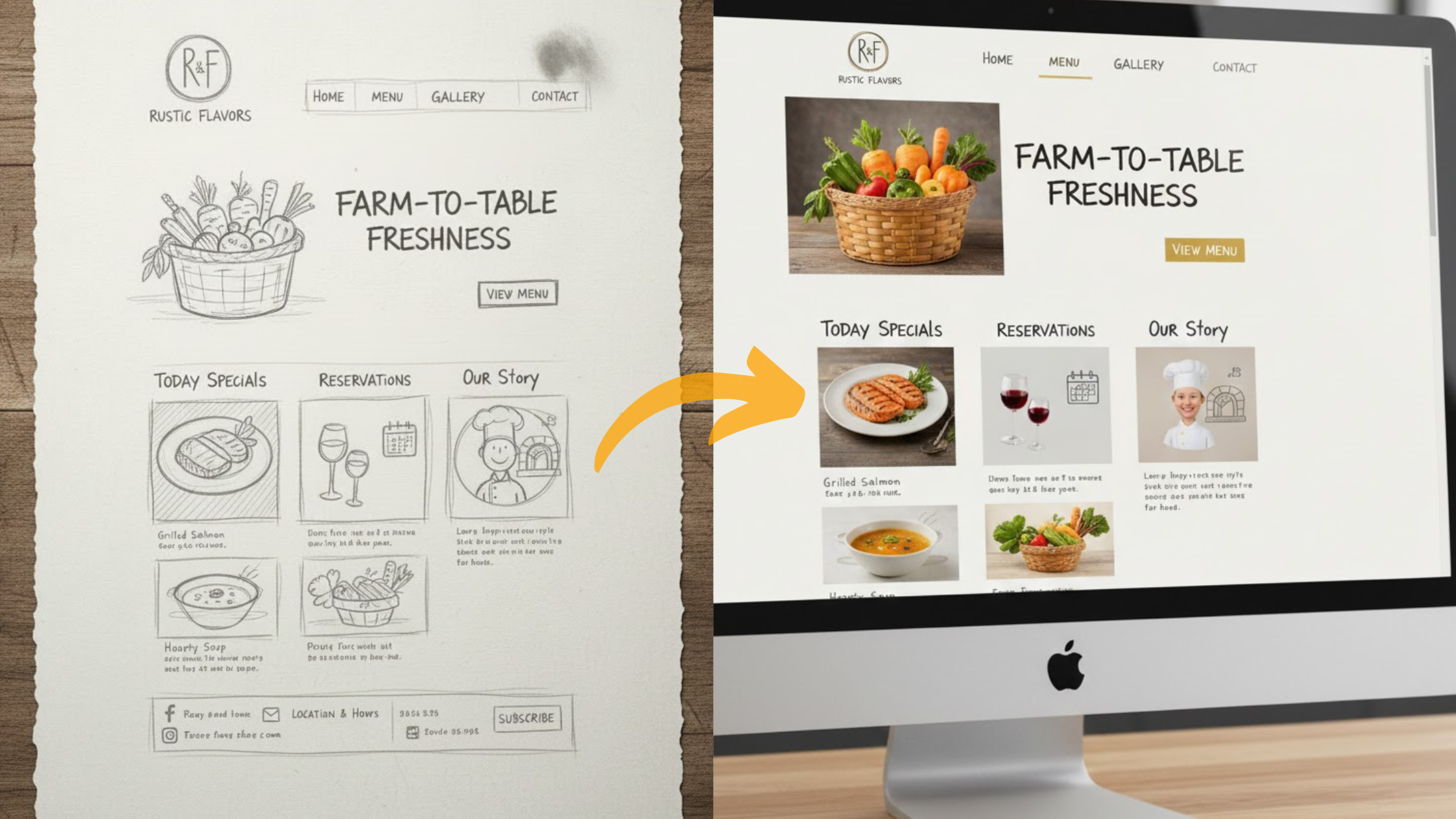
Now, talk of tools like Olitt AI which it’s mere existence is to make your work even easier, by using artificial intelligence to auto-generate layouts and content based on your inputs.
You only need to describe your business, and it handles the rest, from templates, images, to even basic SEO tweaks.
What Is a Multi-Page Website?
On the flip side, a multi-page website is like a digital house with multiple rooms.
Each “room” is a separate page, like home, about us, services, blog, and shop, linked via a navigation menu.
Users click around to explore, making it ideal for businesses with lots of info to share.
When weighing one page website vs multi page website, multi-page options offer structure for growth.
If you’re an entrepreneur planning to add products, articles, or portfolios over time, this setup scales effortlessly.
It’s common for established brands, but it can intimidate beginners due to the extra planning involved.
Additionally, maintaining links and ensuring consistent design across pages takes more effort.
But with the right builder, it’s manageable.
While Olitt AI excels at one-page sites, it also supports multi-page builds through its intuitive drag-and-drop interface, integrated with WordPress for added flexibility.
Pros and Cons of One-Page Websites
About one-page websites, they’re not for everyone, but they pack a punch when they fit.
Here’s a balanced look at what works and what doesn’t.
Pros:
- Lightning-Fast Setup and Loading: You can launch in hours, not days. Pages load quicker since there’s less to fetch, reducing bounce rates. For small businesses, this means happier visitors and better search rankings.
- Seamless User Experience: Scrolling feels natural, like reading a story. It guides users linearly, boosting conversions, think landing pages where the goal is to sign up or buy.
- Cost-Effective: Fewer pages mean lower design and hosting costs. Ideal for entrepreneurs on a budget.
- Mobile Optimization: With responsive design, they adapt perfectly to phones, where most traffic comes from today.
- Focused Storytelling: Perfect for highlighting your unique value without side trips.
Take Zendaya’s official site (zendaya.com), a sleek one-page setup that scrolls through her bio, projects, and social links.
It’s minimal yet captivating, drawing fans in without overwhelming them.
Or consider Joe Rogan’s one-page website focusing on his brand which is separate from his shop website.
One trick he manages to pull is linking his shop website through his personal brand website although the shop is a multi page website.
Olitt AI amps up these pros by using AI to suggest designs tailored to your niche.
For instance, it can generate a one-page site for a freelance photographer with auto-optimized images and contact forms, all integrated with tools like Google Analytics for tracking visitors.
Cons:
- Content Limitations: Cramming everything onto one page can feel cluttered if your business expands.
- SEO Hurdles: Fewer pages mean fewer chances to target keywords, though smart sectioning helps.
- Scalability Issues: Adding features like a full blog might require switching formats later.
- Potential Overload: Long scrolls can tire users if not designed well.
But with Olitt AI’s smart content generation, you avoid this by letting AI balance sections automatically.
Overall, in the one page website vs multi page website matchup, one-page wins for quick, impactful launches, especially with AI help from Olitt.
Pros and Cons of Multi-Page Websites
Multi-page websites are the workhorses of the web, built for depth and expansion.
But they come with their own trade-offs.
Let’s unpack them.
Pros:
- Room to Grow: You can easily add pages for blogs, products, or teams as your business evolves.
- Superior SEO Opportunities: More pages allow targeting various keywords, building authority over time.
- Organized Navigation: Users find what they need fast via menus, improving engagement.
- Versatile for Complex Needs: They are great for e-commerce or content-heavy sites.
- Professional Vibe: Feels established, like a full-fledged online headquarters.
Look at SKIMS by Kim Kardashian (skims.com)—a multi-page e-commerce giant with sections for shop, about, and blog, seamlessly handling high traffic and sales.
Or Joe Rogan’s shop, higherprimate.com, packed with merch, for a whole sets of collections experience across pages, keeping fans hooked.
These examples show how multi-page suits big enterprises with diverse content or collections.
Cons:
- Higher Complexity and Costs: Building and maintaining takes more time and money.
- Slower Load Times: Multiple pages can lag if not optimized, frustrating mobile users.
- Navigation Risks: Poor design leads to lost visitors.
- Overkill for Simples Needs: If you’re just starting, it might feel unnecessary.
Rihanna’s site (rihannanow.com) illustrates this well—elegant multi-page with music, videos, and news, but it requires robust hosting to stay snappy.
Contrasting one page website vs multi page website, multi-page excels for depth but can overwhelm beginners.
If it feels challenging, Olitt AI’s tools simplify multi-page setups too.
Direct Comparison: One Page Website vs Multi Page Website
To make your decision easier, here’s a head-to-head in key areas.
We’ll use a table for clarity.
| Aspect | One-Page Website | Multi-Page Website |
| SEO | Focused but limited; great for single keywords | Broader reach with multiple targeted pages |
| User Experience | Intuitive scrolling, low friction | Structured but risks confusion if menus are poor |
| Loading Speed | Faster, single load | Slower if not optimized |
| Cost | Lower upfront and ongoing | Higher due to more content and maintenance |
| Scalability | Limited for growth | High, easy expansions |
| Maintenance | Simple updates in one place | More involved, checking links and consistency |
For SEO in the one page website vs multi page website arena, multi-page often edges out for established sites like Kylie Cosmetics, where separate product pages rank individually.
But one-page can compete with strong on-page optimization, as seen in Usain Bolt’s athlete-focused site.
User experience?
One-page feels modern and mobile-first, like a quick read.
Multi-page offers depth, but only if navigation is spot-on, think Amazon’s empire vs. a simple portfolio.
Speed and cost favor one-page for startups, while scalability tips to multi for growing ventures.
Maintenance? One-page is a breeze; multi requires vigilance.
Your pick depends on your stage, quick launch or long-term hub?
When to Choose One Over the Other
Timing is everything in the one page website vs multi page website choice.
Here’s how to match it to your needs.
Go one-page if you’re a solopreneur, like a consultant or artist, needing a fast online business card.
Scenarios: Launching a personal brand, event promo, or minimal e-commerce.
Case in point: Jeffree Star Cosmetics started with focused landing pages before expanding.
Opt for multi-page if you’re building an online store or content machine, like a blog-heavy business.
Think growing retailers or media sites.
Example: Serena Williams’ site evolved into multi-page to cover career, ventures, and philanthropy.
For small businesses, start one-page and scale.
Olitt AI makes transitioning smooth with its flexible builder.
Why Choose Olitt AI for Your One-Page Website
If the one page website vs multi page website tilt lands on one-page, Olitt AI is your shortcut to success.
This AI-powered builder lets you create professional sites in minutes, no coding required.
Key features: AI-driven templates that auto-design based on your description, content generation for bios and services, drag-and-drop editing, and built-in e-commerce for simple shops.
Integrations? Seamless with PayPal, Mailchimp, Google Analytics, and more for marketing and tracking.
Plus, free SSL, SEO tools, and domain management—all without hidden fees.
Pricing starts affordably, making it beginner-friendly.
Users rave about its ease: “Olitt turned my idea into a live site faster than I imagined,” shares a small business owner in reviews.
If you are ready to try it, sign up at olitt.com and build your one-page masterpiece today.
It’s perfect for that transactional leap, to get online, attract customers, and grow.
Conclusion
Wrapping up the one page website vs multi page website pros and cons, it’s clear: one-page offers speed and focus for quick wins, while multi-page provides depth for expansion.
For many entrepreneurs, starting with one-page via Olitt AI balances simplicity and power.
It changes everything on web building, making it accessible, affordable, and effective.
What are you waiting for? Make a choice already and launch your site now. Your audience is out there—let’s connect you.