
Let me tell you about Sarah.
She’s a graphic designer in Nairobi who spent three sleepless nights agonizing over a decision that seemed simple on the surface. Should she register her business as sarahdesigns.co.ke or sarahdesigns.com?
You know what? She’s not alone.
Every day, hundreds of Kenyan entrepreneurs face this exact .ke vs .com dilemma. And honestly, the choice matters more than most people think.
The Domain Showdown
Here’s the thing about domains. They’re not just web addresses.
They’re your digital storefront. Your first impression. Your handshake with potential clients before they even see your work.
Sarah eventually chose .co.ke. But was she right?
Let’s figure this out together.
What Makes .COM and .KE Different Anyway?
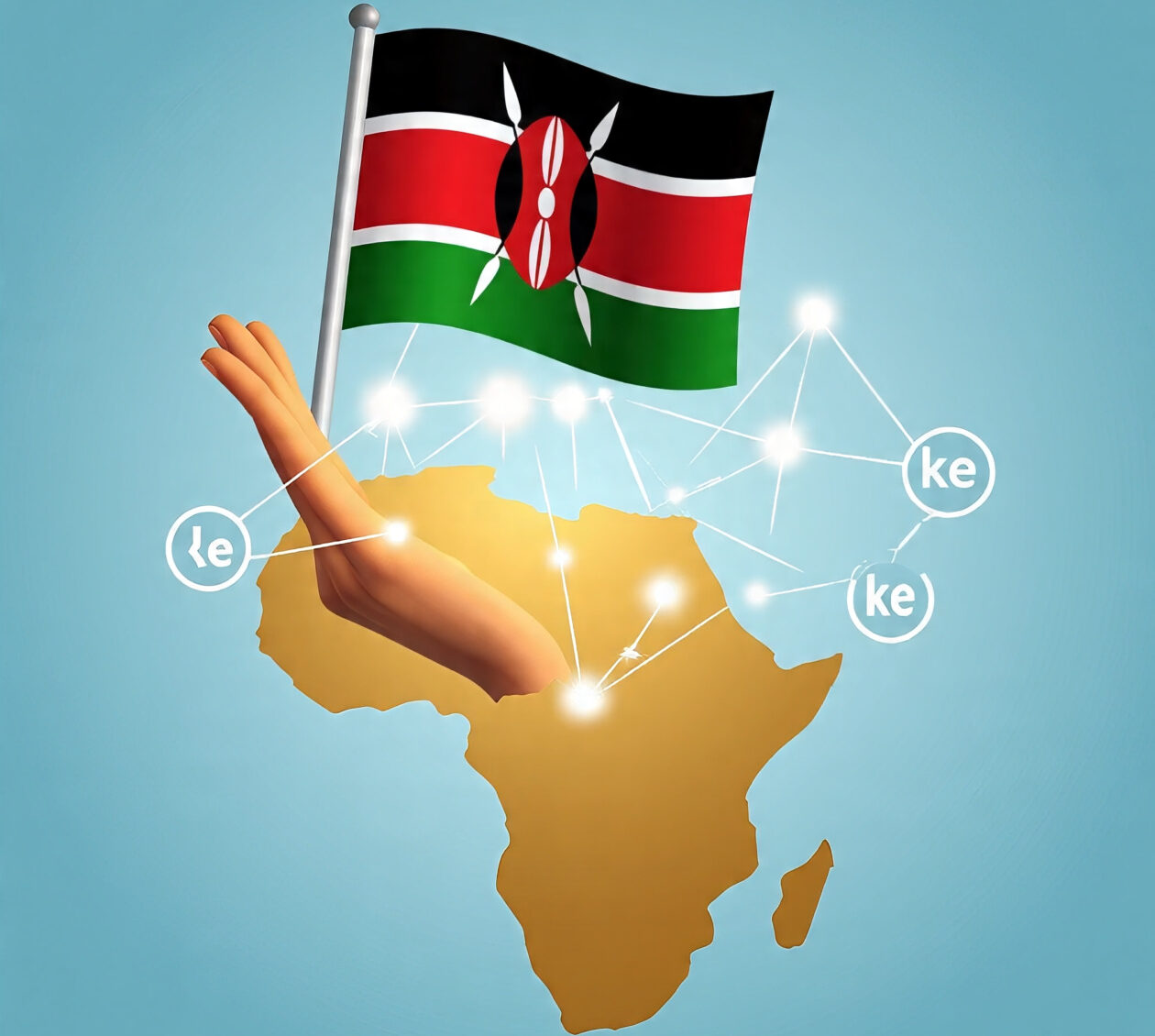
Think of domain extensions as accents. A .com speaks with a global voice. A .ke domain? That’s distinctly Kenyan.
The .COM Story: Going Global Since 1985
The .com extension has been around since the internet was basically a baby. It’s the default choice for most people worldwide.
When someone can’t remember your exact domain, they’ll probably type .com first. That’s just muscle memory at this point.
Global businesses love .com. Tech startups worship it. International clients expect it.
But here’s something interesting. Being global isn’t always better.
The .KE Reality: Home Is Where the Domain Is
Kenya’s country code domain came later. KENIC manages all .ke registrations from right here in Nairobi.
You’ve got options too. There’s .co.ke for businesses. The .or.ke for organizations. Even .ac.ke for academic institutions.
Each one tells visitors something about who you are before they click a single link.
And that specificity? Sometimes it’s exactly what you need.
Why .KE Domains Win Hearts in Kenya
Sarah’s client base was 100% Kenyan. Her work focused on local businesses. Her network? All within East Africa.
She needed to signal that immediately.
1) Google Loves Local (Especially in Kenya)
Here’s something most people don’t realize. Google treats .ke domains differently for Kenyan searches.
When someone in Mombasa searches for graphic design services, Google gives preference to .co.ke sites. The algorithm assumes local intent from local domains.
It’s not magic. It’s just smart targeting.
Your .ke domain tells Google’s algorithms exactly where you belong. And in return, you rank higher for Kenya-based searches on google.co.ke.
I’ve seen businesses jump from page three to page one just by switching domains. The power of local SEO is real.
2) Trust Works Both Ways
Kenyans trust Kenyan businesses. That’s not nationalism; it’s practical sense.
When you’re choosing between two similar services, which feels safer? The one with a .co.ke address showing clear local presence, or the ambiguous .com that could be anywhere?
Your clients see that .co.ke and think, ah, they get it. They’re one of us.
3) The Money Talk: What You’ll Actually Pay
Let’s talk numbers because budgets matter.
A .co.ke domain costs around KES 399 to KES 1,200 per year depending on your registrar. That’s less than most people spend on lunch in a week.
Compare that to .com domains. Those typically run KES 1,500 to KES 2,000 annually. Sometimes more if you’re not shopping around.
You can pay in Kenyan shillings through M-Pesa. No currency conversion headaches. No international transaction fees eating your budget.
For Sarah, that KES 800 difference meant she could invest elsewhere. Maybe better hosting. Maybe that logo redesign she’d been putting off.
Small savings add up faster than you’d think.
When .COM Makes Perfect Sense
But hold on. I’m not saying .ke vs .com is always a clear winner for .ke.
Sometimes .com is exactly what you need.
Thinking Beyond Borders
Remember David? He runs a software development shop in Eldoret.
His clients? All over the world. Silicon Valley. London. Dubai.
When he sends proposals to international clients, davidtech.com feels more neutral than davidtech.co.ke. It doesn’t limit him geographically.
Global clients recognize .com instantly. They trust it. They expect it.
If you’re selling to the world, .com speaks their language.
The Recognition Factor
.COM has been around since 1985. That’s almost 40 years of brand recognition baked in.
People type .com automatically. It’s muscle memory at this point.
When someone hears your business name at a networking event, they’ll probably try the .com first. That’s just how brains work.
If that domain is taken and someone else owns it? You’re sending potential customers straight to a competitor or a parked page.
More Names Available (Sometimes)
The .ke namespace is smaller. Popular business names get snapped up quickly.
With .com, you’ve got millions more options. Your desired name might still be available.
Yes, the good short .coms are mostly gone. But creative variations? Still plenty out there.
The Real .KE vs .COM Comparison
Let me break this down in a way that actually makes sense.
| Factor | .KE Domain | .COM Domain |
|---|---|---|
| Cost | KES 399 – 1,200/year | KES 1,500 – 2,000/year |
| Local SEO | Strong for Kenya searches | Weaker for local targeting |
| Global SEO | Limited outside Kenya | Strong worldwide |
| Trust in Kenya | High local credibility | Neutral to positive |
| International perception | May seem limited | Professional globally |
| Payment methods | M-Pesa, local options | Usually card or PayPal |
| Registration speed | 1-2 business days | Instant |
| Availability | Limited options | More names available |
Neither choice is wrong. They just serve different purposes.
Sarah chose .co.ke because her entire business lives in Kenya. David went .com because his clients don’t.
Both made the right call for their situations.
How to Actually Make This Decision
Stop agonizing. Start asking yourself better questions.
Who’s Your Real Audience?
If 90% of your customers are in Nairobi, Mombasa, Kisumu, or other Kenyan cities, .co.ke makes sense.
If you’re targeting East Africa? Maybe .ke still works.
But if you’re dreaming of clients in New York, London, or Singapore? .COM is probably smarter.
Geography drives this decision more than anything else.
What’s Your Five-Year Plan?
Think ahead. Where do you see your business in 2030?
Still serving local clients? Expanding regionally? Going international?
Your domain should match your ambitions, not just your current reality.
Sarah knew she’d stay local. Her entire business model relied on face-to-face meetings and understanding Kenyan design preferences.
David knew he’d chase international contracts. His skills weren’t geographically limited.
What Industry Are You In?
Some businesses naturally benefit from .ke domains. Others don’t.
Better for .KE:
- Local retail stores
- Real estate agencies
- Law firms serving Kenyan clients
- Restaurants and hospitality
- Community organizations
- Local news sites
Better for .COM:
- Software companies
- E-commerce stores shipping internationally
- Digital marketing agencies
- Freelancers working remotely
- Tech startups seeking investment
- Online course creators
Your industry often tells you which way to lean.
The Smart Play: Own Both
Here’s what successful businesses do. They register both the .ke vs .com versions.
It costs maybe KES 2,000 total per year. That’s cheap insurance against confusion.
Use one as your primary domain. Redirect the other one to it.
Someone types the wrong extension? They still land on your site.
OLITT.com makes this easy with their affordable domain registration packages. You can grab both extensions without breaking the bank.
Brand protection matters more than you think. Competitors can’t squat on your name if you already own it.
Getting Your Domain Registered in Kenya
The .ke vs .com decision is made. Now what?
Registering a .KE Domain
KENIC manages all .ke domains, but you’ll register through authorized registrars.
You’ll need:
- Your national ID or business registration documents
- Payment method (M-Pesa works great)
- Basic contact information
The process takes one to two business days for approval. Slightly slower than .com, but not bad.
Popular registrars like OLITT.com handle all the paperwork. You just fill out forms and wait for confirmation.
Registering a .COM Domain
This one’s faster. Usually instant.
Pick any international registrar. Many operate in Kenya now with local payment options.
No special documentation needed. Just fill out the form, pay, and you’re live.
OLITT.com offers both .ke and .com registrations, making it easy to grab both at once if you want.
Mistakes Everyone Makes (Don’t Be Everyone)
Choosing Solely on Price
The cheapest option isn’t always the best option.
Save KES 500 on your domain but lose thousands in missed local customers? Bad math.
Ignoring Renewal Costs
That promotional KES 399 .co.ke? Might renew at KES 1,200.
That bargain .com? Could jump to KES 2,500 next year.
Read the renewal pricing before you commit. Some registrars play games with promotional pricing.
Forgetting About Your Growth
You’re small today. But next year?
That .co.ke might feel limiting if you suddenly land an international client. That .com might feel impersonal if you double down on community connections.
Think two steps ahead, not just where you are now.
Not Securing Both Extensions
If someone else registers the other version of your domain, confusion follows.
Customers might end up at a competitor’s site. Or a domain squatter demanding money.
For the cost of a nice dinner in Nairobi, you can prevent that headache.
The Bottom Line on .KE vs .COM
Sarah’s story ended well. Her .co.ke domain helped her rank higher for Nairobi graphic design searches.
Clients loved that she was clearly local. Her business grew 40% in the first year.
Would .com have worked? Maybe. But .co.ke was the smarter choice for her specific situation.
David’s .com domain opened doors internationally. Clients took him more seriously. His business expanded to three countries.
Would .ke have worked? Possibly. But .com matched his global ambitions better.
Your Move
The .ke vs .com debate doesn’t have one right answer. It has YOUR right answer.
Ask yourself:
- Where are my customers?
- Where will they be in three years?
- What impression do I want to create?
- Can I afford both?
Local focus and Kenyan pride? Go .co.ke.
Global ambitions and international clients? Choose .com.
Smart money says register both through OLITT.com and redirect one to the other.
Your domain is more than a web address. It’s a signal. A statement. A strategy.
Pick the one that tells your story best.
And if you’re still unsure? Start with the one that matches your current business. You can always add the other later.
Just don’t spend three sleepless nights overthinking it like Sarah did. Make the call and move forward.
Your business needs you building it, not debating domain extensions forever.