
Have you ever wondered how to get more Google reviews without spending money on ads or sketchy review services?
We get it. Collecting reviews doesn’t happen overnight, and honestly, it’s not the most comfortable part of running a business.
Over the years, we’ve worked closely with local business owners across the U.S., and almost everyone runs into the same roadblock. You know reviews matter, but asking customers for feedback can feel awkward, pushy, or just plain exhausting.
You’ve probably tried it all: friendly reminders, follow-up emails, even social media posts. And still, the reviews don’t come in the way you hoped.
Here’s the good news.
After helping businesses consistently earn real, positive Google reviews, we’ve put together a simple 10-step process that actually works without pressure or shortcuts.
In this post, we’ll break down that approach and show you how to take your Google Business Profile from barely any reviews to a steady flow of genuine feedback, the natural way.
Let’s get into it.
Why Google Reviews Matter More Than You Think
Before jumping into tactics, it helps to understand why Google reviews carry so much weight in the first place.
Today, people don’t trust ads the way they used to. They trust other people.
And Google reviews are often the first place they look before deciding who to contact.
At a glance, reviews influence three major areas of your business.
i) Trust: Social Proof Beats Marketing
When potential customers see real reviews from real people, it removes doubt.
They’re not asking, “What does this business say about itself?”
They’re asking, “What do other customers say?”
A business with detailed, recent reviews feels safer, more established, and more reliable, even if it’s smaller than its competitors.
ii) Visibility: Reviews Help You Show Up
Google doesn’t just display businesses randomly.
It looks for signals that show your business is active, relevant, and trusted. Reviews provide all three.
- More reviews signal ongoing customer interaction
- Recent reviews show your business is still active
- Positive sentiment reinforces credibility
The result? Businesses with strong review activity are more likely to appear in local search results, especially when people search nearby services.
iii) Conversions: Reviews Turn Views Into Action
Reviews don’t just help people find you; they help people choose you.
When someone compares two similar businesses, the one with more reviews and better responses usually wins.
More reviews often lead to:
- Higher click-through rates
- More phone calls
- More website visits
- More walk-ins
In many cases, reviews make the final decision before a customer even visits your website.
A business with consistent, recent reviews almost always gets more attention than one that stays silent.
So when someone searches for your service, your reviews are no longer just feedback; they’re your first impression.
They quietly answer the questions every customer has:
- Can I trust this business?
- Do others like working with them?
- Is this the right choice for me?
That’s why learning how to get more Google reviews is a core part of staying visible, competitive, and chosen.
Preparing Your Business for Review Success
Before you start asking for reviews, you need the basics in place.
Reviews work best when your business already looks credible. Without that foundation, even satisfied customers may hesitate to leave feedback.
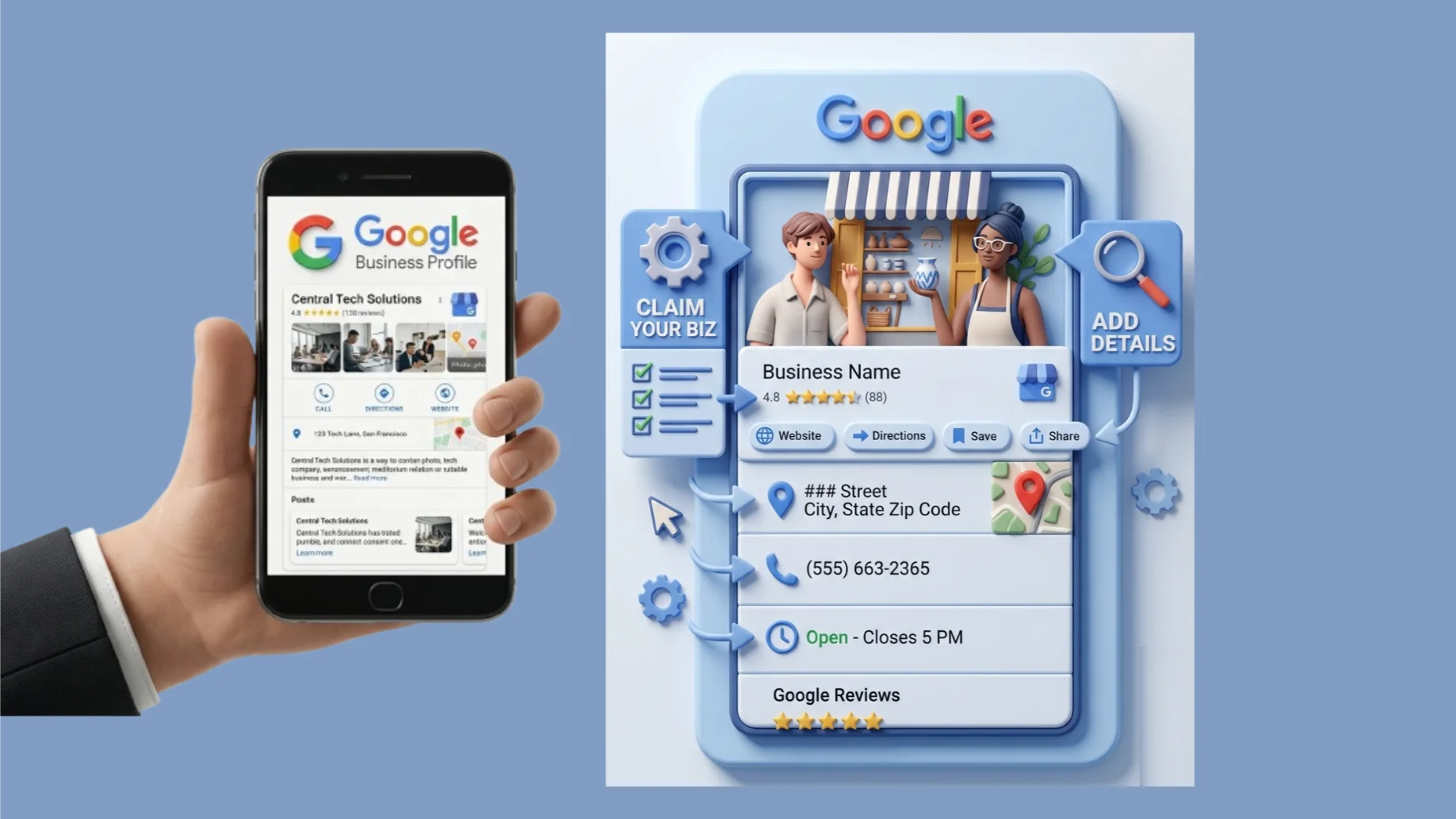
a) Claim and Optimize Your Google Business Profile
The first step is claiming your Google Business Profile.

It’s free, and it’s how your business appears on Google Search and Maps.
Head to business.google.com, search for your business name, and verify ownership. Once that’s done, fill out every important detail:
- Business hours
- Accurate contact information
- Clear business description
- Real photos of your location, products, or services
An optimized profile gets more views, and more views lead to more reviews.
That’s not guesswork. Studies consistently show that customers are far more likely to visit and trust businesses with complete Google profiles.
b) Make Sure You Have a Website
If you don’t have a website yet, this is the moment to fix that.
A website gives customers somewhere to:
- Learn more about your business
- Confirm you’re legitimate
- See reviews and testimonials
It also reinforces trust when someone clicks from your Google listing.
At Olitt, our website builder makes this easy, with drag-and-drop templates ready in minutes.
Once your website and Google profile are aligned, asking for reviews feels natural instead of forced.
Now that your foundation is solid, let’s move into the exact steps you can use to start collecting reviews consistently.
Step-by-Step Ways to Get More Google Reviews Fast
Getting more Google reviews involves setting up small systems that run in the background every day.
Follow these steps in order. Each one builds on the last and helps you collect reviews faster, without pressure or awkwardness.
1) Generate Your Direct Review Link
This is where everything starts.
If customers have to search for your business before reviewing you, most won’t bother. The extra effort kills momentum.
Inside your Google Business Profile dashboard, click “Get more reviews” and copy your shareable review link. That link takes customers straight to the review box, no distractions, no confusion.
Once you have it:
- Save it on your phone
- Add it to WhatsApp templates
- Shorten it for easy sharing
- Turn it into a QR code
We’ve seen simple QR codes on receipts, counters, and business cards quietly generate dozens of reviews in a month. People scan while they wait, and the job is done.

2) Ask Customers In Person, Right After a Good Experience
This is still one of the fastest ways to get reviews.
The key is timing.
Ask when the customer is already smiling, thanking you, or clearly satisfied. That’s when leaving a review feels natural, not forced.
A simple line works best:
“If you enjoyed the service today, would you mind leaving us a quick Google review? It really helps us grow.”
No long explanations or pressure.
When teams are trained to ask confidently and casually, customers respond. Many just need permission to help.
3) Send Follow-Up Emails That Feel Personal
Email works best as a reminder, not a push.
Send it within one or two days, while the experience is still fresh in their mind. Keep the message short and warm.
A good review email:
- Thanks to the customer
- Mentions what they purchased or received
- Shares the review link clearly
Avoid long paragraphs. One clear action is enough.
When emails feel personal instead of automated, response rates climb quickly.
4) Use SMS for Fast, High-Response Requests
Text messages get read almost instantly.
That’s why SMS works so well for review requests, especially for local and service-based businesses.
A short message is all you need:
“Thanks for choosing us! If you have a minute, tap here to leave a Google review: [link].”
Send it shortly after the interaction, and don’t overdo it. One well-timed message is far more effective than multiple reminders.
5) Add Visual Review Prompts in Your Physical Space
Not every customer wants to be asked directly, and that’s okay.
Visual prompts do the work for you.
Place small signs or cards where customers naturally pause:
- At checkout
- On tables
- Inside takeaway bags
- On receipts
A simple “Scan to review us on Google” message works because it removes friction and avoids awkward conversations.
6) Display Your Reviews on Your Website
People follow social proof.
When visitors see real reviews on your website, it reassures them that others trust you, and it subtly encourages them to add their own voice.
Embedding reviews:
- Builds credibility instantly
- Reinforces buying decisions
- Encourages follow-up reviews later
Once trust is established, leaving a review feels like a natural next step.

7) Respond to Every Review (Yes, Every One)
Reviews are conversations, not just ratings.
When you respond, you show that:
- You’re listening
- You value feedback
- You care about customer experience
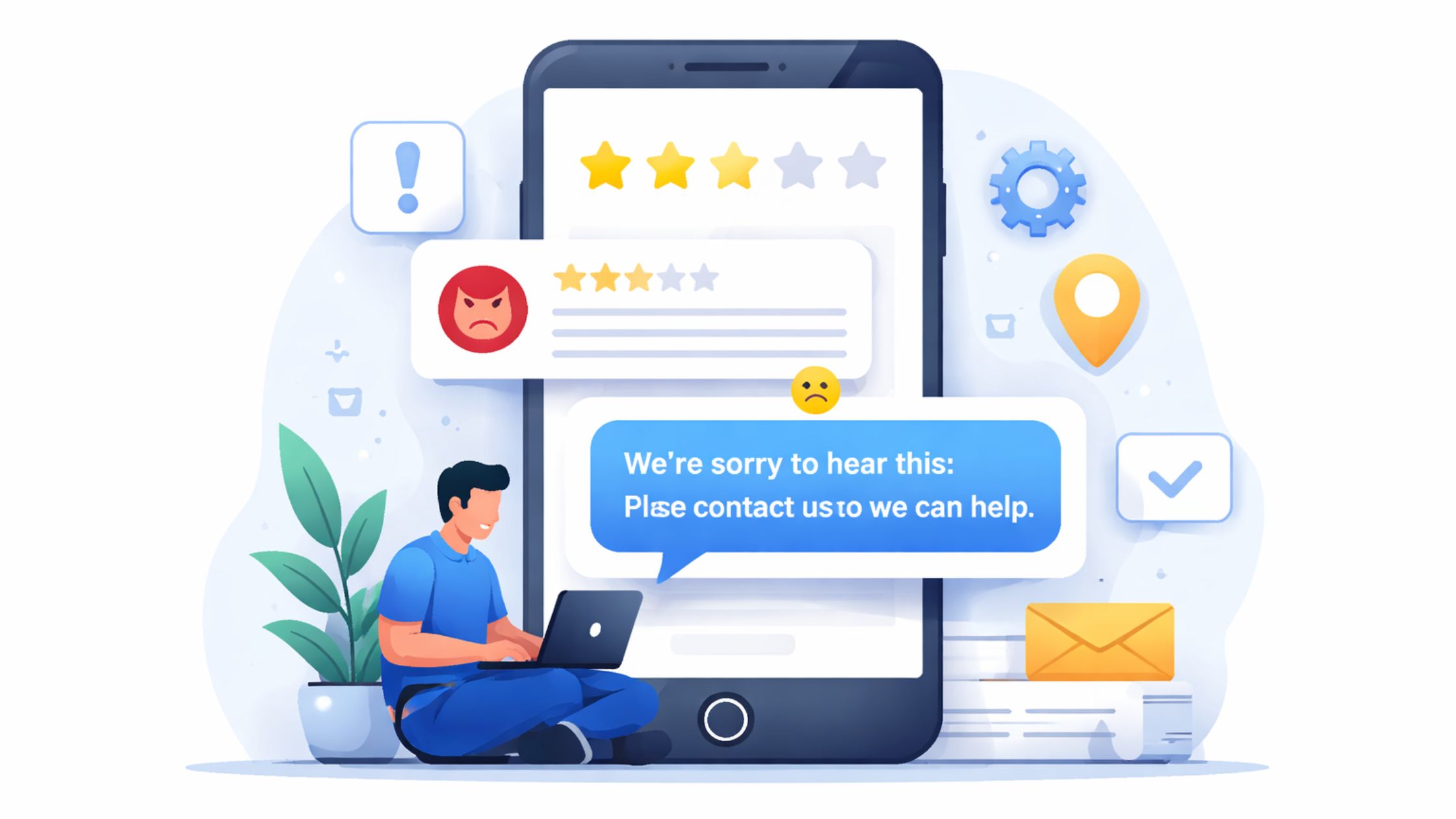
Thank positive reviewers. Acknowledge negative ones calmly and professionally.
Future customers read these responses closely, and many decide to leave reviews because they see how engaged you are.
8) Avoid Shortcuts and Fake Incentives
It’s tempting to speed things up with rewards, but this often backfires.
Google doesn’t allow paid or incentivized reviews, and profiles can be penalized or suspended.
Instead, focus on:
- Great service
- Clear requests
- Easy review links
Authentic reviews may come slower, but they last longer, and they build real trust.
9) Automate the Process Where Possible
Once your manual review process is working and bringing in consistent results, automation becomes the next logical step.
Not because you have to scale fast, but because doing everything manually gets tiring over time. Automation takes care of the repetitive follow-ups, so you’re not constantly reminding yourself who to message and when.
It frees up your time and mental energy, letting you focus on what actually grows the business: serving customers well.
Here’s how automation helps in real, practical ways:
- Review requests can go out automatically right after a purchase, appointment, or completed service, when the experience is still fresh.
- Follow-ups can be scheduled gently, so customers who forget the first time still get a chance to respond.
- You can see which channels perform better, whether it’s email, SMS, or WhatsApp-style messaging, and adjust from there.
The result isn’t overnight magic. It’s a steady, predictable review growth that doesn’t rely on you remembering every single step.
Tools can make this easier. For example, Olitt LocalForce is designed to help local businesses automate parts of their Google review workflow. It focuses on timing review requests properly, assisting with responses using natural templates, and keeping your Google Business Profile active and up to date.
Several shops and service providers we’ve worked with found that once they set up a basic automated flow, reviews stopped being random. Instead of long gaps followed by bursts, they began seeing a more reliable stream, without adding daily admin work.
If you’re new to automation, start small. Pick one trigger, like sending a review request after checkout, and automate just that. Once it runs smoothly, you can build on it.
Your future self and your review count will appreciate the consistency.
10) Reconnect With Past Customers
Some of your best reviews are still waiting.
Reach out to customers who already know and trust you. A simple check-in message often works:
“We’d love to hear how your experience was. If you have a moment, here’s our Google review link.”
Loyal customers are usually happy to support you; they just need a reminder.
When these steps become part of your routine, reviews stop feeling like a struggle.
You’re no longer chasing feedback. You’re simply creating opportunities for happy customers to speak up.
Common Mistakes That Kill Review Growth
Most businesses don’t struggle with reviews because customers are unhappy.
They struggle because of small, avoidable mistakes that quietly slow everything down.
Here are the most common ones and why they matter.
- Asking too late
Waiting days or weeks to ask for a review usually means the moment has passed. The experience is no longer fresh, and customers have mentally moved on. Reviews work best when requested right after a positive interaction.
- Using generic, copy-paste messages
Messages that sound automated or impersonal get ignored. Customers are far more likely to respond when the request feels human, friendly, and specific to their experience.
- Making the process complicated
Asking customers to search for your business, click through multiple steps, or figure things out on their own creates friction. Every extra step reduces the chances of a review.
- Ignoring reviews once they come in
Not responding sends the wrong signal. It makes your business feel distant or uninterested, and it discourages others from leaving feedback.
- Only asking once and giving up
Many customers are willing to leave a review, but they just forget. A gentle follow-up is often all it takes, but many businesses never send one.
These may seem small on their own, but together, they add up fast.
Fixing just a few of these mistakes can dramatically increase the number of reviews you collect, without changing anything else about your business.
Conclusion
Getting more Google reviews doesn’t require tricks or constant follow-ups.
It comes down to three things: good timing, simple processes, and consistency.
When you ask at the right moment, make it easy for customers, and follow up thoughtfully, reviews start coming in naturally. Over time, they stop feeling like something you have to chase and become part of how your business grows.
The key is turning review collection into a system, not a one-off effort.
That’s where Olitt comes in. Olitt helps you build a professional online presence and simplify how customers find, trust, and review your business. With tools designed for local growth, including review workflows and Google Business Profile support, you can stay visible without adding extra work to your day.