
How do some businesses show up at the top of Google Maps while others get buried on page two, where nobody looks?
You might have a great product. You might have loyal customers. You might offer better service than anyone in town. But none of that helps if people cannot find you when they search.
The way Google decides who gets those top spots has changed. It is more automated, more reliant on artificial intelligence, and more focused on how you manage your profile week after week.
That is what we will discuss in this article. We will go through the Google Maps ranking factors. We will look at how the system works and what you need to do to show up at the top.
How Does Google Maps Ranking Work?
To understand how to rank better, you first need to understand how Google sees your business.
When someone types a search query, Google scans millions of businesses and runs them through a set of rules to decide who belongs at the top.
The algorithm looks at three main things.
- First, it checks relevance. Does your business actually offer what this person is looking for?
- Second, it checks the distance. How close are you to the person doing the searching?
- Third, it checks prominence. How well-known and trusted is your business?
These three categories have been the foundation of local search for years. But in 2026, the definition of each one has expanded.
Now, artificial intelligence plays a much bigger role. The algorithm looks for freshness, consistency, and engagement.
If your Google Business Profile looks like it was set up five years ago and hasn’t been touched since, the algorithm assumes you might not even be open anymore.
It will push you down and put active businesses ahead of you.
So, don’t set up your profile, and walk away. You have to prove to Google every week that your business is alive, open, and serving customers.
Why is Google Maps Ranking Important?
Maybe you’ve already created a website for business with Olitt, and you think that you’ve done enough.
Having a functional website is a step ahead. However, it’s not sufficient. Google Maps is often the very first place a potential customer ever encounters your business.
High-intent customers use Maps. When someone opens Google Maps, they are looking for a specific product or service, and they want it right away.
These are people who are ready to call you or walk through your door.

In addition, near me searches have blown up. More than half of smartphone owners search for a local business every day. They want convenience. They want something close by.
If you aren’t visible in those searches, you are invisible to a massive group of potential customers.
Also, the local three-pack is prime real estate. When you rank in the top three on Google Maps, you also appear in a special box on the main Google search results page.
That means you dominate both map results and regular web search results for your local terms. Your competitors get pushed down to page two, where nobody looks.
A good ranking builds trust. A profile that appears at the top and has recent photos, posts, and reviews immediately tells a customer you are legitimate.
Your customers find confidence before they ever contact you.
7 Google Maps Ranking Factors You Cannot Ignore in 2026
You cannot afford to miss out on these Google Maps ranking factors.
1) Your Physical Location

We have to start here because location is more critical than other factors.
If a customer is searching downtown and your business is three blocks away, you have an advantage over a business that is three miles away.
But if you run a service business that goes to the customer, like a plumber or a mobile dog groomer, this gets trickier.
If you use a service area instead of a physical address, you are fighting an uphill battle. Google needs to know exactly where you are based to trust that you can serve customers in a given area.
If you operate without a verifiable physical location, it is harder for Google to know where to show you.
So, if you can secure a small office or even a virtual office that can be verified close to your core customer base, do it.
For example, in Kenya, small businesses rent shelves in mall shops within the Nairobi CBD so customers can pick up products.
Having a physical location gives your business an advantage over businesses without one.
2) Your Primary Business Category
Your primary category is the single most important piece of text on your Google Business Profile. It tells Google what you do.
If you own a pizza restaurant, do not just select “restaurant” as your category. Pick “Pizza Restaurant.”
When someone searches for “pizza near me,” Google needs to see those exact words connected to your business.
The more specific you are with your category, the more relevant you become to that search. Being generic makes you invisible.
You can also add secondary categories, but your primary category carries the most weight.
3) Your Google Business Profile Activity

Just as you have to feed your social media accounts regularly to keep them alive, you have to feed your GBP regularly to keep it alive.
How active you are on your profile is one of the most important ranking factors you can control. This includes several things.
- Posts. You should share updates, offers, and events weekly. These posts appear right in your listing and let Google know you are active.
- Photos. You should upload new, high-quality images of your products, your team, or your location every week or two. Profiles with fresh photos get significantly more views than those with old, stale images.
- Q&A. You need to monitor the questions people ask on your profile and answer them quickly. This shows engagement.
Now, here is the honest truth. Keeping up with all of this activity while also running your business is hard to do manually.
Who has time to sit down and create new posts every week, sort through photos, and monitor questions when you have customers standing in front of you?

This is why we built Localforce on Olitt. Localforce automatically handles this ongoing activity for you. It generates posts using your own business data, so you stay active without having to think about it.
It helps you upload images consistently. It even alerts you to new questions so you never miss an opportunity to engage.
Localforce keeps you visible by keeping you active, week in and week out, without adding more to your plate.
4) Your Reviews
Reviews rules have changed in 2026. It is no longer about having a high number of reviews.
Recency is also key. A business with fifty reviews from the last three months can outrank a business with two hundred reviews from three years ago.
Google wants to know you are good today, not that you were good five years ago.
Keywords in reviews are also important. When customers mention specific things in their reviews, like friendly staff or great latte art, Google takes note.
Those keywords help build your relevance profile and connect you to more searches.
Also, you must respond to both positive and negative reviews to show Google that you are engaged with your customers and that you care about feedback.
5) Your Website and Local Content
Your Google Maps listing does not exist in a vacuum. It is tied directly to your website, and Google checks your site to see if it matches the quality of your profile.
In 2026, this means having local content on your website. You need pages dedicated to each service you offer in each location you serve.
Let me give you an example. If you are a roofer in Dallas, do not just have a single services page.
Have a page for Roof Repair in North Dallas. Have another for Emergency Roofing in Arlington. Have another for Leak Detection in Fort Worth.
This proves to Google that you are an expert in those specific geographic areas. It builds your authority and helps you rank for more specific searches.
6) Your Citations and NAP Consistency
NAP stands for Name, Address, and Phone number.
Google needs to trust that you are a real business, and one way it verifies this is by checking whether your information is consistent across the internet.
This means your Yelp page, your Facebook page, your local chamber of commerce listing, and every other directory should have your exact name, address, and phone number listed exactly the same way.
Consistency builds trust. Trust builds rankings. You need to make sure your information is identical everywhere and avoid even the slightest inconsistencies.
7) How Customers Engage With Your Listing
Google watches what people do when they see your listing. This is called user behavior, and it carries significant weight.
If 100 people see your listing and 50 click to call you, that tells Google you are what people are looking for.
The key signals Google looks at include how many people click to call you from the listing, how many people ask for directions to your door, and how many people click through to visit your website.
High engagement tells Google that your business is popular and useful. That pushes you higher up the ranks.
You Can Rank With Our Help

All these Google Maps ranking factors can be hard to keep up with. Running a business is already hard enough without having to become a Google Maps Expert.
You need a system that handles the busy work, keeps you consistent, and shows you exactly what is working.
At Olitt, we built Localforce specifically for business owners who want to rank on Google Maps without spending all their time on it.
Localforce helps you manage your Google Business Profile in all the locations where you operate, turning your profile into a machine that generates real calls, visits, and bookings.
With Localforce, you can audit your current profile, get suggestions for improvement, apply those changes, and track your progress all from one simple dashboard.
We focus on Google Business Profile first because it is crucial for local ranking.
Google Maps Ranking Best Practices
I’ll leave you with some practical steps you can take starting today to improve your ranking.
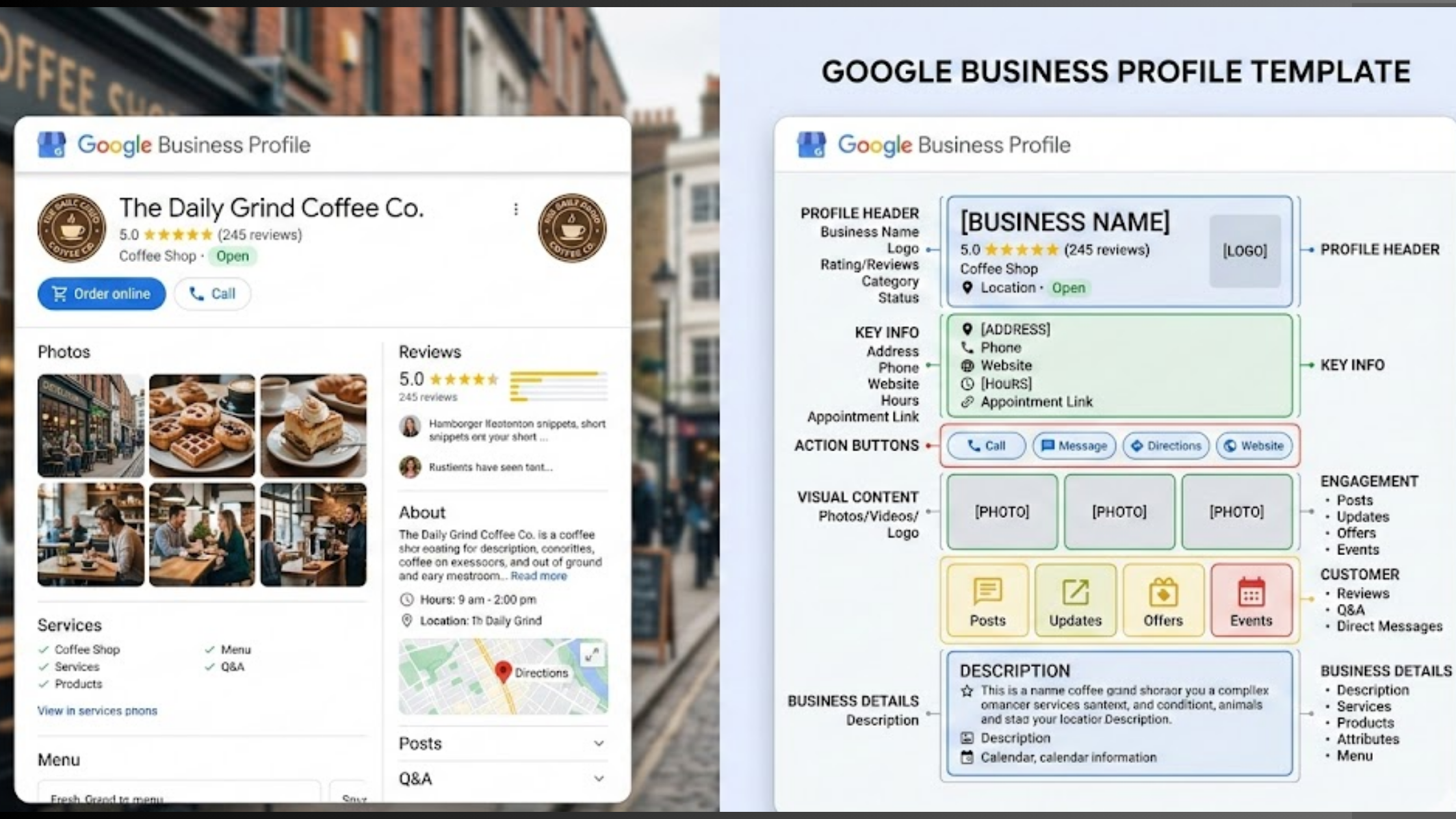
a) Do a Complete Profile Audit
Log in to your Google Business Profile right now and check every single field. Is your phone number correct? Are your hours updated? Is your website link working?
Fill out every section Google gives you. Never leave a field blank.
b) Get on a Schedule
You have to post regularly. You have to upload photos regularly. You have to respond to reviews regularly. Set a reminder on your calendar.
Every Monday, post a quick update or a new photo. Consistency is more important than perfection.
c) Build a Review System
Do not sit and hope for reviews. Ask for them. Train your staff to ask happy customers at the point of sale.
Send a follow-up text or email with a direct link to your review page. The easier you make it, the more reviews you get.
d) Monitor Your Competition
Keep an eye on who is ranking above you.
What are they doing that you are not? Are they posting more often? Do they have more recent reviews? Use that information to adjust your own strategy.
Final Take
Ranking on Google Maps takes consistent work. You have to post regularly, manage reviews, keep your info accurate, and stay active.
That is a lot to handle when you are already running a business.
Google does not care if you are busy. It only rewards businesses that show up consistently. If you go silent, it moves on to your competitors.
You do not have to do this alone.
At Olitt, we built Localforce to handle the hard work for you. We keep your profile active with posts, help you manage reviews, and track your progress so you know what is working.
You focus on your business. We focus on getting you found.
Stop letting competitors take customers who should be yours. Take a look at Localforce today and see where your profile stands.