
If you run a small business website in 2026, you already know how competitive search results have become. Ranking on page one used to feel like success. Today, it is only part of the battle.
When someone searches for your service on Google, they see more than simple blue links. They see map results, AI summaries, reviews, business hours, and quick answers displayed directly on the results page. In many cases, users get what they need without clicking on any website at all.
This shift has changed how local SEO works, and it is exactly why local business schema matters.
Local business schema is structured data added to your website that clearly tells search engines who you are, where you operate, and what you offer. Instead of leaving Google to interpret scattered information across your pages, schema organizes your business details in a format search engines can easily read.
In 2026, structured data is not optional. It helps remove confusion about your business information and improves your chances of appearing in enhanced search features like map packs and rich results. If your competitors are using it and you are not, they are giving search engines clearer signals.
This guide explains what local business schema is, why it matters now more than ever, and what you need to implement to stay competitive.
What Is Local Business Schema?
Local business schema is structured data added behind the scenes of your website. It’s code that search engines can read clearly, even though visitors never see it.
When platforms like Google and Bing scan your site, they are looking for clear business details. Schema labels your business name, address, phone number, opening hours, service area, and even price range in a format they instantly understand.
Instead of guessing your information from scattered text, search engines read it directly and accurately.
When implemented correctly, local business schema improves your chances of appearing in the Local Pack. These top three map listings show above regular search results, and attract the most clicks.
Why Local Business Schema Matters More in 2026
Search engines are far more advanced than they were a few years ago.
In 2026, search is heavily driven by AI systems that analyze meaning, relationships, and context, not just keywords on a page. Because of this shift, the local business schema has become more important than ever.
Here’s what has changed.
1) AI-Powered Search Relies on Structured Data
Modern search systems, especially those used by Google, focus on understanding entities such as your business, your location, your services, and how they connect. They look for clear, structured signals that confirm who you are and what you offer.
Local business schema provides that clarity. It organizes your details in a format AI systems can process quickly and accurately. Without it, search engines may rely on scattered information across your site, which increases the risk of incomplete or incorrect business data appearing in search results.
In short, schema helps search engines understand you correctly the first time.
2) Zero-Click Searches Are Increasing
More users now get answers directly from search results without clicking through to a website. When someone searches for a local service, they often see:
- Business hours
- Customer reviews
- Directions
- FAQs
- Contact details
These features appear prominently in map results and improved listings. Schema increases your chances of appearing in rich results because it clearly labels your business information.
If your competitors provide structured data and you do not, their listings are more likely to look complete and more trustworthy at a glance.

3) Voice Search Still Matters
Voice assistants continue to play a role in local search. When someone asks, “Where is the best web designer near me?” the system pulls information from structured sources to provide a fast, accurate answer.
Search engines prefer clearly organized data when responding to voice queries. If your website lacks local business schema, your chances of being selected decrease because the system has less confirmed information to rely on.
How to Implement Local Business Schema
You don’t need to be a senior developer to get this right. You have three main options.
1) Use JSON-LD Format
Google explicitly prefers JSON-LD. It is a clean script that sits in the header of your page. It is much easier to manage than older formats like Microdata, which required wrapping code around every single sentence on your page.
Step-by-Step Implementation:
- Generate the code: Use a tool like the Merkle Schema Generator or a WordPress plugin like Rank Math.
- Fill in your details: Enter your NAP, social profiles, and coordinates.
- Add to your site: Paste the script into the <head> section of your website.
- Test the code: Always run your URL through the Google Rich Results Test.
If you are looking for a platform that handles the technical heavy lifting for you, creating a website on Olitt ensures your site is lightweight and ready for advanced SEO integrations.
2) Use a Schema Plugin
If coding feels intimidating, WordPress plugins make this simple. They generate schema automatically and validate your data so you don’t have to touch any code.
How it works:
- Fill in your business details inside the plugin dashboard.
- The plugin generates JSON-LD automatically.
- Test the output using Google’s Rich Results Test.
Popular plugins for 2026:
- Rank Math SEO: Lets you add local business schema and multiple locations.
- Yoast SEO Premium: Includes structured data features.
- Schema & Structured Data for WP: Good for more customized markup.
For beginners or small business owners who want a quick, reliable solution, this is often the easiest way to get started. It saves time, reduces errors, and ensures search engines read your information correctly.
3) Manual Implementation
For businesses with multiple locations or advanced services, manual implementation gives full control. It requires careful attention to detail but offers flexibility you won’t get with plugins.
When to choose manual:
- You have multiple branch locations.
- You want a detailed service/product schema on each page.
- You need custom fields like booking availability or pricing tiers.
Steps:
- Identify the properties you need using schema.org/LocalBusiness.
- Write JSON-LD scripts for each page or location.
- Paste scripts in the <head> section.
- Test each page with Google’s Rich Results Test.
Remember to keep a spreadsheet of your locations, NAP info, and services to ensure all schema is accurate and consistent.

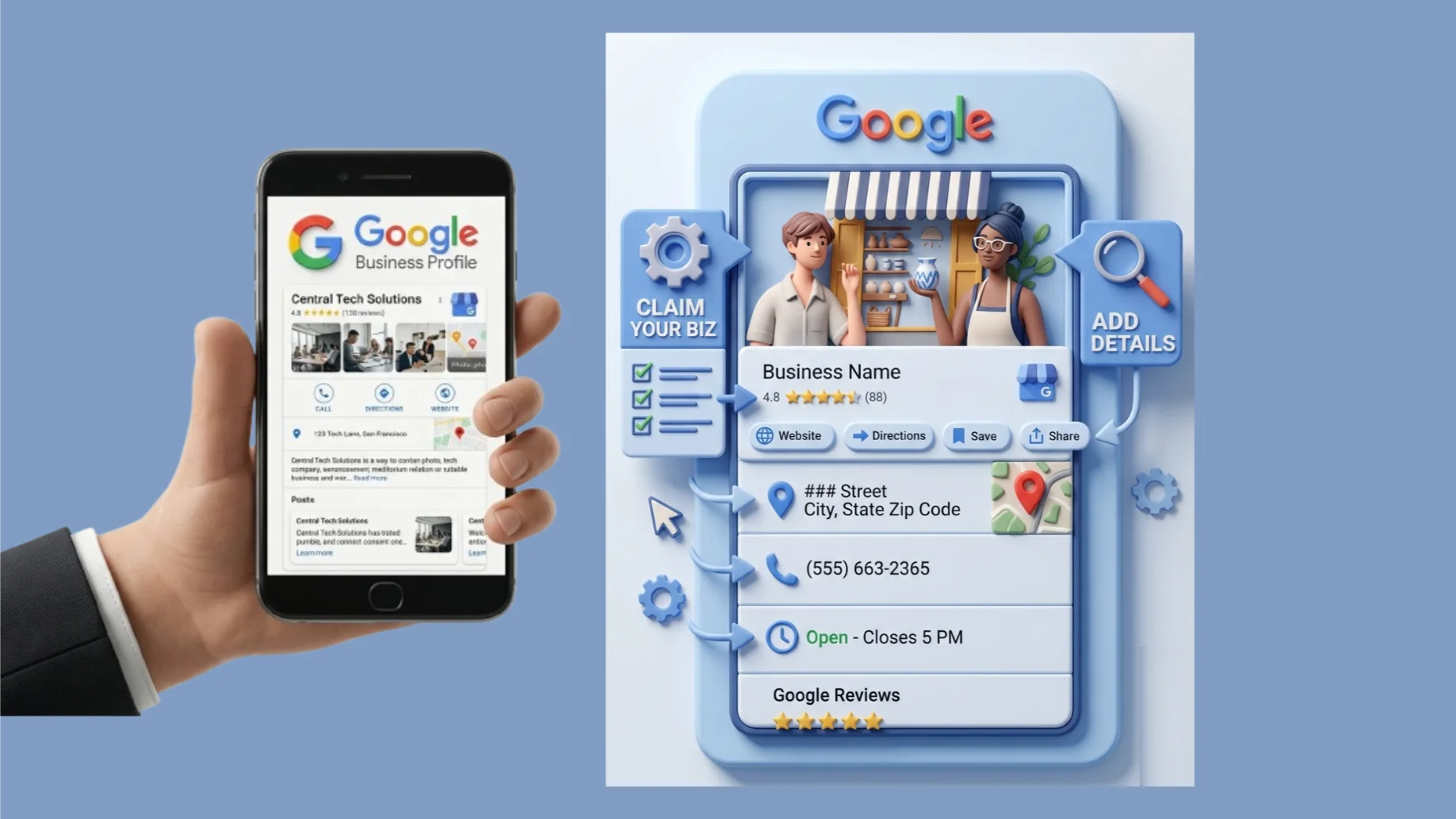
Here’s an example of how schema enhances search results – notice the rich details.
How Olitt Localforce Fits Into Your 2026 Local SEO Strategy
By 2026, ranking locally isn’t just about having great content or fast hosting; it’s about managing your entire presence where customers are searching. That’s where Olitt Localforce comes in.
Localforce is an AI‑powered Google Business Profile (GBP) management tool built to help local businesses earn visibility and conversions in the places that matter most: search results, map packs, and “near me” queries
While schema ensures your website details are clearly labeled for AI and search bots, Localforce makes sure your Google Business Profile is a major local ranking factor, is optimized, active, and performing. That’s crucial because in 2026, most local visibility is shared between your website and your GBP.
Here’s how it supports what you’ve already structured with schema:
✅ Profile setup and cleanup
Localforce audits your existing GBP and fills in gaps that could weaken local signals.
✅ Category and service alignment
It aligns your business categories with what customers are actually searching for, making your structured data and GBP speak the same language.
✅ Location‑based keyword optimization
Localforce uses real search trends to make sure your profile targets the right queries like “plumber near me” or “best café in Nairobi.”
✅ Posting and update consistency
Active profiles with regular updates, offers, and posts send stronger relevance signals to search engines, something schema alone can’t do.
✅ Review management and responses
It helps you handle reviews (even automate replies that still sound human), which boosts both trust and ranking signals.

Common Mistakes to Avoid in 2026
Even in 2026, many businesses struggle with local business schema because they treat it like a one-time setup instead of an ongoing process. Small errors can prevent search engines from understanding your business correctly, which hurts visibility.
Here are the most common mistakes and how to avoid them:
i) Adding schema but never updating it:
Your business information changes over time, including phone numbers, addresses, or hours. If your schema doesn’t match these updates, search engines see conflicting information.
ii) Using fake or misleading reviews:
Some try to boost ratings with fake reviews, but Google’s algorithms detect inconsistencies. Only display real, verified reviews in your schema.
iii) Mismatched business names:
Your website, Google Business Profile, and schema must all list the same official name. Even small differences can confuse search engines.
iv) Missing location data:
Without a clear address or geo-coordinates, your business may not appear in the Local Pack or map results.
v) Duplicating conflicting schema:
Multiple plugins or scripts generating a schema can create contradictory data, which reduces trust.
Google and other search engines value consistency. If your website information doesn’t match what’s in your Google Business Profile, your chances of ranking well drop.
Keeping your schema accurate, up-to-date, and consistent ensures that AI-driven search systems display your business correctly and reliably.
2026 Local Business Schema Implementation Checklist
Before you publish or update your site, confirm:
- Core LocalBusiness schema added
- NAP (Name, Address, Phone) is consistent everywhere
- Logo included
- Social profiles linked
- Services structured
- Reviews marked properly
- FAQ schema added where applicable
- All schemas tested and validated
If you tick all these boxes, you’re ahead of many competitors.
Conclusion
Local SEO in 2026 is no longer just about ranking on page one. It’s about being understood clearly by search engines, appearing in the Local Pack, and showing up in rich results that drive real customers to your business.
Implementing a local business schema ensures your website communicates key details like name, address, services, and hours directly to search engines. Pair that with Olitt Localforce to optimize your Google Business Profile, manage reviews, and stay visible in local searches, giving you the complete advantage over competitors.
Start today and make your business impossible to miss. Build your website or optimize your local presence easily with Olitt. Visit Olitt.com and take control of your local SEO now.