
Are citations still important? Yes, citations are still important in 2026, just not for the reasons most people think.
They’re no longer about gaming Google or stacking directory listings for quick ranking wins.
Instead, citations now play a quieter but far more important role: confirming that your business is real, trustworthy, and worth referencing not just by search engines but also by AI-driven systems.
A citation is a mention of your business details, your name, address, and phone number on other websites.
No backlink required. And this is where a lot of confusion comes in. Many people assume citations are just cheap links, outdated directories, or SEO leftovers from a decade ago. They’re not.
In this article, you’ll learn:
- What citations actually are (and what they’re not)
- Why they still important in 2026, even without links
- How citations support trust, entity recognition, and local visibility
- And how to build and manage citations the right way, without wasting time on low-value listings
Let’s break it down, simply and clearly.
What Are Citations?
A citation is any online mention of your business’s name, address, and phone number, often shortened to NAP.

You’ll find these mentions on business directories, map listings, industry sites, local blogs, and chamber of commerce pages.
Here’s where most people get it wrong: a citation doesn’t need a backlink to be useful.
Many businesses assume citations are just low-quality links from outdated directories.
Others group them with backlinks and ignore them once rankings stop jumping overnight.
That misunderstanding usually leads to one thing: inconsistent business information scattered across the web.
Citations play a different role.
Instead of boosting authority through links, citations help search engines and platforms confirm your business details.
When the same NAP information appears across trusted websites, it reinforces that your business is legitimate, active, and operating where it claims to be.
This confirmation is especially relevant today.
Search engines no longer focus only on websites. They focus on entities, real businesses connected to real locations.
Citations work like reference points across the web, supporting that entity’s understanding with consistent data.
So while backlinks influence authority, citations reinforce accuracy and trust.
What Information Should Appear in a Citation
Not all citations are created equal. Some just list your business name. Others go further and give search engines, directories, and AI systems everything they need to know about your business.
The more complete and consistent your citations are, the easier it is for your brand to be recognized and trusted.
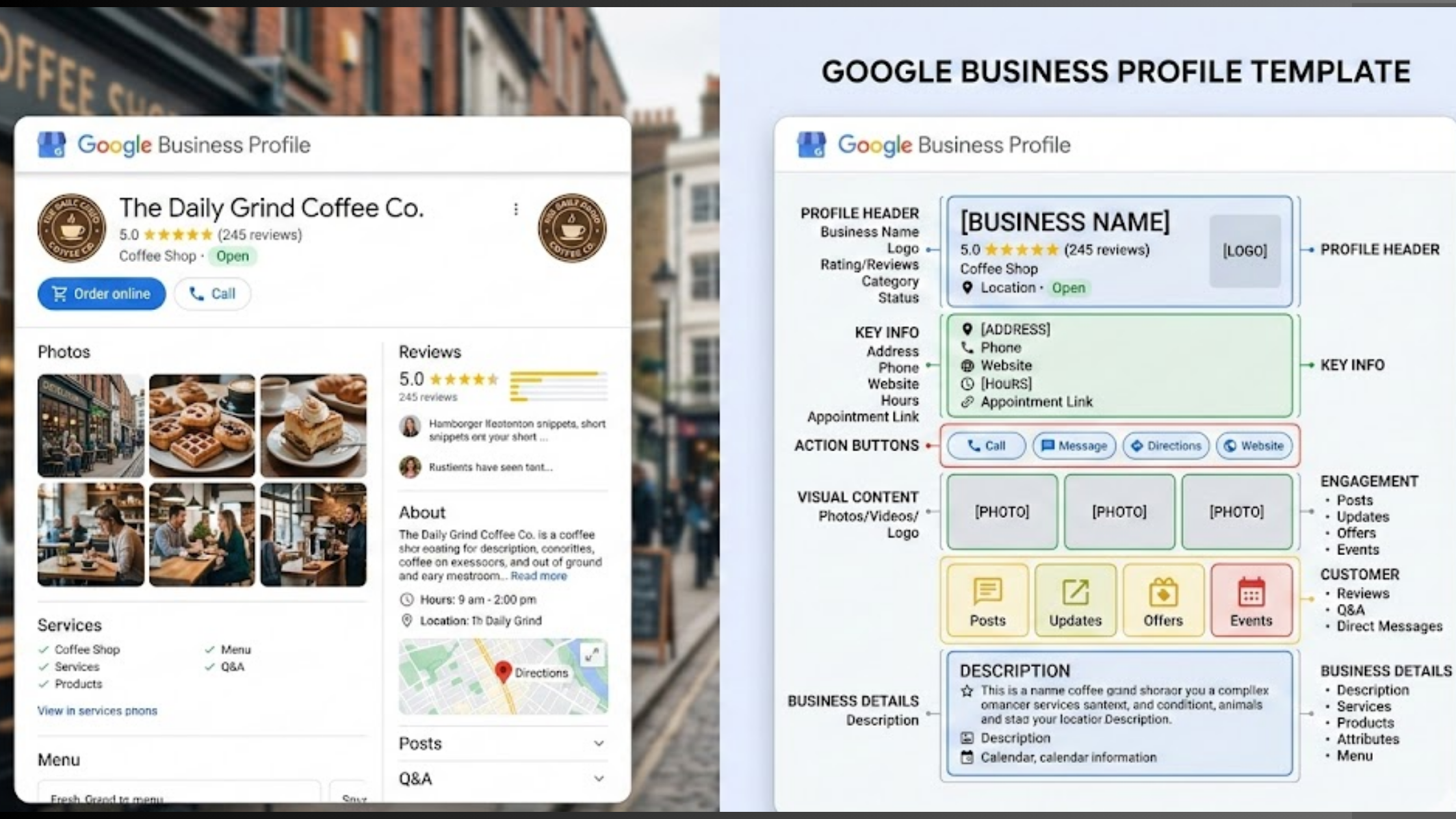
At a minimum, a citation should include your NAP which is your Name, Address, and Phone number. But that’s just the start.

Modern citations often include:
- Website URL: So users and platforms can verify your online presence.
- Opening hours: Makes it easier for people to plan a visit or call.
- Business category/description: Tells search engines exactly what you do.
- Driving directions: Helps maps and location-based AI recommend your business.
- Images: Logos, storefronts, or product shots boost recognition.
- Social media links: Shows active engagement and modern relevance.
- Email address: For contact and verification.
They are like a business card spread across the internet. The more complete the card, the more likely someone or an AI system will recognize and trust your brand.
Inconsistent or incomplete citations create confusion.
Different versions of your address, missing phone numbers, or outdated info can make AI assistants second-guess whether your business is even active.
Types of Citations
Not all citations work the same way.
Some are neat, structured, and easy for search engines to read.
Others are more casual, almost accidental, but still powerful. Knowing the difference helps you focus on the citations that actually support visibility and trust.
Structured Citations
Structured citations are the most familiar type.
These appear on platforms built specifically to list business information.
Everything follows a fixed format: business name, address, phone number, category, hours, and sometimes a website link.
You’ll usually find structured citations on:
- Business directories
- Mapping platforms
- Industry listing sites
- Local or regional business portals
Because these platforms standardize data, search engines can quickly scan, compare, and validate your business details.
This makes structured citations especially useful for confirming location and contact information.
They’re straightforward. Predictable. And still foundational.
Unstructured Citations
Unstructured citations look very different.
These happen when your business is mentioned naturally within content without a formal listing or fixed format.
A local blogger references your store. A news site quotes your company. A guide mentions your brand in passing.
There may be no address listed. Sometimes no phone number. Often no link at all.
And yet, these citations carry strong signals.
Unstructured citations show up in:
- Blog posts
- News articles
- Community websites
- Reviews and forums
- Social media discussions
Instead of confirming data fields, they reinforce brand presence and recognition.
They tell search engines and AI systems that your business is being talked about in real contexts, not just listed in directories.
Step-by-Step Process to Build Citations
With the right approach, building citations can be simple, organized, and actually rewarding.

Here’s a step-by-step method to get it done efficiently.
1) Conduct an Initial Audit
Start by looking at what’s already out there. Check all your current listings and spot inconsistencies, wrong addresses, outdated phone numbers, and duplicate listings.
Tools like Olitt Localforce make this much easier. They pull data from multiple directories and highlight discrepancies, saving you hours of manual checking.
The goal here is simple: know what you have and what needs fixing before adding anything new.
2) Ensure NAP Consistency
Your business name, address, and phone number need to be the same everywhere. Even small differences like “St.” vs “Street” can confuse search engines and AI systems.
Pick a single, standardized format and stick with it for every listing. This consistency builds trust with both platforms and potential customers.
3) Select the Right Platforms
Not all directories are created equal. Focus on platforms that are relevant to your industry and geographic location.
High-value options include:
- Local chambers of commerce
- Regional business directories
- Industry-specific listing sites
Avoid low-quality or irrelevant directories; they don’t add credibility and can create noise rather than clarity.
4) Optimize Your Citations
Don’t just stop at NAP. Fill in all available details: business hours, images, videos, business description, and links to key pages on your website (like your contact or about page).
The more complete your listing, the easier it is for search engines, directories, and AI systems to recognize and reference your business accurately.
5) Manage and Maintain
Citations aren’t “set it and forget it.” Update your listings regularly, new locations, changed hours, updated phone numbers.
A quick annual review can prevent outdated information from undermining all your efforts.
6) Engage and Enhance
Where possible, interact with the platforms hosting your citations. Respond to reviews, answer questions, and post updates or special offers.
Active engagement strengthens your visibility and shows both AI and human users that your business is alive and active.
See also: Can Businesses Use a .Org Domain
Popular Local Citation Sites
If you’re wondering where to start building citations, not all directories are created equal.
Some carry more authority, while others are niche-specific but still valuable.
Focusing on the right platforms saves time and strengthens your online presence.

Here are some of the most trusted places to list your business:
1) Foursquare
Long before apps like Uber or Google Maps, Foursquare helped people find businesses nearby. Today, it’s still widely referenced by search engines and AI-driven location services.
2) Better Business Bureau (BBB)
A listing on BBB signals credibility. It’s not just for big companies — even small businesses benefit from the trust factor here.
3) Localworks
A regional directory that focuses on connecting local businesses with their communities. Ideal for visibility in maps and local search.
4) MapQuest
Yes, it’s still around. MapQuest helps with driving directions and location confirmations, which reinforces your business’s legitimacy.
5) Yellow Pages
A classic, but still relevant. Many directories pull data from Yellow Pages, so having your info correct here multiplies your reach.
6) Angi (formerly Angie’s List)
Great for service-based businesses. Reviews and consistent citations here strengthen your reputation and visibility.
7) City-Data
A highly trusted platform for local information. Citations here are particularly useful for businesses looking to appear in community searches.
8) Manta
A directory that caters to small businesses and service providers. It’s another place where structured citations can reinforce NAP consistency.
By creating listings on these platforms, you’re spreading accurate information across the web.
While sites like Foursquare, Manta, and Yellow Pages are popular places to build structured citations, tools like Olitt Localforce make it easier to manage and maintain those listings without doing everything manually.
The Business Benefits of Building Citations
Citations aren’t just for SEO experts; they directly benefit your business in ways you can see and measure.
1) Boost Visibility Without Spending a Dime
Many business directories and third-party sites let you create listings for free.
That means you can put your business in front of more potential customers without paying for ads.
Every citation is another chance for people to find you when searching for your services locally.
2) Appear in Search Results and AI Recommendations
When someone searches for a service like yours, business directories often appear in the results.
Consistent citations increase the chances that your business will pop up in maps, search answers, and even AI-generated recommendations, helping you capture more leads.
3) Build Trust and Authority
Citations act like references in a book; they show your business is recognized by multiple sources.
This improves reputation, credibility, and authority in the eyes of both search engines and potential customers.
4) Encourage Positive Reviews
Many local directories allow customers to leave reviews.
A single glowing review can influence a potential client, but multiple reviews across trusted directories amplify your reputation, making your business more likely to be chosen over competitors.
5) Increase Brand Recognition
Unstructured citations mentioned in blogs, news articles, or social media, paired with structured listings, signal that your business exists and is relevant.
Over time, this increases organic visibility and recognition, which is especially important as AI-driven search grows.
Managing and Maintaining Citations
Building citations is only half the battle. Over time, business details change, including new phone numbers, updated addresses, additional locations, or revised hours.
If your listings aren’t updated, inconsistent information can confuse both search engines and potential customers.
1) Regular Updates
Set a schedule to review your citations at least once a year, or whenever major changes happen.
Update NAP details, business hours, descriptions, and images across every listing.
Consistency across platforms ensures AI and search engines always see accurate information.
2) Monitor for Duplicates
Duplicate listings can happen easily, especially on directories you didn’t personally create.
These duplicates dilute trust signals and create confusion. Tools like Olitt Localforce can identify duplicates and help you clean them up efficiently.
3) Engage Where Possible
Some directories allow reviews or content updates.
Responding to customer reviews, posting updates, and adding photos or posts shows that your business is active and responsive.
Active listings signal credibility to both users and AI-driven search systems.
4) Track Performance
Keep an eye on how your citations influence visibility. Are more people finding you on maps?
Are your unstructured mentions increasing? Tracking these metrics helps you understand which platforms are most valuable and which need attention.
5) Keep it Organized
Maintaining a spreadsheet or dashboard of all your citations, structured and unstructured, makes updates easier.
You’ll know where your business is listed, when it was last updated, and which platforms require action.
See also: Best .Org Domain Registrars
Final Thoughts on Are Citations Still Important
Yes citations are still important in 2026. They help search engines, maps, and AI-driven systems confirm your business details, location, and legitimacy.
They reinforce accuracy. They support entity recognition. And they make it easier for your business to be mentioned, recommended, and trusted even when no one clicks a blue link.
Citations won’t replace great content, a solid website, or strong backlinks. But without them, everything else becomes harder.
Inconsistent listings, outdated phone numbers, or duplicate entries can quietly chip away at your visibility.
The businesses that win going forward aren’t chasing shortcuts. They’re making it easy for platforms and AI to understand who they are, where they operate, and why they’re credible.
If managing citations feels overwhelming, especially across dozens of directories, tools like Olitt Localforce can simplify the process.
From auditing existing listings to fixing inconsistencies and keeping everything updated, we will help you stay accurate without the manual headache.
In short: citations still deserve a place in your strategy.
Build them carefully, maintain them consistently, and use the right tools to stay in control.
That’s how citations continue to support visibility in 2026 and beyond.