
When to Use a .Org: Choosing a domain name can feel simple until you realize how much is riding on it.
This one decision can shape first impressions, influence trust, and even affect whether someone takes you seriously or clicks away.
Get it right, and your website feels credible from the start.
Get it wrong, and people hesitate, sometimes without knowing why.
That’s where the confusion around when to use org comes in.
You’ve probably seen .org everywhere: charities, NGOs, community groups, even some businesses. It feels safe. Familiar. Trustworthy.
But here’s the problem: not every website should use a .org domain.
When used correctly, a .org domain can signal purpose, integrity, and impact within seconds.
When used poorly, it can blur your message, raise doubts, and leave visitors unsure of what you actually do.
And that uncertainty can cost you support, engagement, or trust.
This guide breaks it all down so you can confidently decide whether a .org domain truly fits your mission, your audience, and your goals.

What Is a .Org Domain?
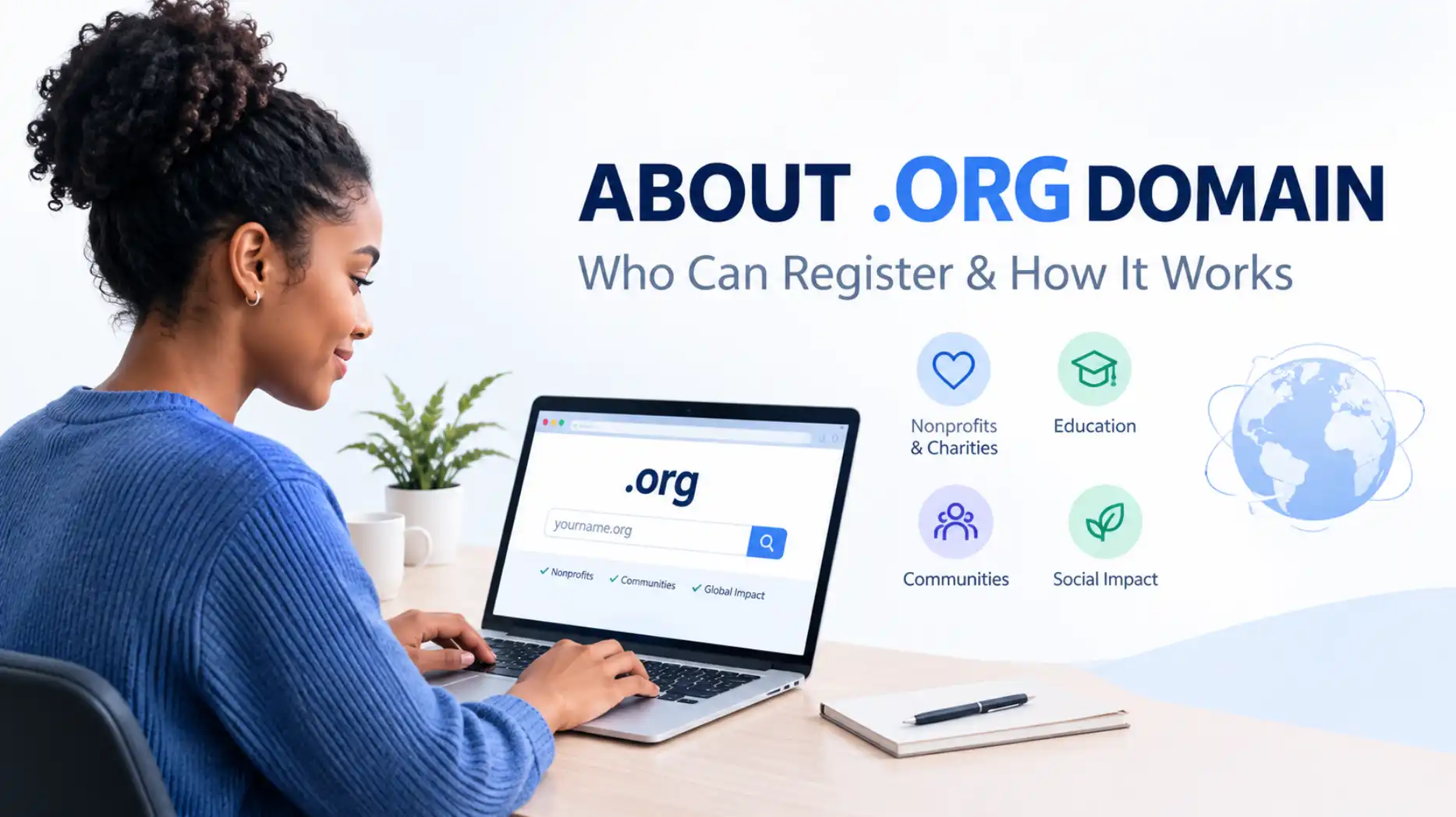
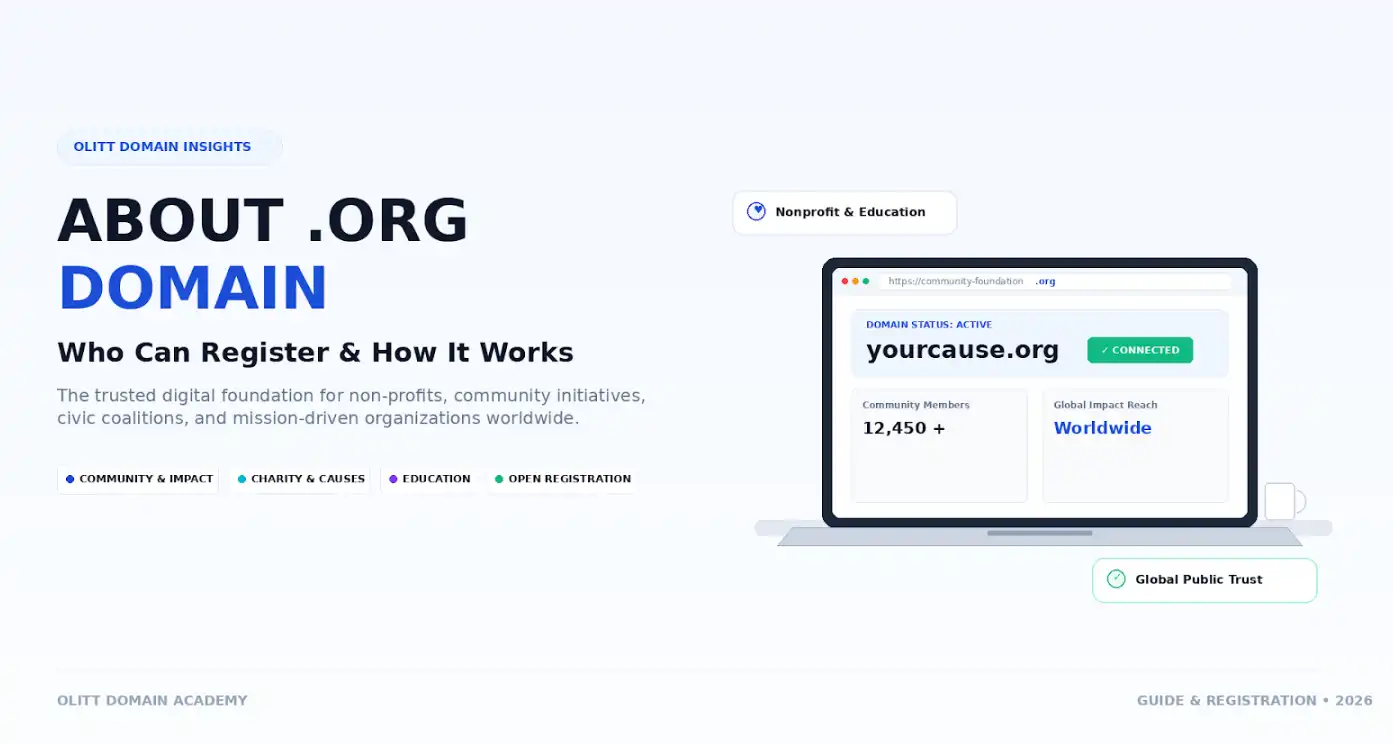
A .org domain is a top-level domain (TLD) created for organizations.
It was meant for:
- Nonprofits
- Charities
- Associations
- Foundations
Today, anyone can register a .org domain. But the meaning behind it still matters.
That expectation is the key to deciding when to use it.
Key Scenarios: When to Use a .Org Domain

If you’re stuck wondering whether a .org domain is the right fit, the easiest way to decide is to look at what you’re building and who you’re building it for.
A domain name isn’t just a web address.
It quietly sets expectations.
When you choose the right extension, your site immediately speaks to the right audience, without you having to explain yourself.
Below are the most common, proven scenarios where a .org domain makes sense.
1) Non-Profit Organizations and NGOs
This is where .org feels most natural.
If you run a:
- Charity
- Foundation
- Faith-based organization
- Non-governmental organization (NGO)
A .org domain instantly conveys a sense of purpose over profit.
Donors, partners, and volunteers recognize it as a space built for impact, not sales.
That familiarity builds trust before they even read your mission statement.
For nonprofits, .org is often the expectation.
2) Open-Source Software Projects
Many of the world’s most trusted digital projects live on .org domains.
Think of platforms like WordPress.org or Wikipedia.org.
A .org domain tells users your project is:
- Community-driven
- Open and transparent
- Built for public benefit
It reassures contributors and users that the software isn’t locked behind aggressive monetization or corporate control.
If collaboration is at the heart of your project, .org fits naturally.
3) Community and Advocacy Groups
If you’re bringing people together around a shared cause, .org works beautifully.
This includes:
- Local community initiatives
- Sports and hobby clubs
- Social or political advocacy groups
A .org domain feels like a meeting place, not a marketplace.
It invites participation, conversation, and belonging, which is exactly what community-driven sites need.
4) Professional Associations
Professional groups rely heavily on credibility.
Trade unions, medical associations, industry bodies, and chambers of commerce often choose .org because it communicates authority and structure.
It tells visitors:
- This group represents professionals
- The information is reliable
- Member resources are official
When trust and recognition matter, .org supports that image effortlessly.
5) Educational Platforms
Not every learning platform is a school, and not all education is commercial.
Many independent learning resources use .org, especially when:
- Content is free or low-cost
- The goal is knowledge sharing
- Sales are not the main focus
If you’re building a site to educate, guide, or inform without heavy paywalls, a .org domain aligns well with that mission.
6) Cultural Institutions
Cultural organizations often choose .org because it reflects their role in society.
This includes:
- Museums
- Art galleries
- Public libraries
- Heritage and history projects
A .org domain signals that your site exists to preserve, educate, and enrich, not to sell aggressively.
It reassures visitors they’re engaging with a trusted cultural resource.
When You Should NOT Use a .Org Domain
Choosing a .org domain isn’t just about where it works; it’s also about knowing where it doesn’t.
When your domain extension doesn’t match your purpose, visitors feel the disconnect almost instantly.
And when people feel unsure, trust drops.
Here are the situations where a .org domain can do more harm than good.
a) Commercial Businesses and Startups
If your main objective is to make money, a .org domain sends mixed signals.
This includes businesses that aim to:
- Sell products or services
- Monetize heavily through ads
- Scale fast for profit
Visitors expect .org websites to be mission-led, not sales-focused.
When they land on a commercial site with a .org extension, it can feel confusing or even misleading.
For profit-driven brands, .com or .co sets clearer expectations and supports conversions better.
b) Personal Brands and Influencers
If your website revolves around you, your expertise, services, portfolio, or personal content, a .org domain often feels out of place.
Personal brands thrive on clarity and connection.
Using .org can blur your message and make people wonder:
- Are you a business?
- An organization?
- A nonprofit?
That uncertainty weakens your brand identity. A more personal or commercial extension works better here.
c) E-commerce Stores
Online shoppers want confidence and familiarity.
Most people associate .org domains with information and causes, not checkout pages.
When a store uses .org, it can create hesitation at the moment that matters most, buying.
Even a small pause can lead to abandoned carts and lower conversions.
For e-commerce, stick to extensions that shoppers trust for transactions, like .com.
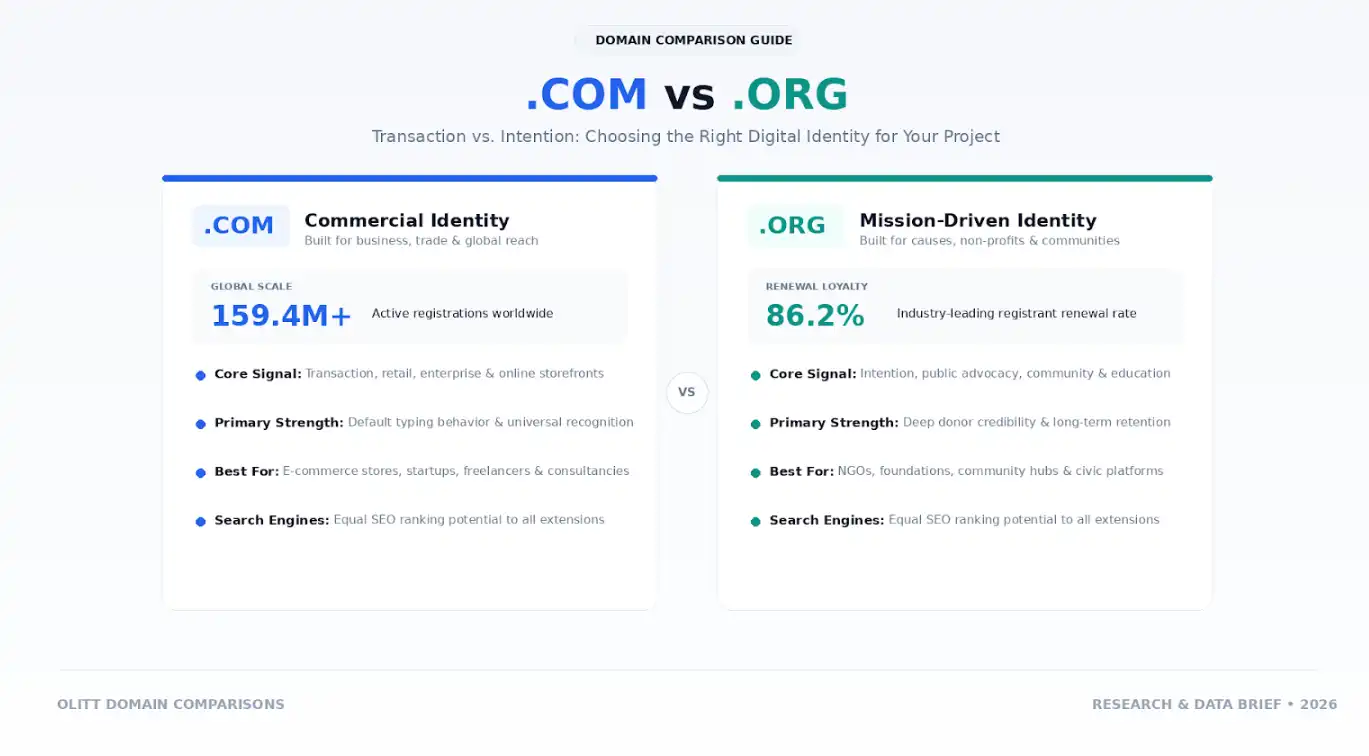
.Org vs .Com: Key Differences

You often choose between .org and .com.
Here is a simple table:
| Feature | .Org | .Com |
| Main Use | Non-profits, communities, causes | Businesses, shops, and general sites |
| Trust Level | High for good causes | High for buying and selling |
| Availability | More names open | Many taken, harder to find |
| User Expectation | Helpful info, no sales pressure | Products or services for sale |
| Best For You If… | You focus on impact | You sell or run a company |
Pick .org if you want to show you care about people, not just profit.
The Benefits of Choosing .Org
Using a .org extension offers more than just a name. It provides several strategic advantages that can help your organization grow.
a. Building Instant Credibility
Because people associate .org with non-profits, your site gains an immediate “trust boost.”
Users are often more willing to share their data or donate to a site with this extension. Trust is the currency of the internet.
b. Better Availability
Most “good” .com names are already taken by speculators or existing businesses. You might find that your perfect brand name is available as a .org. This allows you to keep your name short and memorable.
c. SEO Advantages
Search engines do not necessarily rank .org higher just because of the extension. However, because .org sites are often cited by educational and government sites, they tend to earn high-quality backlinks. This naturally improves your search engine ranking over time.
Common Myths About .Org Domains
Let’s clear up confusion.
1) .Org Is Only for Nonprofits
False.
Anyone can register a .org domain today.
But expectations still exist — and they matter.
2) .Org Ranks Better on Google
False.
Google does not rank domains based on extensions.
Content always wins.
3) .Org Is Old-Fashioned
Also false.
Many respected global organizations still use .org.
The domain remains powerful when used correctly.
How to Decide If .Org Is Right for You
Ask yourself these simple questions:
- Is your mission more important than profit?
- Are you asking for trust, donations, or support?
- Do you provide value without heavy selling?
If you answered yes to most of these, a .org domain fits.
If not, choose another extension.
How to Register Your .Org Domain
Getting a .org domain is a simple process. You do not need to submit tax papers or non-profit certifications.
Step 1: Brainstorm Your Name
Keep it short. Avoid using hyphens or numbers if possible. Your name should reflect your mission or the name of your organization.
Step 2: Check Availability
Use a reliable domain registrar to see if your name is free. We recommend using the Olitt Domain Search tool to find the best options at affordable prices.
Step 3: Secure the Name
Once you find the right name, register it quickly. Even if you aren’t ready to build your site yet, “parking” the domain ensures no one else takes it.
Conclusion
Deciding when to use org comes down to your core purpose. If your website is a gift to the community, a resource for learners, or a hub for a movement, .org is your best friend. It sets the right tone from the very first click.
If you are building a commercial brand that hopes to scale into a global marketplace, .com remains the king. But for everything else that makes the world a better place, .org is the home you are looking for.
If you’re ready to start your journey, you can create a free website with Olitt today and pair it with the perfect domain. Our platform makes it easy to launch your mission in minutes.