
Just like we all do, most people looking for a meal inspo online, end up on the restaurant website reviews section, searching through what everyone else has to say.
It’s just that we all trust other people.
Now, your restaurant might shows up with great photos, and tempting menu.
But then if the reviews section ain’t measuring up, then you are toast.
So this will mean it’s either hiding in some dusty corner or worse, non-existent.
And that will be only landing you a huge left swipe faster than you can say “no-show.”
Since you’re already running a whole restaurant, we understand the exhaustion, especially when you’re already battling supply chain headaches or that one picky reviewer who nitpicks the ice cubes.
To make things simple for you, we have put together a simple but detailed step-by-step guide to help you get your restaurant website reviews back on track.
We will go through:
- Why these reviews are your unfair advantage.
- A simple four-step plan to collect feedback.
- Sneaky-smart ways to showcase ’em so they convert browsers to loyalists.
- How AI turns the grind into a breeze.
Let’s chat more, so grab that coffee, and join in. You’ve got this!
Why Restaurant Website Reviews Are Essential for Your Business
So, why bother with restaurant website reviews at all?
I mean, isn’t a killer menu photo enough? Short answer: Nope.
In this swipe-happy world, they’re your handshake with every potential diner—the thing that says, “We’re legit, come eat.”
Trust: The Secret Ingredient
Think about it—would you walk into a new restaurant without checking it out first? Probably not. Most people wouldn’t either.
Reviews are like digital word-of-mouth.

In fact, 88% of people trust online reviews just as much as personal recommendations.
When your restaurant website is sprinkled with comments like “The vibe was pure magic—date night saved!” that skepticism melts away fast.
And here’s the kicker: according to BrightLocal, restaurants with 3.5 stars or higher earn up to 82% more revenue than those with lower ratings.
That’s more happy customers, more tips, more table turns, and maybe even that extra $5K a month for your dream espresso machine.
SEO: Let Google Do the Heavy Lifting
Then there’s the SEO side.
You don’t need to be an SEO wizard to understand this—Google loves fresh reviews.
When your site regularly features new restaurant website reviews, you climb higher in local search results, like “best cozy Italian spot near me.”
More visibility means more clicks.
Here’s the fun part: 35% of diners say they choose where to eat based on what they read online.
And if you embed reviews directly on your website, conversions can shoot up by 15–30%.
That’s free marketing that actually pays you back.
Why You Can’t Afford to Ignore Reviews
Now, here’s where it gets real. Skipping out on managing reviews could be a big mistake.
Maybe you’ve seen this before—great feedback stuck on Yelp, never making it to your own site.
Or worse, a negative review left unanswered, just sitting there like bad sauce.
Remember that viral restaurant a few years ago that ignored a hygiene complaint? Bookings dropped by 20%. Brutal.
On the bright side, Talkin’ Tacos in LA nailed it.
They synced their Google and Yelp reviews directly onto their website, turning one fan’s “best birria ever” comment into serious business.
Co-founder Mo Forraj in interview,
“We hit $60M in annual sales without raising a single menu price”
Pretty wild, right?
Step-by-Step Guide: How to Collect Restaurant Website Reviews
Alright, let’s roll up our sleeves.
Gathering restaurant website reviews doesn’t have to feel like herding cats after closing time.

I’ve broken it down into four steps that fit right into your daily chaos: quick setups, smart nudges, graceful saves, and a little website pro.
Step 1: Set Up Automated Collection Tools
Why chase reviews when you can set it and forget it?
Automation’s your new best friend here, because the best time to ask for feedback is while the meal’s still fresh in their memory.
Think of it like sending a friendly “How was it?” text the next day.
That’s the vibe you want.
Use your POS system to send a short email or text:
“Hey Sarah, glad you stopped by! That stir-fry seemed to be a hit—mind sharing a quick review?”
Timing is key—24 hours after their visit is the hit. They’re relaxed, honest, and still remember what they loved (or didn’t).
Want something even simpler?
Add a QR code to your receipts or table tents.
One quick scan, and they’re off to your Google or Yelp page. Easy, cheap, and surprisingly effective.
Tech it up: connect your POS for auto-surveys, or try tools like ReviewTrackers.
With Olitt AI, it’s even smoother—POS data syncs automatically, firing off review invites without you lifting a finger.
Your starter checklist:
- Pick one tool (POS integration or something free like Google Forms)
- Test it on last week’s customer list
- Track responses and note what works
Small steps, big wins.
Step 2: Encourage Participation Without Being Pushy
No one likes being sold to halfway through dessert.
The trick is to make asking for reviews feel like a friendly chat, not a pitch.
Start with your team. Coach them to keep it casual, something like:
“If we nailed it tonight, mind dropping us a quick review on Google? Takes two seconds and helps us tons.”
You can also weave it into your follow-up emails or texts:
“Loved your night with us? A quick review keeps our kitchen fired up!”
Keep it light, warm, and genuine—gratitude always beats pressure.
Now, don’t just stick to one platform.
Cast a wider net: include Google Maps, Yelp, and TripAdvisor in every reminder.
On your website, drop a quick feedback form in your contact section. (Olitt makes that part a breeze.)
And while you’re at it, make sure your Google Business Profile is optimized so leaving a review is literally one click away.

If you want to give folks a little extra nudge, a small thank-you goes a long way—something like “10% off your next visit for sharing your thoughts.”
Your quick checklist:
- Write one fun, friendly “nudge” script for your staff or emails
- Link at least three review platforms in your next customer message
- Offer a small incentive (discount, free dessert, whatever fits your vibe)
You’ll be amazed how quickly those reviews start rolling in.
Step 3: Handle Negative Feedback Gracefully
Ah, the dreaded one-star review. It stings, right?
But here’s the truth: when handled right, that little jab can become your best PR moment.
The hack is speed and empathy.
Keep an eye on your mentions—tools like Hootsuite can alert you when someone tags (or subtweets) you with a “That downtown spot? Meh wait…” kind of comment.
Respond within 24 hours whenever possible, whether it’s on Yelp, Google, or Instagram.
And have a go-to response template ready. Something like:
“Hey Alex, so sorry the wait threw off your evening—that’s not our usual pace. We’ve added extra staff to keep things smooth, and we’d love to make it up to you. Drop me a line next time you’re in, apps on the house.”
A good response shows you care, own the issue, and fix it forward.
Plus, those reading your replies see your professionalism in action.
If you notice a trend (say, three people mention cold appetizers), don’t just reply, take action.
Maybe it’s time for a quick fridge temp check or plating review.
Your quick checklist:
- Set up social alerts or review monitoring tools
- Draft three response templates (for late orders, cold food, and service hiccups)
- Review last month’s feedback—find one pattern to fix this week
Negative feedback isn’t failure—it’s free insight. Handle it with heart, and you’ll win loyalty for life.
Step 4: Integrate with Your Restaurant Website
You’ve collected the gold—now it’s time to show it off.
Think of your website as the stage where all that great feedback takes a bow.
Start by pulling your best reviews right onto your site.
Tools like Trustpilot widgets can stream live reviews automatically, or you can use Olitt’s built-in forms to display customer love in real time.
Want to go a step further? Create a dedicated “Diner Buzz” page that brings all your reviews together—Google, Yelp, TripAdvisor, the works.
It’s your story, told by your guests, and it helps new visitors see what makes you special before they even walk in the door.
Set a simple goal for week one: get 10 new restaurant website reviews flowing in.
With Olitt’s Google/Yelp sync running in the background, the process practically runs itself.
There you go—simple, doable, and powerful.
You’ve built the system, now it’s time to let it shine.
Best Practices for Showcasing Restaurant Website Reviews Online
Got a fresh batch of reviews? Nice haul. Now let’s make them shine—like plating your signature dish before the dinner rush.
Showcasing reviews the right way turns casual visitors into “Book Now” or “Order Online” clicks before they even realize it.

We’re talking about design that grabs attention, SEO that actually works, seamless multi-channel syncing, and ethics that build lifelong trust.
A few smart tweaks now can bring you lasting results later.
1. Design Tips That Hook
First rule: don’t bury the good stuff.
Reviews are social proof—treat them like your best appetizer, not an afterthought.
Put your top restaurant website reviews front and center.
Try a simple carousel on your homepage that highlights what guests are saying.
Sprinkle others across key pages—food praise on your menu page, vibe love on your About Us.
And don’t forget mobile, since most restaurant visitors book or browse from their phones, so make sure everything looks great on small screens.
Add a little flair, too.
Pair short quotes with star ratings, photos, or even reviewer snapshots for that custom touch.
2. SEO That Hustles
If Google can’t see your reviews, they don’t exist.
When you surface them properly, though, you can win more clicks—and better rankings.
Work in keywords naturally, like “best brunch in [your city]” into headers or review captions.
Then, add schema markup (Google’s free tool can help).
Those golden stars in search results? That’s schema at work.
Refresh your review sections monthly, since Google’s algorithm loves new content.
3. Sync Across Multiple Channels
Don’t rely on one review source—mix it up.
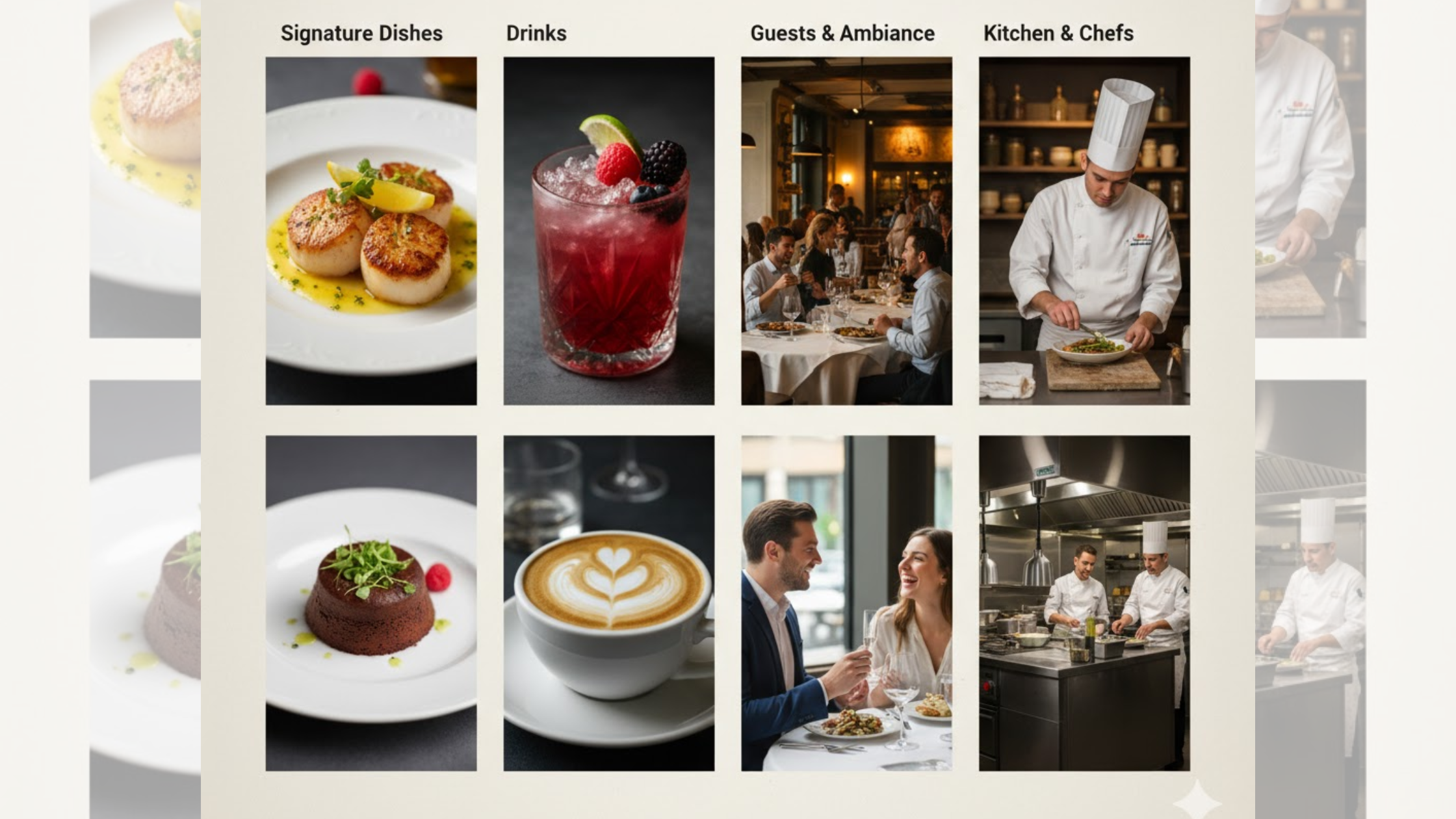
Pull in content from Google, Yelp, and TripAdvisor, and organize it by category: Food, Service, Ambiance.
It makes things super easy to scan, especially for visitors hunting for specific experiences like “great brunch spots” or “romantic dinners.”
Use canonical tags to keep Google from penalizing you for duplicate content.
4. Keep It Honest and Ethical
Trust is everything. People can smell fake reviews from a mile away, and the FTC definitely can, too.
Show the good and the not-so-perfect.
A steady 4.2-star average actually feels more believable than a flawless 5.0.
Include names, dates, and photos to prove authenticity, and keep updating regularly. Stale reviews kill credibility fast.
It’s not about perfection, but realness. You want visitors to think, “Yeah, these guys are for real.”
5. Tools That Make It Easy
Now that you know what to showcase, let’s talk about how to actually pull it off.
Just pick the tool that fits your rhythm.
If you’re running a smaller spot or just starting out, manual embeds might do the trick.
You can copy and paste your favorite reviews straight onto your site for free.
It takes a bit more time, sure, but it gives you full control over how everything looks and feels.
For restaurants that want something more automated, Olitt AI is the game.
Prompt it to keep your reviews fresh, update automatically, and looking great on mobile.
And if you’re aiming for extra credibility with a recognizable badge, Trustpilot is worth a look.
Their widgets instantly signal legitimacy to visitors, though they can be a bit rigid in terms of design flexibility.
Feels like you’ve got your edge now, right?
You’re not just collecting reviews—you’re turning them into your restaurant’s story.
Using AI for Smarter Restaurant Website Reviews Management

Managing reviews manually is like dicing onions by hand all night. Necessary, but exhausting.
Now imagine AI doing the chopping while you sip your post-shift wine.
That’s the magic of using AI for restaurant website reviews: you go from constantly reacting to staying one step ahead.
If you’re curious, Olitt is an easy entry point.
It automatically pulls in reviews from Google, Yelp, and even your POS or social channels, then sorts, analyzes, and helps you respond in your own voice.
Say a bunch of guests are raving about your pasta?
Olitt AI spots the trend and suggests an email promo to ride the wave.
Noticing a dip in service mentions? Time to schedule a quick training.
Why it’s worth it:
- Saves hours of manual work
- Keeps your brand voice in every reply
- Spots trends before they become problems
- Grows with you
Sure, it takes a quick minute to get used to chatting with your site like it’s part of the team, but once you do? You’ll wonder how you ever lived without it.
Try the free trial, play around, and see how fast feedback turns into full tables.
Conclusion
Restaurant website reviews done right can change your whole business story.
Remember Talkin’ Tacos’ $60M glow-up? That’s you next, packing the place.
But hey, reading’s half, doing’s the main deal. Start now!
To full tables and fan stories—cheers to you!