
Filipino restaurant website builders need to do more than look pretty. They need to handle GCash, survive slow connections, and speak your customers’ language.
Let me be straight with you, most global platforms weren’t built with Manila, Cebu, or Davao in mind. They assume everyone has credit cards and blazing fast internet.
That’s not your reality, right?
This guide walks you through builders that actually work for Filipino entrepreneurs. From budget-friendly options to AI-powered solutions, we’re covering what matters: local payments, mobile-first design, and features that fill tables.
Why Generic Website Builders Fail Filipino Restaurant Owners
You’ve probably tried a few builders already. Downloaded a template. Got excited about the free trial.
Then reality hit.
The Payment Problem
Here’s what kills most Filipino restaurant websites: payment integration. Or rather, the lack of it.
Your customers want to pay with GCash. Maybe Maya. Some prefer bank transfers through Instapay.
Credit cards? That’s maybe 5% of Filipinos. According to Bangko Sentral ng Pilipinas data, e-wallet adoption exploded while credit card usage stays flat.
Most global builders act like GCash doesn’t exist. They push Stripe or PayPal, which charge conversion fees on top of transaction fees.
That’s money straight out of your pocket.
Mobile Internet Reality
Your customers browse on prepaid data plans. Connection speeds bounce between 3G and 4G. Data costs still matter to most people.
Filipino restaurant website builders need to load fast on slow connections. Image-heavy templates that look gorgeous on your laptop? They’ll frustrate mobile users burning through precious load.
Over 96% of Filipino internet users access the web via mobile. If your site takes 10 seconds to load, they’re already scrolling to your competitor.
Language Matters
Should you write in English or Tagalog? What about regional languages?
This isn’t just about translation. It’s about trust. A carinderia in Quezon City might connect better with Tagalog content. A tourist-facing restaurant in Boracay needs English.
Generic builders don’t understand this nuance. They give you one language option and call it a day.
What Filipino Restaurant Website Builders Need to Include
Let me break down the non-negotiables. These aren’t nice-to-haves but they’re must-haves.
Payment Integration That Respects Your Market

GCash support tops the list. With 40+ million users, it’s how Filipinos actually pay for things.
Maya comes next at 20+ million users. Bank transfers through Instapay and PESONet are growing fast too.
Cash on delivery or pickup? Still king in many barangays. Your website needs to handle this gracefully.
The best Filipino restaurant website builders either integrate these directly or work seamlessly with payment gateway aggregators like PayMongo and Xendit.
Mobile-First Everything

Your site needs to work beautifully on a Samsung A-series phone over a spotty PLDT connection. That’s the standard.
Fast loading times, under 3 seconds on mobile. Progressive loading so customers see your menu even if images take a moment. Click-to-call buttons that work with every phone.
WhatsApp and Viber integration helps too. Filipinos love messaging for orders.
Menu Features That Match Filipino Dining
Rice options need their own section. Combo meals and family packages deserve prominent placement. Spice level indicators help indecisive customers.
Photo-heavy menus convert better here. Filipinos eat with their eyes first. A crispy pata photo does more than any description could.
Merienda offerings need clear timing. Special occasion packages (birthdays, fiestas) should be easy to find.
Top Global Builders That Work for Filipino Restaurants
Some international platforms actually deliver for Filipino entrepreneurs. They’re not perfect, but they’re workable.
1) Olitt AI: Built for Restaurant Owners Globally

Olitt AI website builder deserves the top spot. Here’s why.
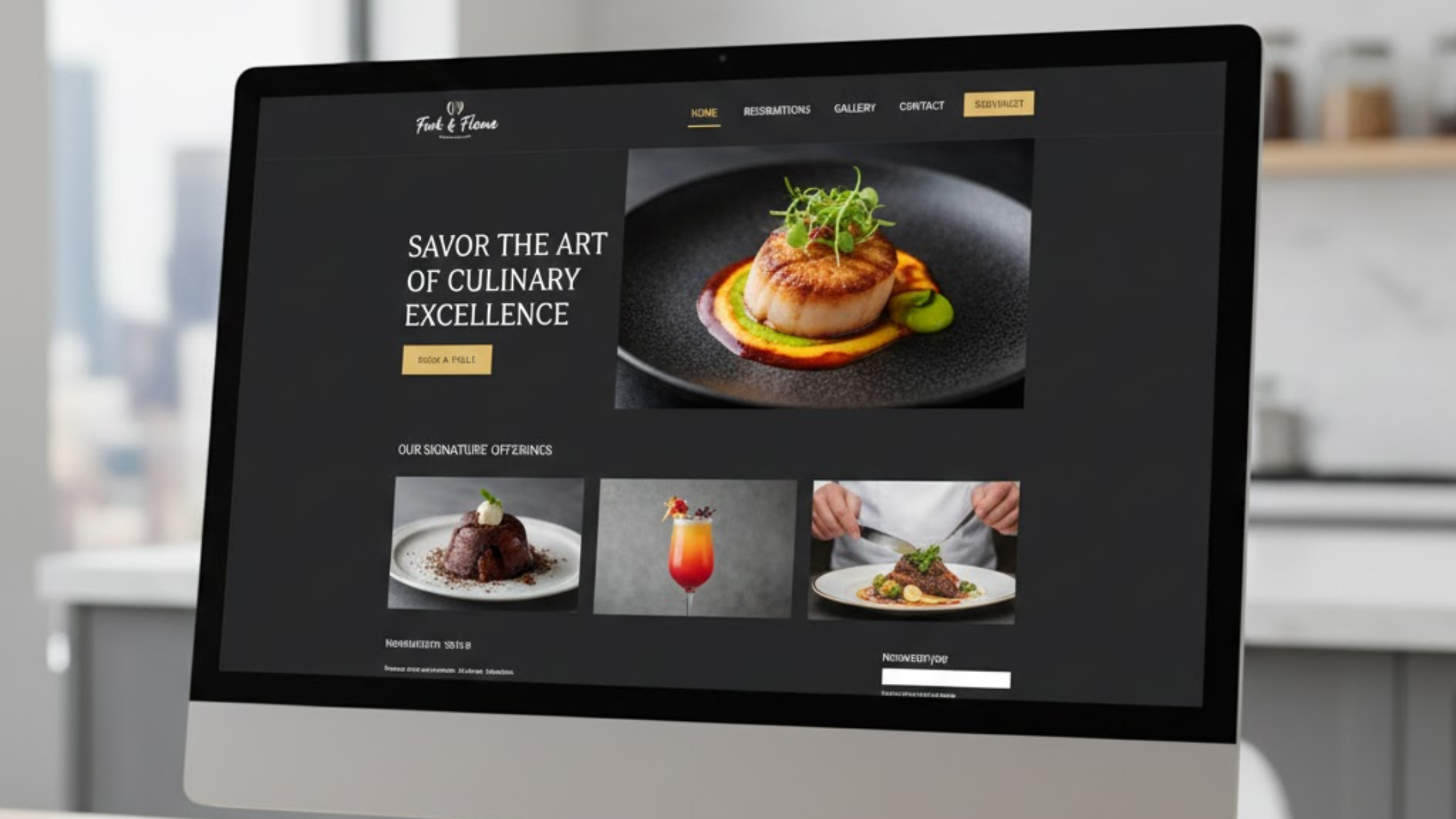
This platform was designed specifically for restaurants. Not generic businesses, restaurants. The AI understands menu structures, ordering flows, and customer behavior patterns.
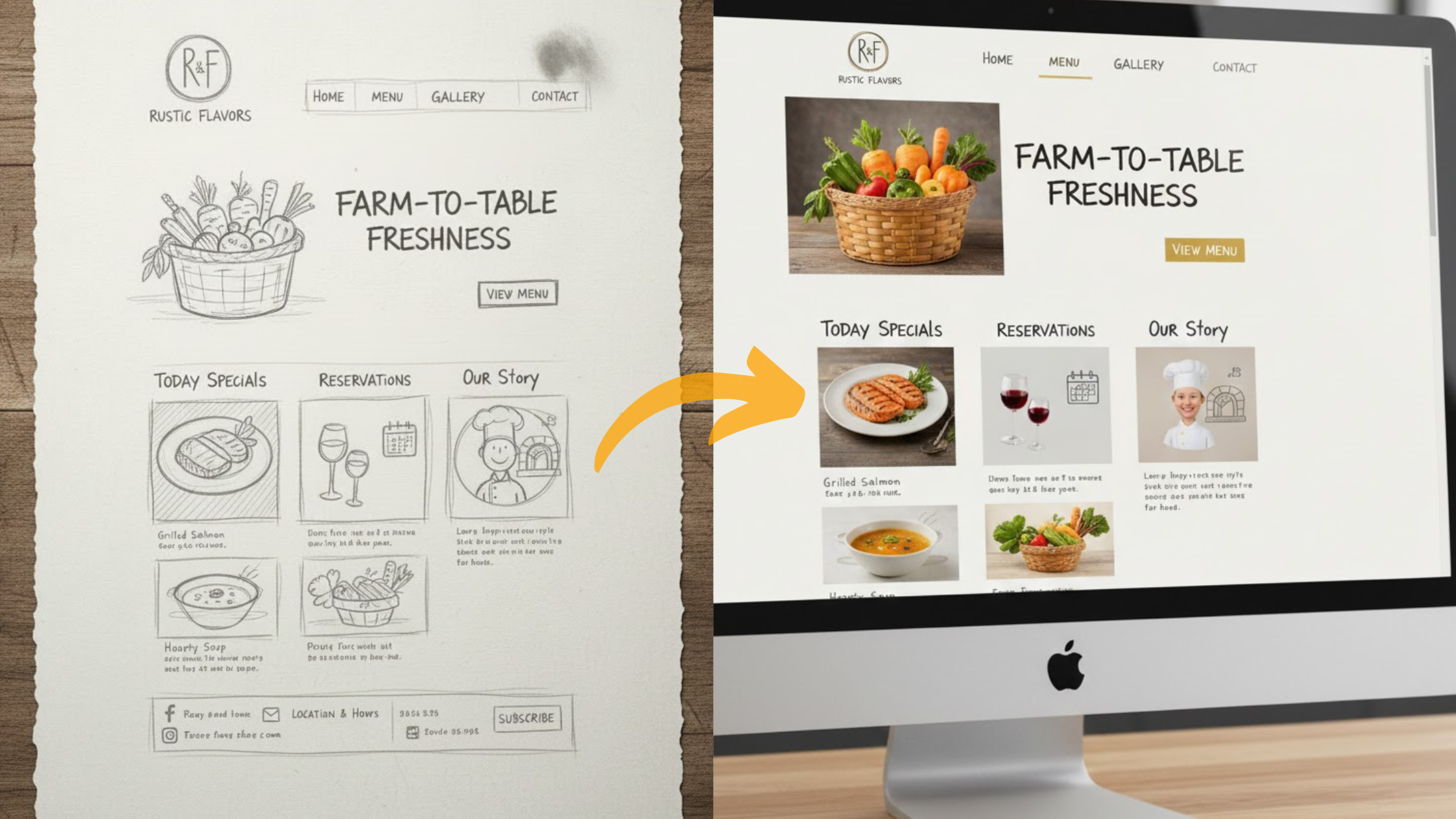
You input your restaurant details. Cuisine type, brand colors, menu items. The AI generates a complete professional website in minutes.
Monthly pricing stays competitive at global rates. Filipino entrepreneurs get the same professional tools as restaurants in New York or London.
GCash and Maya integration? You can connect through PayMongo seamlessly. The platform supports multiple payment gateways used across different countries.
Mobile optimization comes standard. Sites load fast even on 3G connections. Image compression happens automatically.
What sets Olitt apart: the AI learns from successful restaurants worldwide. Your Filipino restaurant benefits from insights gathered globally. Best practices from thousands of thriving establishments get baked into your design.
Try Olitt’s free trial and see your restaurant website come alive in under 30 minutes. No technical skills needed.
2) Wix

Wix makes building easy. Drag, drop, done. Their restaurant templates look professional right out of the box.
You’ll pay around ₱500 to ₱2,000 monthly depending on features. The interface stays intuitive even if you’ve never built a site before.
The catch? No native GCash integration. You’ll need to add PayMongo through their payment settings. It’s doable, just not automatic.
Wix works great for image-focused restaurants targeting both locals and tourists. Their SEO tools help you rank in Google searches.
3) WordPress with WooCommerce

WordPress gives you complete flexibility. Want custom GCash integration? Hire a Filipino developer from OnlineJobs.ph.
Monthly costs run ₱300 to ₱1,500 for hosting plus plugins. One-time theme purchases save money long-term.
The learning curve bites harder here. You’ll need technical chops or someone who has them.
But the Filipino WordPress community is huge. Help exists in Facebook groups and forums. Solutions to local problems already exist—someone else solved your GCash integration headache.
4) Squarespace

Squarespace delivers stunning designs. If your brand leans upscale—fine dining, specialty cafés—this builder shines.
Expect ₱800 to ₱2,500 monthly. Higher than Wix, but the templates justify the cost.
Limitations match the other global players. Payment gateway integration needs workarounds. But if visual appeal matters most, Squarespace competes globally.
Filipino Restaurant Website Builders
Local agencies and Philippine-based platforms understand your challenges. They built for this market.
Philippine Web Development Agencies
Manila-based agencies speak your language, literally. They’ll meet you at a café in Makati. Discuss your vision over coffee.
Setup costs range ₱15,000 to ₱100,000+ depending on complexity. Monthly maintenance adds ₱1,000 to ₱5,000.
What you’re paying for: perfect GCash integration, Tagalog content support, understanding of Filipino dining culture. They know why boodle fight presentation matters for your photos.
Quality varies wildly, though. Check portfolios carefully. Ask for references from other restaurant owners.
StoreHub
StoreHub operates across Southeast Asia with strong Philippine presence. Their system combines POS with website functionality.
Starting at ₱2,500 monthly, you get integrated operations. Sales from your physical location sync with online orders. Inventory updates automatically.
Multi-location management works smoothly. Growing from one branch to three? The system scales with you.
Oddle
Singapore-based Oddle solves the delivery app problem. You get your own branded website without paying 30% commission to aggregators.
GCash integration works natively. Starting prices hit ₱3,000 monthly. Delivery service integration connects you to riders.
For restaurants tired of Foodpanda and GrabFood eating their margins, Oddle offers an escape route.
AI-Powered Filipino Restaurant Website Builders
AI changed website building overnight. What took weeks now takes minutes.
Why AI Matters for Filipino Entrepreneurs
Cost and speed. That’s it. That’s why AI matters.
You can launch a professional site in 30 minutes. No coding. No designer. No weeks of back-and-forth with developers.
Olitt’s AI website builder specifically understands restaurant operations globally. Input your menu, brand colors, and cuisine type. The AI generates a complete site—design, content, ordering system.
For Filipino entrepreneurs testing the digital waters, AI removes the biggest barrier: technical intimidation.
How AI Actually Works for Your Restaurant
You start with basic inputs. Restaurant name. Location. Cuisine style. Menu categories.
The AI analyzes thousands of successful restaurant sites. It understands what works for Filipino dining: family-style presentations, rice options, combo meals.
Content gets written automatically. Menu descriptions. About page. Contact information. Everything.
Chatbots handle common questions. “Do you have vegetarian options?” “What are your hours?” The AI responds instantly.
Real AI Options You Can Use Today
Durable AI builds complete sites in 30 seconds. Seriously. Their interface stays dead simple.
Hostinger AI Builder costs ₱400 to ₱1,200 monthly. That’s cheaper than hiring a designer for a single consultation.
10Web runs on WordPress, giving you flexibility later. Start with AI, customize as you grow.
Olitt offers restaurant-specific AI that understands menu structures and ordering flows. The platform learns from successful restaurants worldwide, including Filipino establishments.
Making AI Work with GCash and Maya
Here’s the workaround: AI builds your site, then you add payment integration. Use PayMongo as a bridge connecting AI builders to Philippine e-wallets.
PayMongo charges 3.5% + ₱15 per transaction. Fair pricing for accessing GCash, Maya, and bank transfers.
Some Filipino entrepreneurs start simpler—embedding a GCash QR code at checkout. Customers screenshot, pay manually, send proof. Clunky but functional while you’re testing.
As revenue grows, upgrade to proper API integration. Start simple. Scale smart.
Payment Gateways
Payment integration separates pretty websites from profitable ones. Let’s talk real solutions.
PayMongo
PayMongo was built by Filipinos for Filipinos. They get it.
One integration gives you GCash, Maya, credit cards, and bank transfers. Customer picks their preferred method. Money hits your account in 2-3 days.
Transaction fees: 3.5% + ₱15. No monthly fees. No setup costs. Just pay when you earn.
Their documentation speaks plain English. Support responds during Philippine business hours. According to PayMongo’s case studies, restaurants see 40% higher conversion with multiple payment options.
Xendit
Xendit operates across Southeast Asia. Slightly lower fees for high-volume merchants.
Their strength? Regional consistency. Multiple locations across different countries? Xendit handles currency and compliance.
For most single-location restaurants, PayMongo edges ahead on support quality.
DIY Payment Solutions While Testing
Not ready for gateway fees? Start manual.
Post your GCash QR code on the checkout page. Customers pay, screenshot their proof, upload during checkout.
You verify manually. Confirm orders. Ship or prepare food.
It’s labor-intensive. But it works while you’re validating demand. Once you’re doing 20+ orders weekly, upgrade to automated gateways.
Ready to test AI-powered website building? Try Olitt.com with a free trial, no credit card needed.
Common Mistakes Filipino Restaurant Owners Make Online
Learn from others’ failures. Save yourself the headache.
i) Choosing Based on Price Alone
The cheapest builder often costs more long-term. Missing features force workarounds. Workarounds waste time. Time is money.
Better: Match features to your actual needs. Pay for what matters, skip what doesn’t.
ii) Ignoring Mobile Performance
Testing only on your laptop guarantees mobile problems. Over 80% of your traffic comes from phones.
Load your site on a budget smartphone over mobile data. If it frustrates you, it’ll frustrate customers.
iii) Skipping Payment Method Preferences
Credit cards only? You’ve locked out 90% of potential customers. GCash and Maya aren’t optional—they’re expected.
Offer multiple payment methods. Let customers choose their comfort zone.
iv) Beautiful Design, Broken Ordering
Gorgeous photos mean nothing if customers can’t complete orders. Every extra click loses conversions.
Keep checkout to 3-4 steps maximum. Guest checkout matters, forcing account creation kills sales.
The Bottom Line on Filipino Restaurant Website Builders
No perfect solution exists. But plenty of good ones do.
DIY platforms work for bootstrapped startups. Local agencies deliver for established brands. AI builders democratize professional results globally.
The key? Start. Don’t wait for perfect. Launch with good enough.
Your lola’s adobo recipe deserves to reach beyond your barangay. Your sinigang could feed expats homesick in Dubai. Your bibingka might become someone’s Christmas tradition.
Filipino cuisine competes globally now. Your website is the gateway.
GCash integration? Check. Mobile optimization? Check. Beautiful menu photos? Check.
You’ve got the roadmap. You’ve got the tools. You’ve got recipes worth sharing.
Now you need to actually build the thing.
What are you waiting for?