
You type www.amazon.com into your browser.

Two seconds later, you are shopping.

But what actually just happened?
Most people have no idea.
And honestly, they don’t need to know. Until they are trying to start a business, build a website, or understand why their site isn’t loading.
See, domains are the foundation of everything online.
If you don’t understand how domain names work, you’re flying blind.
You will overpay for services you don’t need, trust the wrong people with your business, and waste time troubleshooting problems you can’t explain.
This isn’t complicated.
The internet just makes it sound that way.
I’m going to show you exactly how website domains function, step by step.
By the end of this, you’ll know more about internet domain basics than 95% of business owners.
Let’s go.
TL;DR: How Domain Works in 60 Seconds

Domain names are human-readable addresses that translate to IP addresses (the numerical addresses computers use). When you type a URL, the Domain Name System (DNS) looks up which server hosts that website, finds the IP address, and connects your browser to it. Think of it like a phone book for the internet.
Key players
Domain registrars sell you domain names. Web hosting companies store your website files. DNS records and nameservers connect them. ICANN oversees the entire system.
- Domain names point to IP addresses
- DNS makes the translation happen.
- Hosting stores your actual website.
All three work together to put your site online.
Now let’s break down exactly how this works.
What Is a Domain Name, Really?
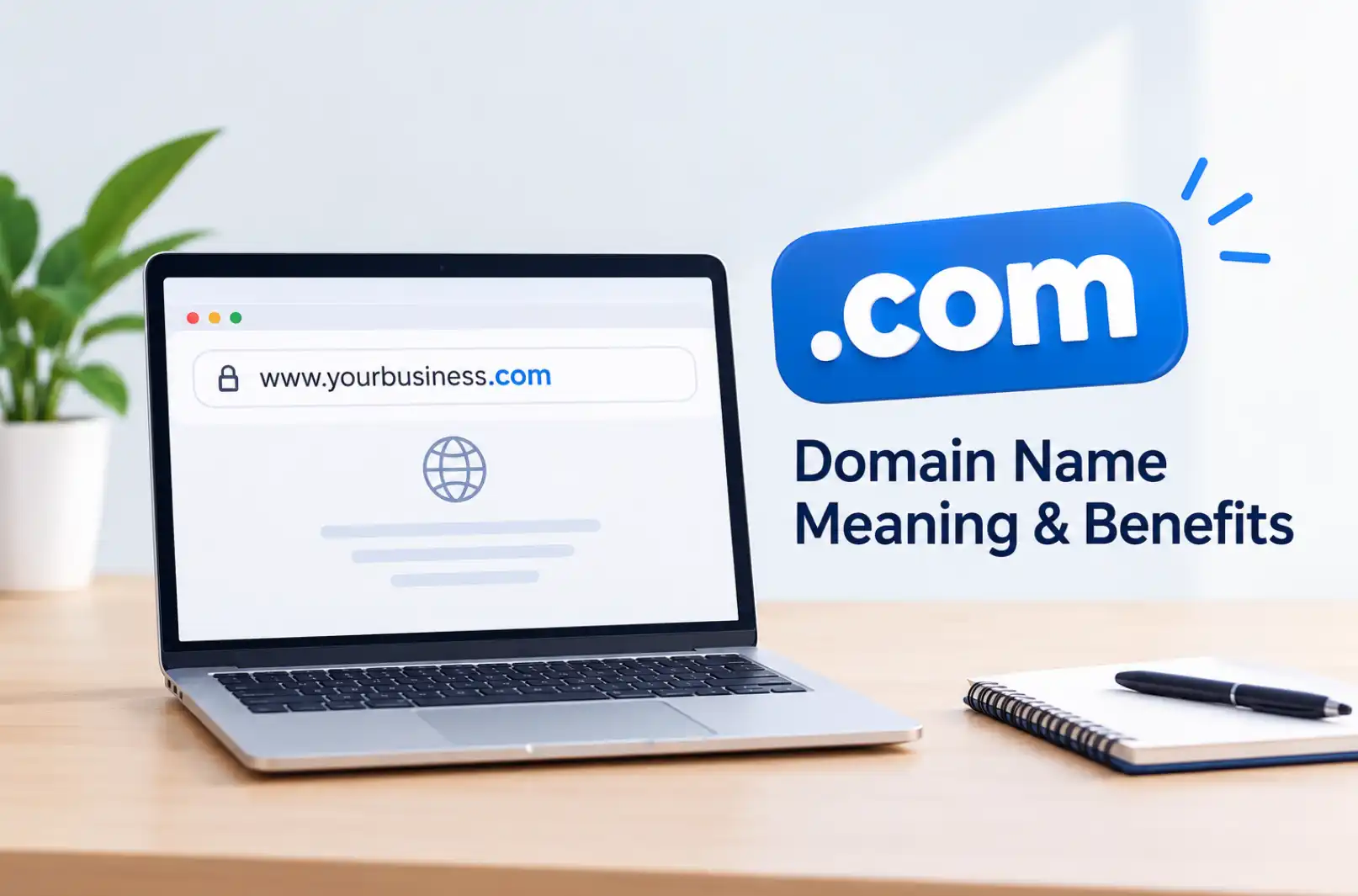
A domain name is the address people type to find your website. Like “yourstore.com” or “yourname.org.”
But here’s what most people miss: your domain name isn’t your website.
It is just the address.
Your website files live somewhere else, on a web hosting server.
Think of it this way:
- Domain name = your street address
- Web hosting = the actual house
- DNS = the GPS that guides people from your address to your house
You can own a domain name without having a website. You can have website files without a domain name.
But to have a functioning website people can visit, you need both, connected properly through the Domain Name System.
The Anatomy of a Domain Name

Let’s break down “www.example.com”:
- www = subdomain (optional, often just a convention)
- example = second-level domain (the name you actually choose and register)
- com = top-level domain or TLD (the extension)
Top-level domains (TLDs) matter. You’ve got:
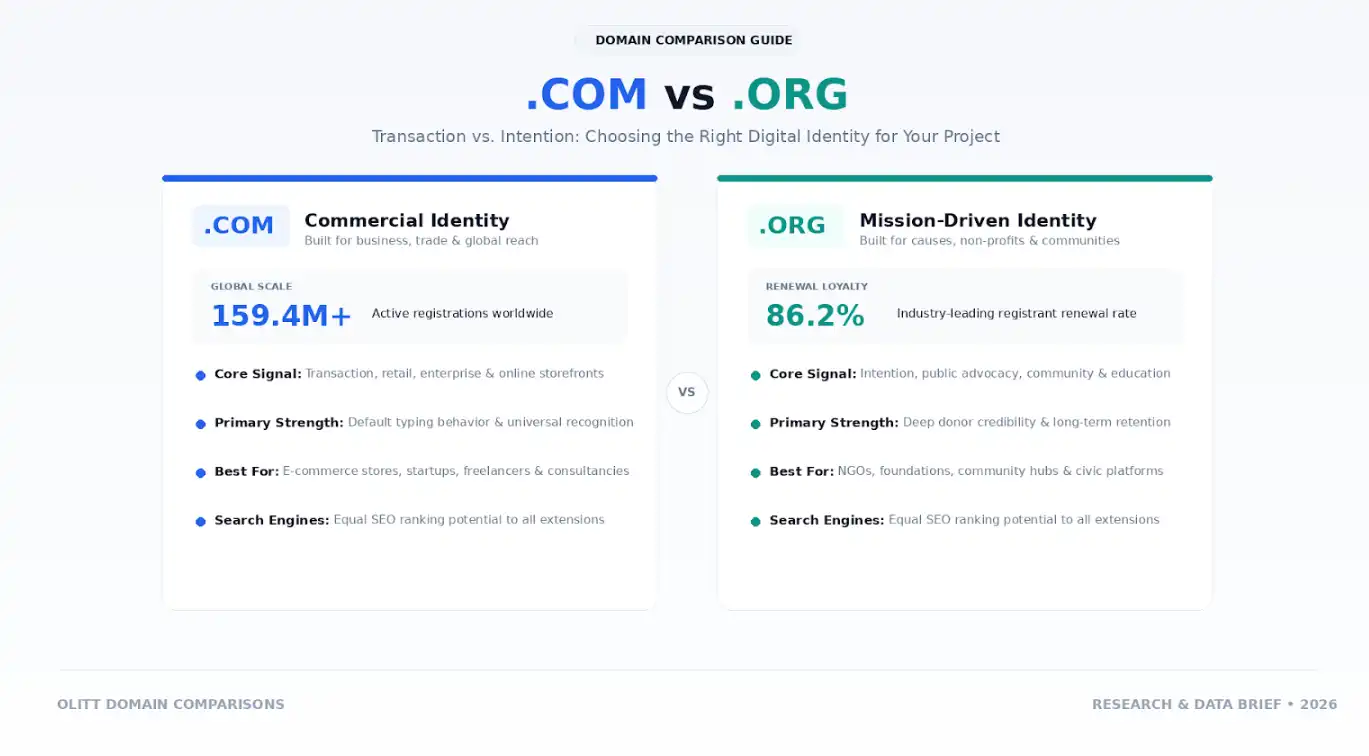
- .com = commercial (most popular)
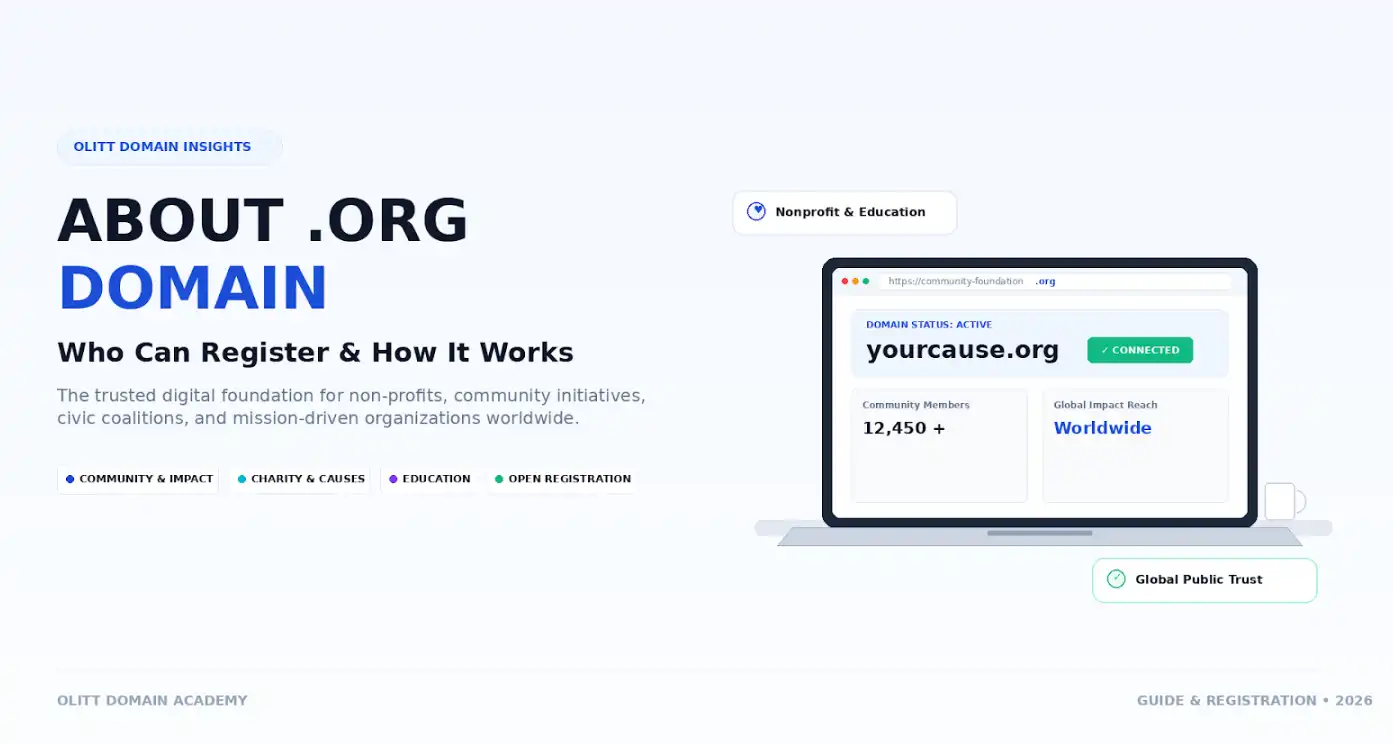
- .org = organizations
- .net = network services
- .edu = educational institutions
- .gov = government
- Plus hundreds of newer ones like .io, .ai, .shop
Each TLD has different rules, managed by registry operators under ICANN (Internet Corporation for Assigned Names and Numbers).
ICANN is basically the governing body that makes sure the entire domain name system doesn’t collapse into chaos.
How DNS Works (The Internet’s Phone Book)

Here’s where it gets interesting. Computers don’t speak in words. They speak in numbers.
Every website sits on a server with an IP address. An IP address looks like this: 172.217.164.46. Try remembering that for every website you visit.
Impossible.
That’s why we have DNS.
The Domain Name System explained simply: It translates human-readable domain names into machine-readable IP addresses.
When you type “google.com,” DNS servers across the internet work together to figure out which IP address hosts Google’s website, then connect your browser to that server.
This happens in milliseconds.
The DNS Lookup Process (Step-by-Step)
Here’s exactly what happens when someone types your domain name:
Step 1: Your browser checks its cache
Have you visited this site recently? Your browser saves DNS information temporarily. If it’s there, done. If not, move to step 2.
Step 2: Your computer checks its local DNS cache
Your operating system also saves DNS records. Still nothing? Step 3.
Step 3: Request goes to your ISP’s DNS resolver
Your internet service provider has DNS servers. They check their cache. If they’ve resolved this domain recently for anyone, they have the answer.
No luck? Step 4.
Step 4: Root servers get involved
There are 13 root server systems worldwide (managed as part of internet infrastructure).
These servers don’t know where “yoursite.com” lives, but they know who manages “.com” domains.
They point your request to the right TLD server.
Step 5: TLD nameservers respond
The .com TLD nameserver doesn’t have your full address either, but it knows which nameservers are authoritative for your specific domain.
It sends your request there.
Step 6: Authoritative nameservers provide the answer
These nameservers (usually provided by your domain registrar or hosting company) hold your DNS records.
They know exactly which IP address your domain points to. They send this back up the chain.
Step 7: Your browser connects to the IP address
Finally, your browser uses the IP address to connect to the web server, which sends back your website files.
You see the website load.
All of this happens in under a second.
Usually a fraction of a second.
Domain vs Hosting: Stop Confusing Them
This is where people get lost. Let me make it crystal clear:
Your domain name is what you buy from a domain registrar (like GoDaddy, Namecheap, or Google Domains). You’re essentially renting the rights to use that name, usually for a year at a time. You can renew indefinitely.
Your web hosting is what you buy from a hosting company (like Bluehost, SiteGround, or AWS). This is the actual server space where your website files, images, databases live.
They’re separate purchases from separate companies (though many companies sell both).
Here’s the confusion: some companies bundle them together and make it seem like they’re the same thing.
Well, they are not.
You can move your hosting to a different company without changing your domain. You can transfer your domain to a different registrar without touching your hosting.
The connection between them? DNS records and nameservers.
Nameservers and DNS Records: Making the Connection
Nameservers are the bridge between your domain and your hosting.
When you register a domain, you tell the domain registrar which nameservers to use.
Those nameservers hold DNS records that specify where to find your website, email, and other services.
Common DNS Records You Need to Know
A Record: Points your domain to an IPv4 address. This is the main record that connects your domain to your web server.
AAAA Record: Points your domain to an IPv6 address (newer IP format).
CNAME Record: Creates an alias. For example, pointing www.yoursite.com to yoursite.com.
MX Record: Directs email to your email server. Critical if you want [email protected] to work.
TXT Record: Stores text information, often used for email verification, security protocols, or proving domain ownership.
You don’t need to memorize these. You just need to know they exist and that they’re controlled in your DNS settings.
How URLs Work

When someone types a URL (Uniform Resource Locator) into their browser, here’s the full journey:
The URL structure: https://www.example.com/products/shoes
- https:// = protocol (how data transfers, securely)
- www.example.com = domain name
- /products/shoes = path to specific page or resource
The browser:
- Extracts the domain name
- Performs DNS lookup to find the IP address
- Connects to that server using the protocol
- Requests the specific path
- Server sends back the files
- Browser renders the website
Every single page load, every image, every interaction involves this process or variations of it.
What You Actually Need to Do To Register Your Own Domain Name
Stop reading theory. Here’s what matters:
Step 1: Choose and register your domain name.
Pick something memorable, relevant to your business, preferably a .com. Register it through any major domain registrar. Budget around $10-15 per year.
Step 2: Purchase web hosting.
Choose a hosting plan based on your needs. Shared hosting for beginners ($3-10/month), VPS or cloud hosting as you grow ($20-100+/month). Get recommendations specific to your industry.
Step 3: Point your domain to your hosting.
Your hosting company will give you nameservers (usually two, like ns1.hostingcompany.com and ns2.hostingcompany.com).
Log into your domain registrar, find DNS settings, update the nameservers.
This change takes 24-48 hours to propagate worldwide.
Step 4: Install your website.
Once DNS is connected, install WordPress, upload your site files, or use a website builder.
Your hosting company usually provides tools for this.
Step 5: Configure email (if needed).
Set up MX records to handle [email protected]. Most hosting packages include email.
Alternatively, use Google Workspace or Microsoft 365.
Step 6: Add SSL certificate.
This enables HTTPS (the secure version). Most hosts provide free SSL through Let’s Encrypt.
Just enable it in your hosting panel.
Non-negotiable for credibility and SEO.
That’s it. You’re live.
Common Domain Problems and How to Fix Them
“My domain isn’t working”
Did you wait 24-48 hours after changing nameservers? DNS propagation isn’t instant. Check if nameservers are set correctly using a tool like whatsmydns.net.
“My website loads but email doesn’t work”
Your MX records are probably wrong or missing. Check with your email provider for the correct MX record values.
“I want to move my website to a new host”
Transfer your website files to the new host first. Then update your domain’s nameservers to point to the new host. Test before making the switch.
“Someone else owns the domain I want”
Either choose a different name or contact the owner through a domain marketplace.
Expect to pay a premium if they’re willing to sell. Don’t build your brand on a domain you don’t own.
Final Thoughts
I can bet you will never look at a domain name the same ever again.
Learning how domain names work gives you power.
Power to make better decisions, avoid getting ripped off, troubleshoot your own problems, and actually control your online presence.
Domains are addresses.
DNS is the lookup system. Hosting is the storage. They work together, but they’re separate. Master this, and you’re ahead of most people trying to build something online.
Now stop reading and take action. Register your domain if you haven’t. Connect it to hosting. Build something real.
The internet isn’t magic. It’s infrastructure.
And now you know how it works.
Read also: