
You’ve got a great idea for a website. You’ve picked out a name, you have the design, and you’re ready to get started. Then you hit the very first, and sometimes most surprising, roadblock: choosing between a .org vs .com domain.
It feels like a small detail, but it’s actually your website’s first impression. That little ending tells people what to expect before they even click. Is it a business? A community project? A personal blog? Your domain does a lot of the talking for you.
You might be building this site for your new business, a passion project, or a cause you care about. Maybe you’re using a tool like Olitt AI website builder to design it quickly.
But no matter how you build it, that all-important address is the foundation.
Let’s clear up the confusion. I’ll walk you through precisely .com vs .org mean, their pros and cons, and most importantly, how to know which one is the right fit for what you’re creating.
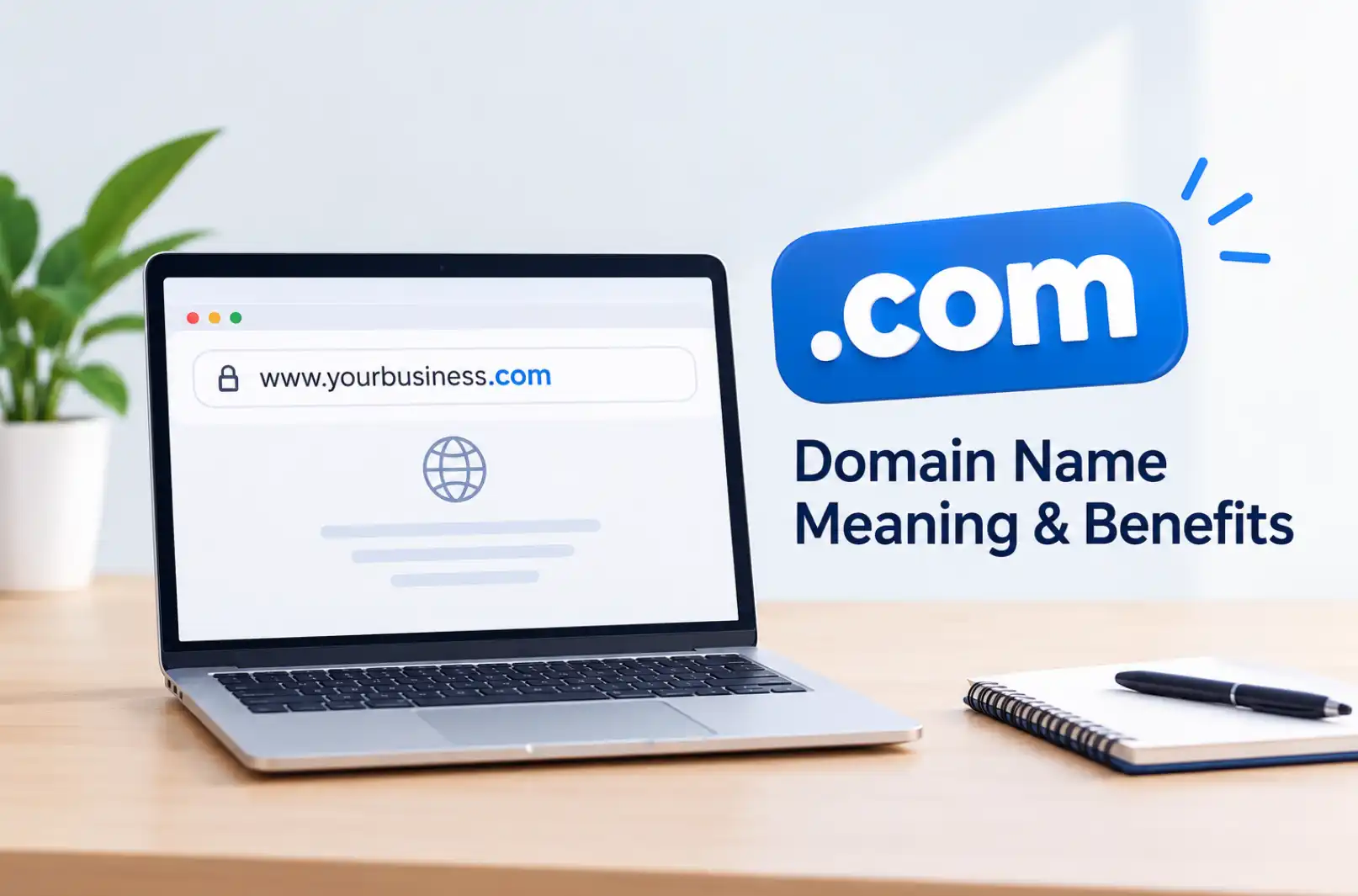
What is a .com Domain?

With 44% of websites being a .com domain, it is the most common street address on the internet.
The “com” stands for “commercial,” and it was initially intended for businesses. However, over time, it became the default choice for almost everyone.
When you try to remember a website, you’ll usually guess .com first. It’s the most recognized and widely used domain extension in the world.
If you are scrolling through a search engine for a global corporation, a small local shop, a personal blog, or an online portfolio, you’ll mostly find it on a .com address.
Its original purpose has broadened, and it now simply means a website to most people.
Pros and Cons of .com Domains
If you want to get a .com website for any preferred purpose, these are the advantages and disadvantages:
Pros
- Instant Recognition: It’s the most trusted and expected domain. People are less likely to mistype or forget a .com address.
- Memorable: Because it’s so common, it’s easier for people to recall and share verbally.
- Perceived Credibility: In many people’s minds, a .com site looks more established and professional, especially for any kind of business or commercial venture.
- SEO (Search Engine Optimization) Familiarity: Search engines like Google have seen .com domains for decades. While the extension itself isn’t a direct ranking factor, the trust associated with .com sites can be beneficial.
Cons:
- Availability: Finding the exact name you want with a .com can be very difficult. Most short, common, or catchy names were registered years ago.
- Cost: Because of high demand, a good .com domain can be expensive to buy from its current owner on the secondary market.
- Lack of Specificity: It doesn’t instantly tell visitors what your site is about. A .com could be a store, a blog, a forum, or anything else.
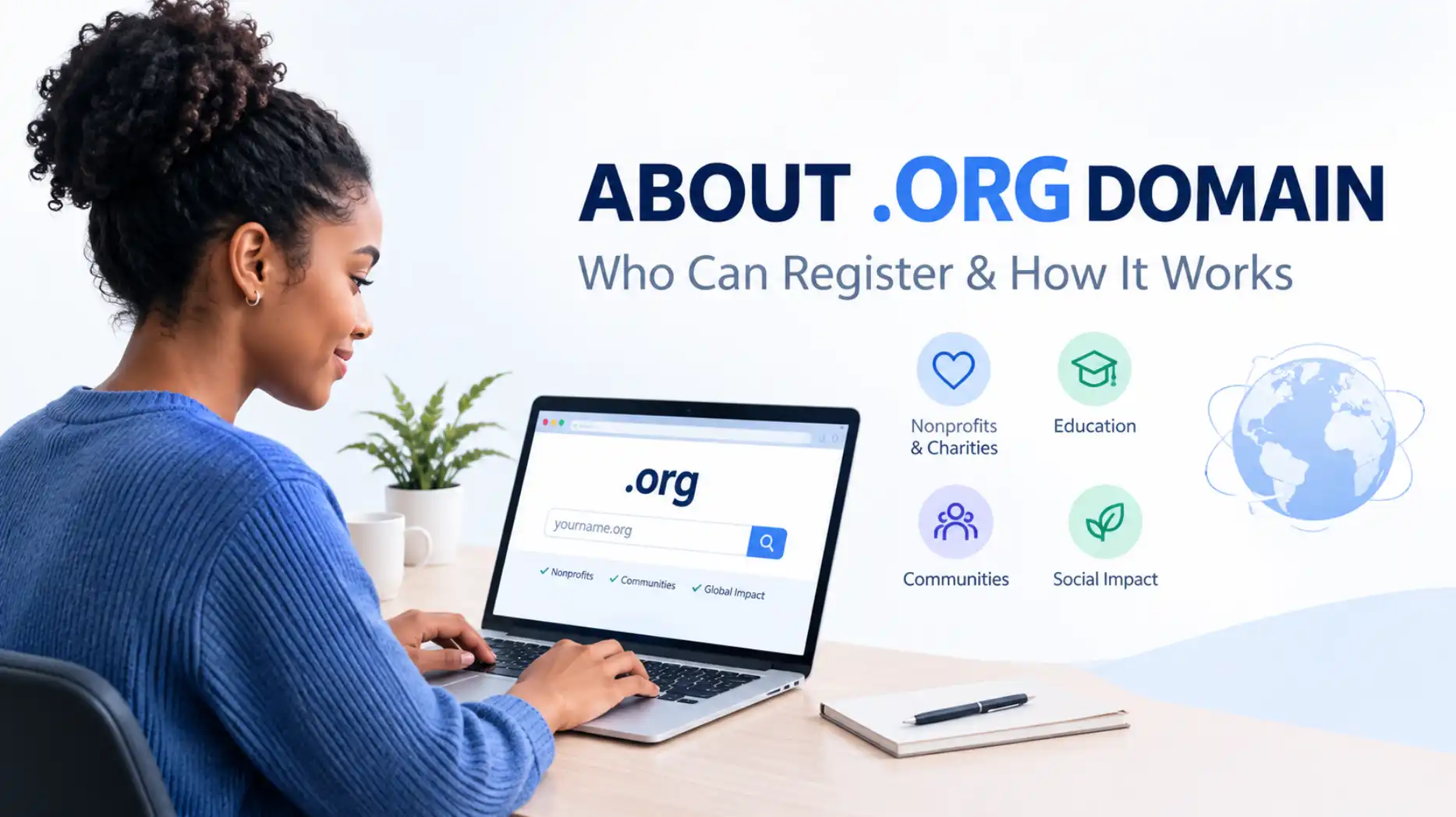
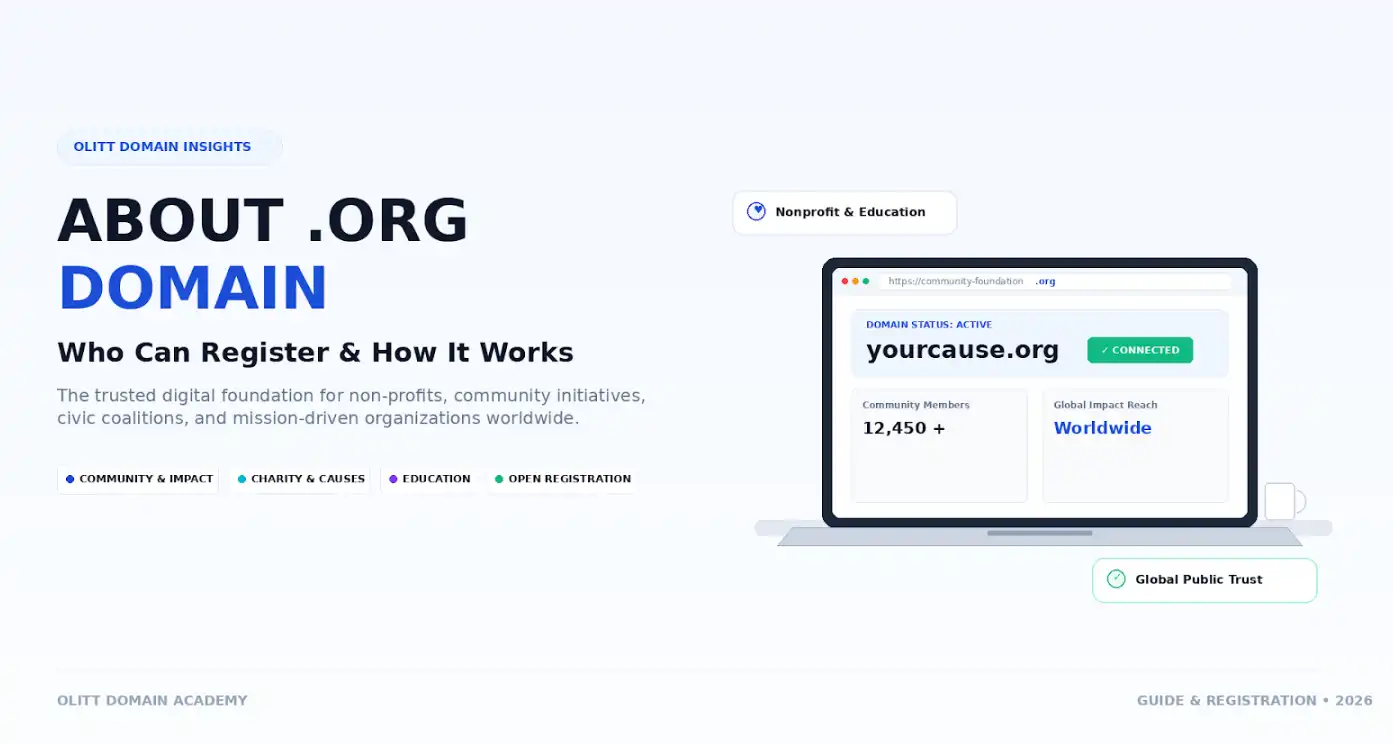
What is a .org Domain?

The .org domain is for organizations.
It was created specifically for non-profit organizations, charities, open-source projects, educational groups, and community initiatives.
The main idea behind .org is that it signifies a site that is not commercial; it’s meant for sharing information, fostering a community, or supporting a cause.
While it’s still the go-to choice for non-profits like the Red Cross (redcross.org) or Wikipedia (wikipedia.org), its use has expanded somewhat.
Some for-profit entities now use .org if their primary mission is educational or community-focused, but the strong association with non-commercial work remains.
Pros and Cons of .org Domains
The .org also comes with good perks and some disadvantages.
Pros
- Immediate Context: It clearly signals that your site is likely mission-driven, not-for-profit, or community-based. This builds instant trust for causes and informational projects.
- Better Availability: You have a much higher chance of securing your preferred name with a .org than with a .com.
- Trust and Authenticity: Visitors at a .org site often have a pre-existing expectation of credibility and altruistic purpose.
- Cost-Effective: .org domains are priced similarly to .coms for new registrations and are usually far cheaper to obtain than an already-taken .com.
Cons
- If you run a for-profit business, using a .org might confuse customers about your nature and intentions.
- Some may incorrectly assume a .org site is smaller, less professional, or not business-ready.
- For a standard business, customers might accidentally go to the .com version of your name out of habit.
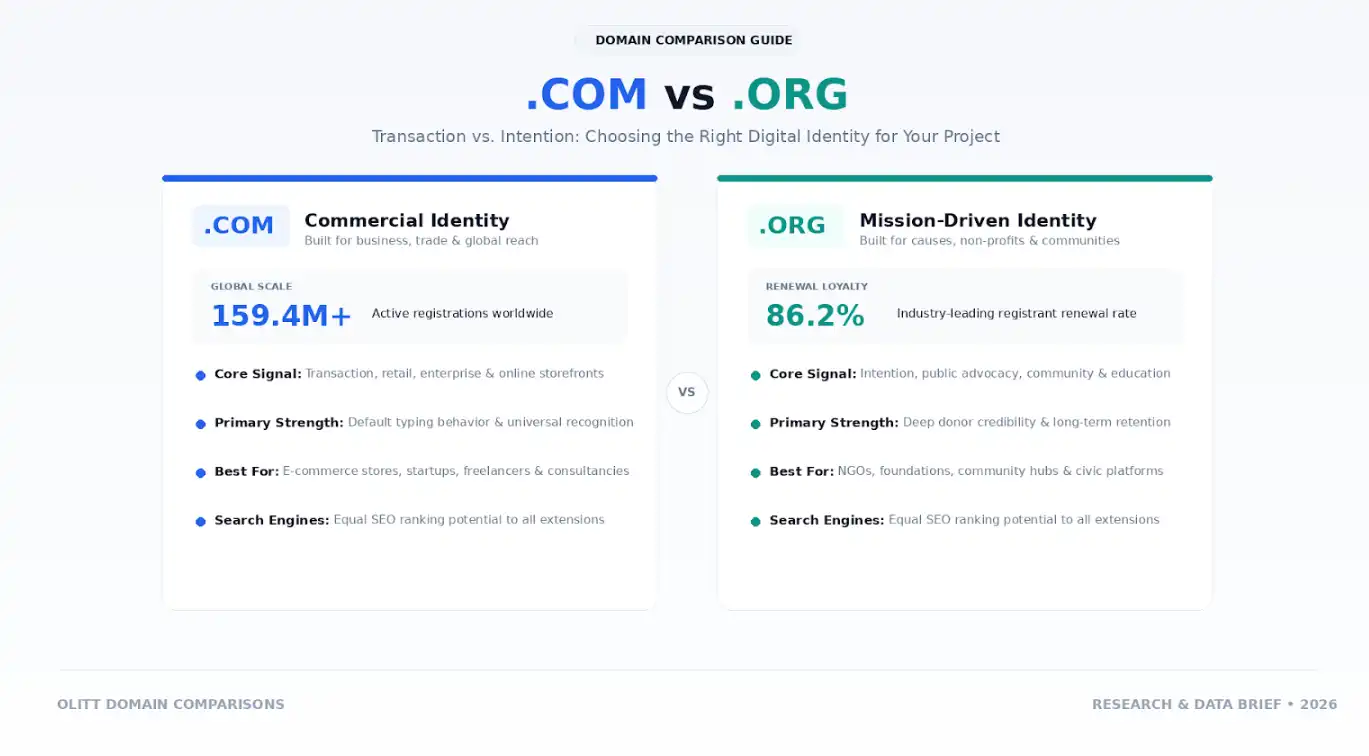
Key Differences of .com vs .org
You now understand what a .com and a .org are. Now, let’s get to the details of the key differences:

1) The Purpose
.com was built for commercial entities. It was meant to be the home for businesses and for-profit ventures on the early internet.
.org was created for organizations, specifically non-profit groups, charities, and community initiatives. Its purpose was to house groups whose goal wasn’t to make money, but to serve a cause.
2) What People Think When They See It
A .com address shows something commercial or general. People see it and think business, service, store, or just a standard website. It feels professional and global.
A .org address is a mission. People see it and think non-profit, charity, open-source project, or educational resource. It carries a sense of trust, ethics, and community focus.
3) How They’re Used Today
.com has become the universal default. You’ll find every type of website here: massive corporations, small shops, personal blogs, and online portfolios. While it started for business, it’s now used for almost everything.
On the other hand, .org has stayed much closer to its roots. It is still overwhelmingly used by non-profits, NGOs, professional associations, and community groups. Some educational or community-focused for-profits use it, but the strong non-commercial association remains.
4) Finding a Name You Want
Getting a .com is tough. Because everyone tries to get one, most simple, catchy, or common names were registered years ago. You’ll often need to get creative with your domain name choice.
Getting a .org is significantly easier. Your first-choice name is more likely to be available because there has been less of a rush to register every possible option.
5) What It Costs You
If the perfect .com is already taken and you want to buy it from the current owner, be prepared for a high price. Good .com domains can sell for hundreds, thousands, or even millions of dollars because of their scarcity and demand.
Buying a used .org from someone else is far more affordable. The aftermarket prices are generally lower because the speculative demand isn’t as intense.
6) How People Remember It
.com is what people automatically type. If you tell someone your website name, they’ll almost always try .com first out of sheer habit. This can be a significant advantage for general use.
.org is what people remember for specific purposes. If they know your site is for a charity or a community project, they’ll naturally remember to type .org. It’s memorable within its niche.
For you to remember the differences:
| Features | .com | .org |
| Initial purpose | Commercial businesses | Non-profit organizations |
| Main impression | Professional, standard, for-profit | Trustworthy, community-focused, non-commercial |
| Best for | Businesses, e-commerce, personal brands, and general use | Charities, non-profits, open-source projects, community initiatives |
| Name availability | Mostly already taken | Usually more available |
.com vs. .org: When to Use
We’ve seen how a .com varies from a .org. Depending on what you need, one has an advantage over the other.
If you are feeling stranded on whether to pick a .com vs .org for your new domain, note this:
You should lean towards a .com domain if:
- You are starting any kind of for-profit business
- You plan to sell products or services online.
- You are creating a personal blog, portfolio, or website where the primary focus is on you or your work as an individual or professional.
- Your long-term goal involves building a broad, global brand.
- You want to minimize the risk of losing visitors to a .com version of your name.
A .org domain is likely the better choice if:
- You are formally registering a non-profit organization, charity, or foundation.
- You are running an open-source software project or a community-driven initiative.
- Your website’s primary purpose is to provide free educational resources, advocate for a cause, or share information without a direct sales focus.
- Trust and credibility in a non-commercial context are your top priorities.
- The perfect .com name for your project is unavailable or prohibitively expensive.
Final Take
So, at the end of the day, your choice between .com and .org comes down to what you want your website to tell at first glance.
If your main goal is commerce, building a personal brand, or creating a general-purpose site, .com is your strongest starting point. It’s the familiar, default choice that tells visitors you’re open for business in the broadest sense.
On the other hand, if you are centered on a cause, a community, or a non-profit mission, .org is your natural home. It tells people you’re about trust, information, and purpose before they even read a single word.
The best thing you can do is be honest about your primary objective. Start by securing the domain that best matches that core goal.
If you can, consider registering the other extension as well to protect your name. But your main domain should be the one that feels right for what you’re building.
And when you are settled on the domain name, let Olitt build you a website that reflects your values and sells you in the most accurate way.