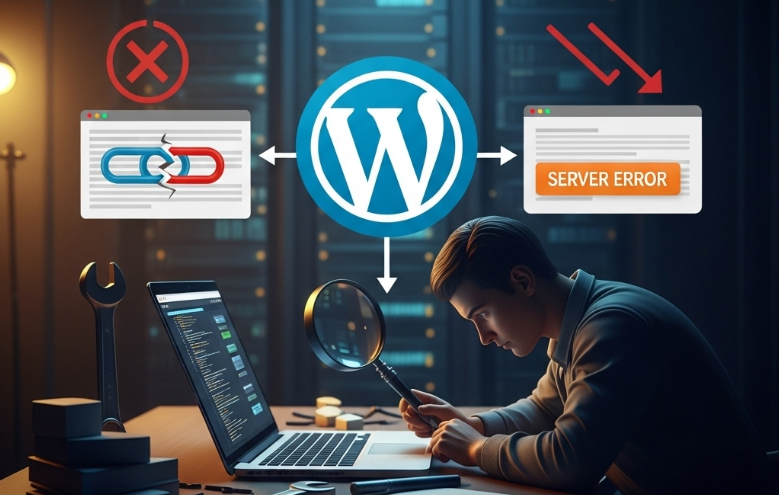

A slow WordPress site frustrates visitors and drives them away long before they read a single post.
Pages that take too long to load not only push users to abandon their session; they also drag down your ranking in search results.
When people leave because of slowness, you’re losing both traffic and potential sales.
In this blog article, we’ll walk you through eleven easy ways to fix WordPress Hosting performance Issues.
We’ll also introduce Olitts WordPress hosting, a speedy, no-nonsense option you can learn more about at Olitt.com.
1. Choose a Reliable and Powerful Hosting Provider

The biggest reason WordPress sites lag is often the host. If the server takes its time, everything built on it will take its time, too.
Hosting comes in several flavors, from budget-shared plans to stout dedicated servers and purpose-built managed WordPress packages.
Shared plans are easy on the wallet yet can drag because dozens of sites share the same hardware.
Dedicated servers, while lightning-fast, come with a price tag most small businesses dread.
Managed WordPress hosting, created specifically for WordPress workloads, usually sits in the middle and delivers a snappy, stress-free experience.
If your site already feels slow, consider Olitt WordPress hosting. Its servers run custom configurations tuned just for WordPress.
Clients also get a free CDN and a handy SSL certificate right out of the box. The CDN pushes copies of your pages to edge locations around the globe, so visitors download files from the nearest server.
SSL encrypts traffic, builds trust, and, these days, is a light-speed booster, too. Swapping to Olitt could turn your sluggish site into a much peppier one.
2. Keep WordPress Core, Themes, and Plugins Updated
Letting WordPress, its themes, and its plugins gather digital dust is a sure way to slow things down.
Older versions often harbor bugs, security holes, and poorly optimized code that drag on performance.
Each update patches these leaks, squashes bugs, and sometimes even trims the code, giving your site a gentle speed bump.
Regularly checking the dashboard takes only a moment, yet skipping those updates can leave your visitors waiting, even on a fast server.
Make it a habit to peek at the updates panel in your WordPress dashboard. When prompted, install the latest core version, theme patches, and plugin revisions without delay.
These small steps guard your site against new threats and keep page loads snappy.
Letting updates pile up, however, can turn a minor slowdown into a major headache for your hosting provider.
3. Audit and Manage Plugins Effectively
Plugins are the magic that turns a basic WordPress install into a feature-rich site.
The trouble is, that too many options or poorly coded add-ons can drag down speed.
Heavy code, script conflicts, or calls to distant servers slowly chew up resources.
All that strain shows up in blank time while pages sit around waiting to load.
Spend twenty minutes hunting through the Plugins tab and deactivate anything that has collected dust.
For the ones you keep, read reviews and pick options praised for clean coding and minimal impact.
If you wonder which culprit lurks behind slow loading, testing tools reveal the heaviest offenders in seconds.
Swap out laggards for lean alternatives, and your leaner plugin roster lightens the load on WordPress hosting.
4. Use a WordPress Caching Plugin

Think of caching like storing leftovers in the fridge: reheating is faster than starting a meal from scratch.
A caching plugin saves a ready-to-serve copy of your web pages so the server does less heavy lifting.
When someone clicks a link, they receive the cached version almost instantly, rather than watching the database and theme assemble every element anew.
Popular caching plugins like W3 Total Cache and WP Super Cache are well-known among site owners.
Setting these tools up is usually quick, and the speed boost they bring is hard to miss.
5. Optimize Images for Faster Loading

Oversized images drag on loading times and hurt a site’s first impression. Image optimization shrinks file size without obvious quality loss.
You can achieve this by compressing photos and by cropping them to the scale they will display.
Lazy loading is another handy trick. With lazy loading, images load only as the reader scrolls down, cutting wasted downloads on pages still out of sight.
These techniques keep your page light and speed up the entire visitor experience.
6. Use a Lightweight and Speed-Optimized Theme
Many themes look stunning yet pack so many extras that they run slowly. Bells and whistles you rarely use can hide behind flashy sliders and animations.
The extra code bloats every page, and all those scripts take precious seconds to download and run.
Pick a lightweight theme built for speed. Options such as Astra and GeneratePress fit the bill and load quickly.
Because they mesh well with caching tools, switching to one can lighten your site and the pressure on your server.
7. Enable GZIP Compression and Minify CSS/JS Files
GZIP compression shrinks files before they leave the server, cutting transfer time.
Minification strips out extra spaces and comments from CSS and JavaScript, so the code arrives faster.
You can turn on GZIP and minify files through plugins or your host’s control panel.
Together, these tweaks slash file size and help solve any slow-loading WordPress headaches.
8. Use a Content Delivery Network (CDN)
A CDN spreads copies of your site across servers worldwide. When a visitor arrives, the network sends files from the nearest location, speeding up the load time no matter where they are.
Olitt includes a free global CDN with every WordPress hosting plan. That little extra layer moves copies of your site closer to visitors around the globe.
When someone clicks a link, they grab the page from the nearest server, not from the original data center.
This quick hand-off cuts loading times and eases the strain on your main server.
If slow speeds have been a nagging problem, a good CDN is one of the first fixes to try.
9. Optimize the WordPress Database
Think of the WordPress database as your site’s digital filing cabinet. As you add posts, comments, and even drafts, old bits like revisions, pingbacks, and spam gunk up the drawers.
Over time it takes the system longer to dig out the right file. A jammed cabinet can turn a normally zippy site into a slow crawl.
Plugins such as WP-Optimize make cleanup simple. One click clears expired transients, prunes revisions, and removes orphaned tables.
With fewer loose papers lying around, the database responds faster to requests.
10. Schedule Background Tasks During Low Traffic
WordPress doesn’t go quiet the moment you log off-Instead, it takes care of stuff behind the scenes.
A messy database, a sweeping security scan, or a nightly off-site backup all matter, but they can overload the server at the worst moment.
Fire up a huge job while a big post hits social media, and every visitor feels the lag.
So, pull up your plugin settings and the host control panel for two minutes, then give those heavy tasks a bedtime.
Running them late at night, or during the sleepy afternoon lull, spreads the work and spares guests the wait.
This tiny tweak often clears the slow spots users keep complaining about, letting pages pop back up fast.
11. Upgrade to the Latest PHP Version
Every WordPress page runs inside the PHP engine, and each fresh release tries to be faster and safer than the last.
Sit too long on an old build and your site drags, while hackers circle the exposed code like seagulls over fries.
A quick peek in the host’s dashboard, and a polite nudge to support reveals the current version, and then you can slide the wallet-friendly green button.
Olitt, for example, offers its customers the newest PHP options right next to the standard picks, quietly shielding sites while adding zip.
Swapping to the latest build takes two minutes, yet it ranks as one of the smartest, highest-impact moves for a slow WordPress host.
Conclusion
Solving sluggish WordPress hosting issues is easier than you think. Start by picking a reliable provider like Olitts WordPress hosting.
Keep the core, themes, and plugins updated, manage extras wisely, enable caching, and compress images.
Pair these steps with a lightweight theme, turn on Gzip compression, link a CDN, tidy up the database, time background tasks, and run the latest PHP version.